Exploring the Temples: Key Structures, Reliefs, Rituals, and Photo Spots at Prambanan and Borobudur
Indonesia, a nation celebrated for its vibrant culture and breathtaking landscapes, is home to two of the world’s most iconic and historically significant temple complexes: Prambanan and Borobudur temples. These UNESCO World Heritage sites, nestled in Central Java, offer an unparalleled journey into ancient Javanese civilization, showcasing remarkable architectural prowess, profound spiritual narratives, and a rich tapestry of cultural heritage. For anyone embarking on an Indonesia tourism adventure, a visit to these majestic structures is an absolute must, promising an experience that transcends mere sightseeing to become a truly transformative exploration.
These two monumental sites, though geographically close, represent distinct religious traditions – Prambanan as a grand Hindu complex and Borobudur as the world’s largest Buddhist monument – offering a unique insight into the religious harmony and artistic sophistication that once flourished in ancient Java. Their towering spires, intricate carvings, and serene atmospheres invite visitors to delve deep into their history, understand their spiritual significance, and capture their timeless beauty through the lens. This guide will take you through the key structures, captivating reliefs, enduring rituals, and the most picturesque photo spots at both Prambanan and Borobudur temples.
A Tale of Two Temples: Prambanan and Borobudur
While both Prambanan and Borobudur temples are masterpieces of their respective eras, they stand as powerful symbols of different faiths. Prambanan, built in the 9th century, is the largest Hindu temple complex in Indonesia, dedicated to the Trimurti – Brahma (the Creator), Vishnu (the Preserver), and Shiva (the Destroyer). Its soaring, pointed architecture is characteristic of Hindu temple design. Borobudur, also constructed in the 8th and 9th centuries, is a colossal Buddhist stupa, a pyramidal structure that guides pilgrims on a symbolic journey to enlightenment. Its design is a three-dimensional mandala, representing the Buddhist cosmos. [10, 15, 19, 32]
Prambanan: The Majestic Hindu Complex
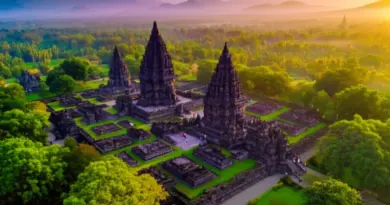
Prambanan’s architecture is a stunning display of Hindu artistry. The complex consists of a central courtyard surrounded by numerous smaller temples. At its heart are three main temples dedicated to the Trimurti, with the Shiva temple being the tallest and most prominent, reaching 47 meters in height. [7, 15, 16, 34] Flanking Shiva are the temples for Vishnu and Brahma. In front of these are three smaller temples dedicated to their respective ‘vahana’ (vehicles): Nandi (Shiva’s bull), Garuda (Vishnu’s eagle), and Hamsa (Brahma’s swan). [7]
Borobudur: The Serene Buddhist Sanctuary
Borobudur’s structure is unique, built as a single large stupa on a hill. It comprises nine stacked platforms: six square terraces at the base and three circular platforms at the top, crowned by a central dome. [10, 13, 19, 39] The design symbolizes the three realms of Buddhist cosmology: Kamadhatu (the world of desires), Rupadhatu (the world of forms), and Arupadhatu (the formless world). As pilgrims ascend, they symbolically move from the earthly realm towards spiritual liberation. [10, 12, 20, 39]
Unveiling Prambanan’s Grandeur
Key Structures: Towers and Shrines
The most striking features of Prambanan are the towering ‘candi’ (temples), particularly the Shiva temple. Inside, a three-meter high statue of Shiva Mahadeva dominates the central chamber. [7, 15, 42] The complex originally boasted 240 temples, though many are now in ruins, a testament to the earthquakes and volcanic eruptions it has endured over centuries. [7, 15, 26]
Intricate Reliefs: Stories in Stone
Prambanan’s walls are adorned with exquisite bas-reliefs that tell stories from Hindu epics, primarily the Ramayana. These carvings depict the adventures of Prince Rama, his wife Sita, and the monkey general Hanuman. To follow the narrative accurately, visitors typically circumambulate the Shiva temple clockwise. [7, 16, 30] The detail and artistry of these reliefs provide a visual scripture, educating and inspiring devotees and visitors alike. [30]
Rituals and Cultural Significance
Prambanan remains a living temple, a sacred site for Hindus in Indonesia. Rituals and ceremonies, such as Galungan, Tawur Kesanga, and Nyepi, are still performed here annually, reflecting the revival of Hindu practices in Java. [7, 9, 30, 34] The temple also hosts the renowned Ramayana Ballet, an outdoor dance-drama performed with the illuminated temples as a dramatic backdrop, offering a captivating cultural experience that brings the ancient reliefs to life. [30]
Capturing Prambanan: Photo Spots
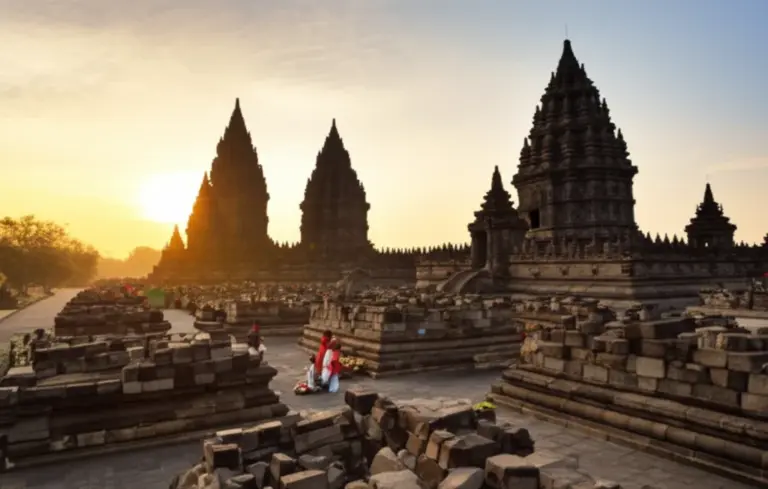
For photographers, Prambanan offers countless opportunities. The grand central temples are stunning at any time of day, but especially during sunrise and sunset when the stone glows with warm hues. [27, 34] Consider the following spots:
- Riyadi Spot: Offers a panoramic view of the temple complex from a distance, perfect for wide-angle shots, especially with Mount Merapi in the background on clear days. [5, 40]
- Nandi Temple: Frame the three main temples through the small gate of Nandi Temple for a unique perspective. [5]
- Syiwa Mandala Spot: Ideal for capturing the temples as the sun sets, providing a dramatic silhouette. [5]
- From within the complex: Experiment with shots that emphasize the intricate details of the reliefs and the sheer scale of the towers.
Discovering Borobudur’s Spiritual Journey
Architectural Layers: From Base to Stupa
Borobudur’s architecture is a spiritual allegory carved in stone. The monument’s base (Kamadhatu) features reliefs depicting the realm of desire. As you ascend through the five square terraces (Rupadhatu), you encounter narratives of the Buddha’s life and teachings. The upper three circular platforms (Arupadhatu) are largely unadorned, symbolizing the realm of formlessness and enlightenment, with 72 perforated stupas, each containing a Buddha statue. [10, 12, 13, 19, 20, 32, 39]
Symbolic Reliefs: The Path to Enlightenment
Borobudur boasts an astonishing 2,672 relief panels and over 500 Buddha statues. [4, 10, 13] These reliefs are a continuous narrative, guiding pilgrims on a spiritual journey. They depict scenes from the Jataka tales (stories of Buddha’s previous lives), the Lalitavistara (the life of Siddhartha Gautama), and the Gandavyuha (the search for ultimate truth). [13, 20, 38] Each panel is a step on the path to enlightenment, making the ascent a profound meditative experience. [20, 39]
Sacred Rituals and Pilgrimages
Borobudur remains a significant pilgrimage site for Buddhists worldwide. The most prominent annual ritual is Vesak (Waisak) Day, commemorating the birth, enlightenment, and death of Buddha. Thousands of monks and devotees gather for processions, prayers, and the release of sky lanterns, creating a truly awe-inspiring spectacle. [4, 21, 32, 39] Even outside of Vesak, many visitors engage in pradakshina, circumambulating each level clockwise, reflecting on the teachings depicted in the reliefs. [4, 20]
Iconic Views: Borobudur Photo Opportunities
Borobudur is arguably most famous for its stunning sunrise views. Arriving early to witness the sun rising over the misty landscape, illuminating the stupas and Buddha statues, is a highly sought-after experience. [27, 33, 41] Other key photo spots include:
- Punthuk Setumbu: A hill nearby offering a classic panoramic sunrise view of Borobudur with Mount Merapi in the background. [6, 27]
- Among the Stupas: Capture the unique bell-shaped stupas, some with visible Buddha statues inside, especially during the golden hour. [4, 20, 33]
- Relief Galleries: Focus on the intricate details of the narrative reliefs that adorn the temple walls.
- From the top platform: Enjoy and photograph the expansive views of the surrounding lush green landscape and distant volcanoes.
Planning Your Temple Exploration
To make the most of your visit to Prambanan and Borobudur temples, planning is key. Both sites are located near Yogyakarta, a vibrant city that serves as the cultural heart of Java. [8, 15, 36]
Best Time to Visit
The dry season (May to September) is generally the best time to visit, offering clear skies and comfortable temperatures. [17] For both temples, early mornings are recommended to avoid crowds and the midday heat, and to capture the best light for photography. Sunrise visits to Borobudur are particularly popular, often requiring special tickets and early arrival. [33, 41]
Getting There and Around
From Yogyakarta, you can hire a private car with a driver, join a tour, or use ride-hailing apps to reach the temples. Borobudur is about an hour’s drive northwest, while Prambanan is closer, about 30 minutes east of the city. [6, 8] Combination tickets for both sites are often available and can offer savings. [31]
Essential Tips for Visitors
- Dress Code: While there’s no strict dress code, modest attire is recommended as these are religious sites. Sarongs are often provided or available for rent at the entrance if required for certain areas.
- Sun Protection: Bring a hat, sunscreen, and plenty of water, especially if visiting during the day.
- Comfortable Footwear: You’ll be doing a lot of walking and climbing stairs.
- Guides: Consider hiring a local guide at the entrance for deeper insights into the history and symbolism of the temples.
- Respect: Be mindful of ongoing rituals and maintain a respectful demeanor.
Exploring the Prambanan and Borobudur temples is more than just a tourist activity; it’s an immersive cultural and spiritual experience. These ancient marvels stand as enduring testaments to human ingenuity, devotion, and artistic expression. Whether you’re captivated by the dramatic Hindu spires of Prambanan or drawn to the serene Buddhist symbolism of Borobudur, these sites offer a profound connection to Indonesia’s rich past and a deeper appreciation for its diverse heritage. Plan your visit, prepare to be amazed, and let the timeless beauty of these temples leave an indelible mark on your soul.
คำถามที่พบบ่อย (FAQ)
References
- Borobudur – Wikipedia
- Prambanan – Wikipedia
- Borobudur Temple Compounds – UNESCO World Heritage Centre
- Prambanan Temple Compounds – UNESCO World Heritage Centre
- Exploring Yogyakarta: Your Travel Guide to Borobudur and Prambanan – YouTube
- 5 Secret Photography Spots At Prambanan – YogyakartaTour.com
- 3 Selfie Spots Around Borobudur – Visit Jawa Tengah
- Celebrating the Day of Buddha on Vesak Day Rituals at Magnificent Borobudur – Indonesia Travel
- Ultimate guide to Indonesia’s Prambanan Temple Complex – Lonely Planet
- Borobudur Temple: A Remarkable Shrine to Buddha | Lindblad Expeditions
- Borobudur | UNESCO World Heritage Site, Java, Indonesia | Britannica
- Photographing Borobudur – Java’s Buddhist Jewel – Nomadic Pixel
- 10 Things To Know About The Prambanan Temple – ETIC Journal
- Visiting Borobudur: A 2025 Spiritual Guide – Sabiduri
- Prambanan Temple: The Heart of Javanese History – BaliMagicTour