How much does a trip to Indonesia really cost? — Typical daily and weekly budgets for backpackers, mid-range travelers, and luxury tourists
- How much does a trip to Indonesia really cost? — Typical daily and weekly budgets for backpackers, mid-range travelers, and luxury tourists
- Understanding Indonesia’s Diverse Travel Tiers
- The Backpacker Budget: Traveling Indonesia on a Shoestring
- The Mid-Range Traveler: Comfort and Exploration
- The Luxury Tourist: Indulgence in Paradise
- Key Cost Variables That Impact Your Total Spend
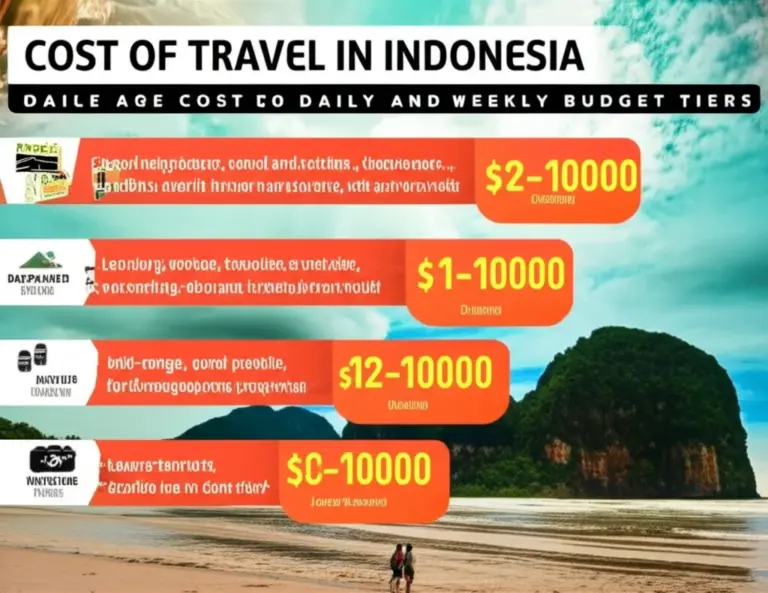
- Sample Daily & Weekly Budgets Summary
- Visualizing Your Indonesian Journey
- คำถามที่พบบ่อย (FAQ)
Planning an Indonesian adventure is exciting, but the financial reality can be murky. From the spiritual serenity of Ubud to the pristine beaches of Raja Ampat, Indonesia offers a vast spectrum of experiences. Understanding the true cost of a trip to Indonesia requires segmenting travel styles. This comprehensive guide breaks down the typical daily and weekly budgets for backpackers, mid-range explorers, and luxury tourists, ensuring your budget aligns perfectly with your Indonesian dream vacation.
Understanding Indonesia’s Diverse Travel Tiers
Indonesia, comprising over 17,000 islands, is not a monolithic destination. Costs fluctuate wildly between popular hubs like Bali and Jakarta, and more remote locations like Flores or Sumatra. Generally, costs are quoted in Indonesian Rupiah (IDR), but for international comparison, we will use USD approximations (assuming an exchange rate where 1 USD ≈ 15,500 IDR, subject to change).
The Backpacker Budget: Traveling Indonesia on a Shoestring
For the true budget traveler focused on cultural immersion and social hostels, Indonesia remains incredibly affordable. This tier prioritizes local transport and street food.
Accommodation (Hostels & Guesthouses)
Dorm beds in popular areas like Canggu or Yogyakarta can range from $8 to $15 USD per night. Private rooms in local guesthouses (losmen) outside major tourist centers might cost $15 to $25 USD.
Food & Drink (Warungs & Street Stalls)
Eating locally is the key to saving money. A delicious meal of Nasi Goreng or Mie Ayam at a local warung rarely exceeds $2-$3 USD. Even basic restaurant meals usually stay under $7 USD.
Transportation
Scooter rentals (essential outside major cities) are cheap, around $5-$7 USD per day. Inter-island budget ferries and local buses keep costs low, though they sacrifice comfort and speed.
Backpacker Daily Estimate
$30 – $50 USD per day (Excluding major inter-island flights).
The Mid-Range Traveler: Comfort and Exploration
The mid-range traveler seeks private accommodation, reliable air-conditioned transport, and a mix of local and international dining experiences. This is where most first-time visitors find their sweet spot.
Accommodation (Boutique Hotels & Villas)
Expect to pay $50 to $100 USD per night for high-quality boutique hotels, well-located apartments, or private pool villas (especially when splitting costs).
Activities & Sightseeing
This budget allows for guided tours, scuba diving day trips, cooking classes, and entrance fees to major temples like Borobudur or Prambanan. Expect activities to cost $30-$70 USD per day, depending on the intensity of touring.
Mid-Range Daily Estimate
$100 – $180 USD per day (Comfortable travel including tours and nice dinners).
The Luxury Tourist: Indulgence in Paradise
For those prioritizing five-star service, private drivers, and exclusive experiences, the sky is the limit, especially in areas like Seminyak, Nusa Dua, or high-end resorts in Komodo National Park.
High-End Stays & Private Transport
Luxury resorts start around $250 USD per night and can easily exceed $1000 USD. Private drivers for a full day often cost $60-$100 USD, and fine dining can match Western city prices.
Luxury Daily Estimate
$400+ USD per day (This tier often involves high fixed costs like private charters or resort minimums).
Key Cost Variables That Impact Your Total Spend
While daily spending is crucial, several large, upfront costs significantly influence the overall cost of a trip to Indonesia.
Flights: The Biggest Variable
International flights from North America or Europe can range from $800 to $1,800 USD depending on the season and booking time. Budget travelers often save by flying into regional hubs like Kuala Lumpur or Singapore and taking a budget carrier connection to Jakarta (CGK) or Denpasar (DPS).
Visa Requirements
Many nationalities qualify for a Visa Exemption (free entry for 30 days) or a Visa on Arrival (VOA) costing approximately $35 USD (valid for 30 days, extendable once). Ensure you check the latest regulations before departure.
Island Hopping and Internal Travel
Traveling between major islands requires domestic flights or long ferry rides. A single domestic flight (e.g., Jakarta to Bali) might cost $50-$100 USD, while a fast boat to the Gili Islands might be $25 USD one way. Luxury travelers often opt for chartered boats or private seaplanes.
Sample Daily & Weekly Budgets Summary
The table below synthesizes the typical spending habits for a standard 7-day trip, excluding international flights but including intra-island transport and basic activities.
| Travel Style | Estimated Daily Spend (USD) | Estimated Weekly Spend (USD) | Primary Focus |
|---|---|---|---|
| Backpacker | $35 | $245 | Hostels, Street Food, Local Transport |
| Mid-Range | $140 | $980 | Boutique Stays, Tours, Mix of Dining |
| Luxury | $550+ | $3,850+ | Resorts, Private Drivers, Fine Dining |
Visualizing Your Indonesian Journey
To give you a better sense of the atmosphere and planning involved, here is a helpful video resource:
Whether you are aiming for the lowest possible cost of a trip to Indonesia or seeking ultimate relaxation, careful planning around these tiers will ensure your budget stretches effectively across this magnificent archipelago.
คำถามที่พบบ่อย (FAQ)
Yes, Bali, especially areas like Seminyak, Canggu, and Ubud, generally has higher prices for accommodation and imported goods due to high international demand. Remote islands or less tourist-focused areas like Java’s interior or Kalimantan are significantly cheaper for daily living expenses.
The shoulder seasons—typically April to June and September to October—offer the best balance. You avoid the peak holiday crowds (and peak prices) of July/August and Christmas, while still enjoying mostly dry weather.
Tipping is not mandatory in Indonesia, but it is greatly appreciated. Many restaurants include a 10% service charge. For taxi drivers or tour guides, rounding up the fare or leaving a small cash tip (IDR 10,000 – 50,000) for excellent service is customary.
Local SIM cards (like Telkomsel) are inexpensive and offer excellent coverage. A tourist package providing unlimited or high-volume data for a month usually costs between $10 and $20 USD, which is highly recommended over expensive roaming plans.
References
- Official Indonesia Tourism Portal
- Directorate General of Immigration (Visa Information)
- Cost of Living Comparison Data for Jakarta
- Indonesia Travel Costs: A Detailed Budget Breakdown for Every Type of Traveler
- Transportation and Getting Around Indonesia — Flights, ferries, trains, buses, taxis, and budgeting tips for inter-island travel
- Accommodation Costs by Region and Style — Hostels, guesthouses, hotels, villas, and how prices vary between Bali, Java, Sumatra, Sulawesi, and the islands