How to interpret the search intent: what travelers to Indonesia are looking for when combining tropical clothing, modesty, and rain preparation
When travelers search for information regarding tropical clothing, modesty, and rain preparation in Indonesia, they aren’t just looking for a packing list. They are seeking a solution to a complex logistical and cultural puzzle. Indonesia is a vast archipelago with diverse microclimates and deeply rooted social norms. Understanding the search intent behind these queries reveals a traveler who values respect, comfort, and preparedness. This guide explores how to navigate these three pillars of Indonesian travel attire to ensure you are ready for both the equatorial sun and the sudden monsoon downpours, all while honoring local traditions.
Decoding the Search Intent: Why Travelers Care
The primary intent behind searching for “tropical clothing, modesty, and rain preparation” is practical versatility. Travelers want to know how to pack light while covering three distinct needs. First, the heat: Indonesia is consistently hot and humid. Second, the culture: as the world’s most populous Muslim-majority nation, modesty is a sign of respect, especially outside of major tourist hubs like Canggu or Seminyak. Third, the weather: rain can arrive without warning, even during the dry season.
The Triple Balance: Tropical, Modest, and Dry
To interpret what travelers truly need, we must look at how these three elements intersect. A traveler searching for this topic is likely planning a multi-destination trip—perhaps starting in the urban sprawl of Jakarta, heading to the cultural heart of Yogyakarta, and ending on the beaches of Bali. Each location requires a slightly different calibration of the tropical-modesty-rain scale.
| Region | Primary Focus | Clothing Suggestion |
|---|---|---|
| Bali (Tourist Areas) | Tropical Heat | Breathable cotton, shorts/dresses |
| Java (Cities/Temples) | Modesty | Shoulders & knees covered, light trousers |
| Sumatra/Highlands | Rain & Coolness | Lightweight waterproof shell, layers |
For the tropical aspect, the intent is moisture management. Synthetic fabrics often trap heat, leading to discomfort. For modesty, the intent is social integration. Wearing a sarong at a temple like Pura Besakih or covering shoulders in a mosque in Aceh shows a level of cultural intelligence that opens doors to more authentic experiences.
Rain Preparation in the Tropics
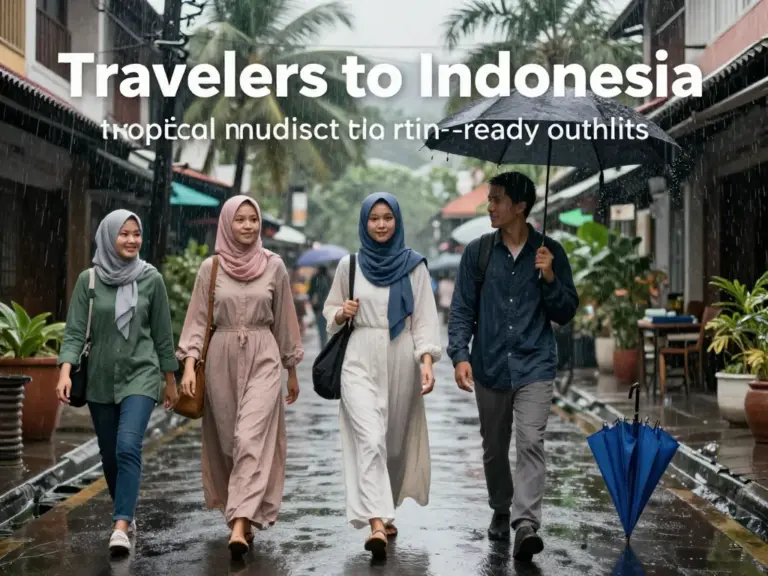
Rain in Indonesia isn’t like rain in Europe or North America; it is often a heavy, warm deluge. Travelers looking for rain preparation are usually trying to avoid being “stuck.” The key is not to stay 100% dry—which is nearly impossible in 90% humidity—but to have gear that dries quickly and protects electronics. A lightweight poncho is often preferred over a heavy raincoat because it allows for better airflow.
Essential Packing List for the Conscious Traveler
When combining tropical clothing, modesty, and rain preparation, your suitcase should include:
- Lightweight Sarong: The ultimate multi-tool. It works as a modest covering for temples, a beach towel, or an extra layer if the AC is too high.
- Moisture-Wicking T-shirts: Look for shirts that cover the shoulders to satisfy modesty requirements in most public spaces.
- Loose Linen Trousers: Keeps you cool while respecting local norms.
- Compact Dry Bag: Essential for protecting your phone and camera during sudden downpours or boat trips.
- Water-Resistant Sandals: Sturdy sandals with grip are better than flip-flops for navigating wet, uneven tropical pavements.
Cultural Nuances and Modesty Expectations
Understanding modesty in Indonesia requires recognizing that “modest” varies by island. In Bali, swimwear is acceptable on the beach but frowned upon in the village streets. In Lombok or Java, covering from the shoulders to below the knees is the standard for both men and women in public. The search intent here is often anxiety-driven: “Will I offend someone?” The answer is usually to lean toward more coverage rather than less.
คำถามที่พบบ่อย (FAQ)
Q1: Do I need to wear a headscarf in Indonesia?
A: No, non-Muslim visitors are not expected to wear a headscarf (hijab) in Indonesia, except when entering certain mosques where it may be provided for you.
Q2: What is the best footwear for the rainy season?
A: High-quality waterproof sandals (like Chacos or Tevas) are better than sneakers, as sneakers will take days to dry out in the humidity once they get soaked.
Q3: Can I wear shorts in Indonesia?
A: Yes, in tourist areas like Bali, shorts are common. However, in rural areas or religious sites, you should wear trousers or a sarong to cover your knees.
Q4: Is a raincoat or an umbrella better?
A: A lightweight, breathable poncho is usually better for walking, but an umbrella is great for short distances and provides better ventilation in the heat.
References
Official Indonesia Tourism Website
Lonely Planet Indonesia Guide
- Indonesia Packing List Tropical Clothing Modesty and Rain Prep: Essential Guide for Comfortable, Respectful, and Weather-Ready Travel
- Key clothing items for a tropical Indonesian packing list: breathable fabrics, sun protection, modest wardrobe staples, and rain gear
- Practical packing strategies and outfit combinations for modest dress in humid climates and sudden downpours