How to determine if your drone requires registration or a permit in Indonesia (including weight limits, commercial vs recreational use, and the Directorate General of Civil Aviation requirements)
- How to determine if your drone requires registration or a permit in Indonesia (including weight limits, commercial vs recreational use, and the Directorate General of Civil Aviation requirements)
Capturing the breathtaking landscapes of the Indonesian archipelago from above is a dream for many travelers. However, before you launch your quadcopter over the emerald rice terraces of Bali or the turquoise waters of Raja Ampat, understanding the nuances of drone registration in Indonesia is vital. The regulatory landscape, governed by the Directorate General of Civil Aviation (DGCA) or Direktorat Jenderal Perhubungan Udara, ensures that the skies remain safe for manned aircraft and people on the ground. Navigating these rules involves looking at drone weight, the purpose of your flight, and specific location restrictions.
Determining the Need for Drone Registration in Indonesia
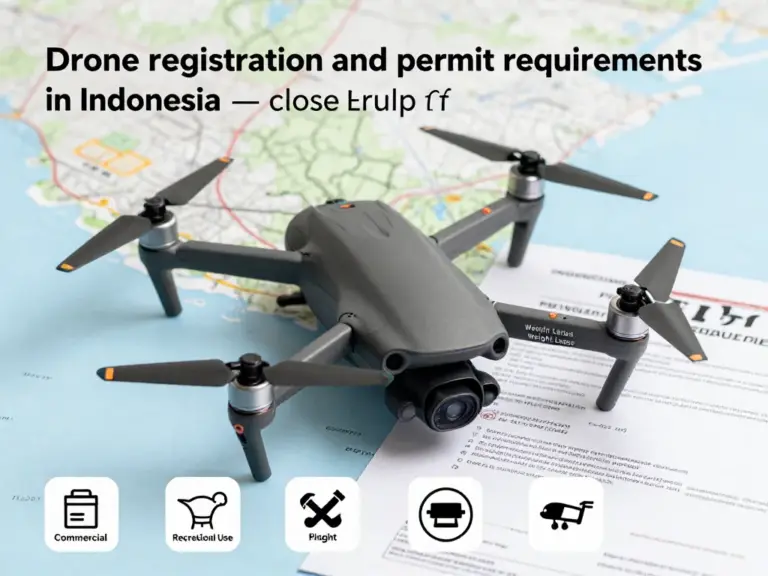
The first step for any pilot is determining if their device needs to be officially recorded in the government database. In Indonesia, the primary threshold for mandatory registration is the weight of the drone. If your Unmanned Aircraft System (UAS) weighs more than 250 grams, it must be registered through the SIDOPI (Sistem Registrasi Drone dan Pilot Indonesia) system. For many tourists using ‘mini’ drones (like the DJI Mini series), this weight limit is a critical factor. However, even if your drone is lightweight, certain operating conditions might still trigger the need for permits.
Registration isn’t just about the hardware; it’s also about the pilot. Pilots operating drones for anything other than basic hobbyist use are often required to hold a remote pilot certificate. The DGCA requires that all drones used for commercial purposes, regardless of weight, be registered and the pilot certified. For recreational users with drones over 250g, registration is the baseline requirement to stay legal.
Commercial vs. Recreational Use: Why It Matters
The DGCA distinguishes strictly between recreational and commercial drone operations. This distinction determines the complexity of the permits you need. Recreational use is defined as flying for fun or personal social media without any financial gain. Commercial use includes professional photography, surveying, or any activity where the footage is sold or used for business promotion.
| Feature | Recreational Use | Commercial Use |
|---|---|---|
| Registration (>250g) | Required | Required |
| Pilot Certification | Recommended | Mandatory |
| Insurance | Recommended | Highly Mandatory |
| SIDOPI Account | Personal | Company/Professional |
For tourists, most falls under ‘recreational.’ However, if you are a travel blogger or YouTuber who monetizes your content, the DGCA may view your flights as commercial. It is always safer to lean toward higher compliance if your work has a professional edge.
Directorate General of Civil Aviation (DGCA) Requirements
The DGCA is the ultimate authority. To comply with their standards, pilots must adhere to several operational limitations. Even with a registered drone, you cannot fly everywhere. Indonesia enforces ‘No Fly Zones’ (NFZ) around airports, government buildings, and military installations.
- Maximum Altitude: Drones are generally restricted to a maximum height of 150 meters (approx. 500 feet) above ground level.
- Visual Line of Sight (VLOS): The pilot must maintain direct eye contact with the drone at all times.
- Distance from Airports: Flying within 15km of any airport requires specific, hard-to-get authorization.
- Night Flying: Flying after sunset is prohibited unless you have a specific permit from the DGCA.
To register, you will need to access the SIDOPI portal. You will need to provide your drone’s serial number, photos of the unit, and your identification (Passport for foreigners). The process can take several days, so it is recommended to start well before your trip to Indonesia.
Permits for Restricted Areas and National Parks
Beyond the DGCA, other bodies may require permits. For instance, flying in National Parks like Komodo or Bromo-Tengger-Semeru requires a SIMAKSI (Permit for Entering Conservation Areas). These permits often carry a separate fee, which can be significantly higher for commercial filming than for hobbyist photography.
Always respect local customs. In Bali, flying drones near temples during ceremonies is strictly forbidden and can lead to drone confiscation or heavy fines. Always ask for permission from local authorities or ‘Banjar’ leaders when in doubt.
คำถามที่พบบ่อย (FAQ)
Do I need to register my DJI Mini 3 Pro in Indonesia?
Since the DJI Mini 3 Pro weighs 249g (with the standard battery), it falls just under the 250g mandatory registration limit for recreational use. However, if you use the ‘Plus’ battery, it exceeds 250g and must be registered via SIDOPI.
Can I fly my drone at night in Bali?
Standard DGCA regulations prohibit drone flight at night without a special permit. For most tourists, flying is restricted to daylight hours only.
What happens if I fly a drone without registration in Indonesia?
Operating a drone that requires registration without doing so can result in fines up to 100 million IDR or even imprisonment, as per the Aviation Law. Authorities are increasingly vigilant in tourist hotspots.
Is a permit required for every flight?
No, a permit is not required for every flight if you are in ‘Open Space’ and flying recreationally. However, permits are mandatory for Restricted Airspace, Prohibited Airspace, and whenever you fly for commercial purposes.
How long does the SIDOPI registration take?
The online registration process typically takes between 7 to 14 working days. It is best to apply at least three weeks before your arrival in Indonesia.
References
- Directorate General of Civil Aviation (DGCA) Indonesia Official Website
- Wonderful Indonesia – Official Tourism Portal
- SIDOPI Drone Registration Portal
- Indonesia Drone Rules, Permits, and No-Fly Zones: Complete Guide for Safe and Legal Flying
- Understanding Indonesia’s no-fly zones and restricted airspace (military areas, airports, government facilities, and temporary restrictions during events)
- Step-by-step process to apply for drone permits and flight authorization in Indonesia (required documents, online portals, timelines, and fees)