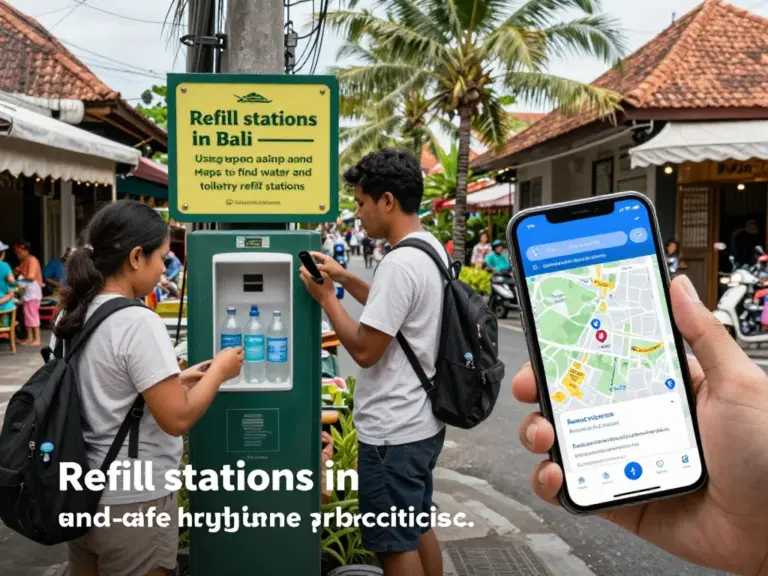
How refill stations in Bali work, best apps and maps to locate water and toiletry refills, and tips for safe refilling
Bali is a world-renowned paradise, but its popularity comes with a significant environmental challenge: plastic waste. Every year, millions of plastic bottles end up in the island’s oceans and landfills. To combat this, a robust network of Bali water refill stations has emerged, allowing travelers to stay hydrated while preserving the island’s natural beauty. Understanding how these stations work and where to find them is essential for any eco-conscious traveler visiting Indonesia.
How Water Refill Stations Work in Bali
In Bali, the concept of refilling is deeply integrated into local businesses. Most refill stations are hosted by local cafes (Warungs), hotels, yoga studios, and dive shops. These establishments typically provide large 19-liter water jugs, known locally as ‘Gallons,’ equipped with a manual or electric pump. The water provided is usually high-quality mineral water or water treated through advanced filtration systems like Reverse Osmosis (RO) or UV sterilization.
When you visit a station, you simply present your reusable bottle, and the staff will fill it for you. Some places offer this service for free to encourage sustainability, while others charge a nominal fee, typically ranging from 2,000 to 5,000 IDR (approximately $0.15 to $0.35 USD) per liter. This is significantly cheaper than purchasing a new plastic bottle from a convenience store.
Best Apps and Maps to Locate Refills
Finding a place to top up your water bottle is easier than ever thanks to digital tools designed specifically for the eco-traveler. Here are the top resources to navigate the Bali water refill stations network:
- RefillMyBottle: This is the premier app for Bali. It features an interactive map showing hundreds of locations across the island where you can refill your water. Each pin provides details on whether the refill is free or paid.
- Google Maps: Many businesses now list ‘Water Refill’ as a service. Searching for ‘refill station’ or ‘zero waste shop’ on Google Maps will yield numerous results in tourist hubs like Ubud, Canggu, and Seminyak.
- Refill Bali Project: A community-led initiative that partners with local businesses to provide visible ‘Refill Bali’ stickers on storefronts, making them easy to spot while walking down the street.
Locating Toiletry Refill Stations
The refill movement in Bali extends beyond just drinking water. To further reduce your footprint, you can also find stations for toiletries such as shampoo, soap, sunscreen, and even laundry detergent. This is particularly popular in the ‘Zero Waste’ community in Bali.
| Store Name | Location | Refillable Items |
|---|---|---|
| Bali Buda | Ubud, Sanur, Bukit | Soap, Shampoo, Household cleaners |
| Utama Spice | Ubud, Denpasar | Essential oils, Body wash, Lotions |
| Zero Waste Bali | Canggu, Uluwatu | Full range of bulk toiletries and dry foods |
These shops encourage you to bring your own containers (glass or plastic) or offer recycled bottles for a small deposit. It’s a fantastic way to support local Balinese artisans who produce natural, biodegradable products.
Tips for Safe and Sanitary Refilling
Safety is a primary concern for travelers regarding ‘Bali Belly’ or waterborne illnesses. While the water at recognized Bali water refill stations is generally safe, following these tips will ensure your health remains a priority:
- Check the App Reviews: Use the RefillMyBottle app to read recent user comments about the water quality and cleanliness of a specific station.
- Observe the Setup: Ensure the refill area looks clean. If using a manual pump, check that the nozzle is clean and doesn’t touch the rim of your bottle.
- Clean Your Own Bottle: Frequently wash your reusable bottle with hot water and soap. Bacteria can grow inside your bottle, especially in Bali’s humid climate, regardless of the water source.
- Look for Certification: Many high-end stations display certificates of water testing or mention the use of UV/RO filtration systems.
คำถามที่พบบ่อย (FAQ)
Is the water at refill stations in Bali safe to drink?
Yes, most refill stations use high-quality mineral water from reputable brands (like Aqua) or advanced filtration systems (UV/Reverse Osmosis) that make the water safe for consumption. Always use verified stations listed on apps like RefillMyBottle.
How much does it cost to refill a water bottle in Bali?
Refills are either free or very cheap. Expect to pay between 2,000 and 5,000 IDR per liter at most cafes and shops.
Can I find toiletry refills everywhere in Bali?
While water refills are ubiquitous, toiletry refills are more common in eco-conscious hubs like Ubud, Canggu, and Uluwatu at specialized zero-waste stores.
Do I need to bring my own bottle for toiletries?
It is highly recommended to bring your own clean containers, but many zero-waste shops in Bali provide recycled jars or bottles for a small fee or deposit.
References
- Plastic-Free Travel in Bali: How to Find Refill Stations, BYO Gear, and Waste-Smart Cafes for a Sustainable Trip
- BYO (Bring Your Own) gear essentials for Bali: where to buy reusable bottles, cutlery, kits, and rules for carrying and using them
- Waste-smart cafes and restaurants: how to identify businesses with zero-waste practices, menus, packaging alternatives, and recommended spots by area