Why choose mangrove and wetland tours near Jakarta? Understanding birding without the crowds and who these tours are for
- Why choose mangrove and wetland tours near Jakarta? Understanding birding without the crowds and who these tours are for
Jakarta is often perceived as a sprawling concrete jungle, a hub of commerce and traffic that never sleeps. However, just beyond the skyscrapers and bustling highways lies a different world—a serene, green fringe of coastal ecosystems. Choosing mangrove and wetland tours near Jakarta provides a unique opportunity to reconnect with nature without having to travel to remote islands. These tours offer a sanctuary for both local and migratory birds, making them a premier destination for those looking to understand birding without the crowds typical of more famous national parks.
The Allure of Mangrove and Wetland Tours near Jakarta
The primary reason to opt for mangrove and wetland tours near Jakarta is the sheer accessibility of high-biodiversity areas. Locations like Muara Angke, Pantai Indah Kapuk (PIK), and the nearby Rambut Island offer a glimpse into the complex web of life that thrives where the land meets the Java Sea. These wetlands are not just mud and water; they are nursery grounds for fish, habitats for rare reptiles, and, most importantly, critical stopovers for avian travelers.
By choosing these tours, visitors contribute to the local economy and support conservation efforts that keep these green zones from being swallowed by urban development. It is an educational journey that highlights the delicate balance between a mega-city and its natural environment.
Birding Without the Crowds: A Peaceful Escape
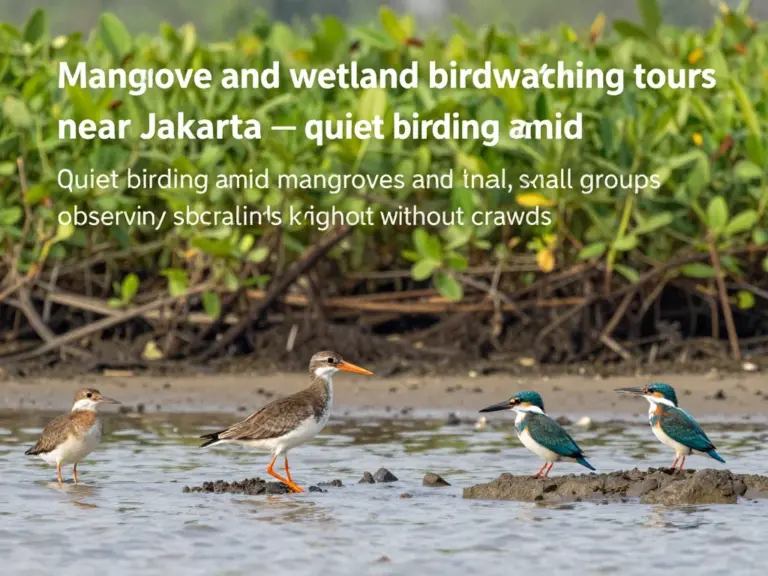
One of the most significant advantages of birdwatching in Jakarta’s wetlands is the relative solitude. While tourist hotspots in Bali or Yogyakarta might be teeming with visitors, the mangrove boardwalks of North Jakarta remain largely a local secret. This lack of crowds is essential for birding, as it ensures that the birds are not stressed and remain visible for longer periods.
In these quiet pockets, you can hear the distinct calls of the Javan Kingfisher or the rhythmic flapping of a Purple Heron’s wings. The stillness allows photographers to wait patiently for the perfect shot without being bumped by other tourists. It provides a meditative experience that is rare to find within the city limits.
Who These Tours Are For?
You might wonder if you need to be a professional ornithologist to enjoy these tours. The answer is a resounding no. These tours are designed for a wide range of interests:
- Wildlife Photographers: The lighting in the mangroves during golden hour combined with rare bird sightings makes for incredible portfolio additions.
- Students and Educators: Understanding the ecology of wetlands is a hands-on lesson in biology and environmental science.
- Families: It is an excellent way for children to see wildlife in their natural habitat rather than a zoo, fostering a sense of environmental stewardship.
- Stressed Professionals: A quick morning trip to the wetlands can act as a “digital detox” before heading back into the city’s grind.
Prime Locations for Exploration
When planning your visit, consider these key spots:
| Location | Key Highlights | Best Time to Visit |
|---|---|---|
| Muara Angke Wildlife Sanctuary | Rare Javan Coucal and Sunda Teal | 6:00 AM – 9:00 AM |
| Taman Wisata Alam Angke Kapuk | Extensive boardwalks and boat tours | Late afternoon |
| Pulau Rambut (Bird Island) | Massive colonies of waterbirds | Migratory season (Sept – March) |
What to Bring on Your Tour
To make the most of your mangrove and wetland tours near Jakarta, preparation is key. The tropical humidity can be intense, and the mosquitoes are always present. Ensure you pack:
- High-quality binoculars for distant sightings.
- Eco-friendly insect repellent.
- A reusable water bottle to reduce plastic waste.
- Sun protection (hat, sunscreen, and long-sleeved light clothing).
คำถามที่พบบ่อย (FAQ)
References
- Wonderful Indonesia Official Tourism Portal
- BirdLife International – Muara Angke Factsheet
- Directorate General of Conservation of Natural Resources and Ecosystems (KSDAE)
- Mangrove and Wetland Tours Near Jakarta: Best Quiet Birding Spots, What to Expect, and How to Plan Your Trip
- Top mangrove and wetland birding sites within easy reach of Jakarta: habitats, target species, and best seasons
- What to expect on a guided tour: typical itineraries, required gear, accessibility, and wildlife-watching tips