What is the cultural and spiritual significance of Balinese temple ceremonies and why understanding them matters for visitors
- What is the cultural and spiritual significance of Balinese temple ceremonies and why understanding them matters for visitors
- The Heart of Bali: Understanding Balinese Temple Ceremonies
- Cultural Significance: Weaving Community and Tradition
- Spiritual Significance: Connecting with the Divine
- Why Understanding Balinese Temple Ceremonies Matters for Visitors
- Popular Balinese Temples and Their Ceremonies
- Conclusion
- คำถามที่พบบ่อย (FAQ)
Bali, often called the “Island of the Gods,” is renowned for its breathtaking landscapes, vibrant arts, and a spiritual way of life deeply intertwined with its Hindu traditions. At the heart of this unique culture lie Balinese temple ceremonies, events of profound cultural and spiritual significance that punctuate daily life and shape the island’s identity. For any visitor seeking to truly immerse themselves in Bali’s essence, understanding the cultural and spiritual significance of Balinese temple ceremonies is not merely a matter of curiosity; it’s essential for fostering respect, appreciation, and a deeper connection with the island and its people.
The Heart of Bali: Understanding Balinese Temple Ceremonies
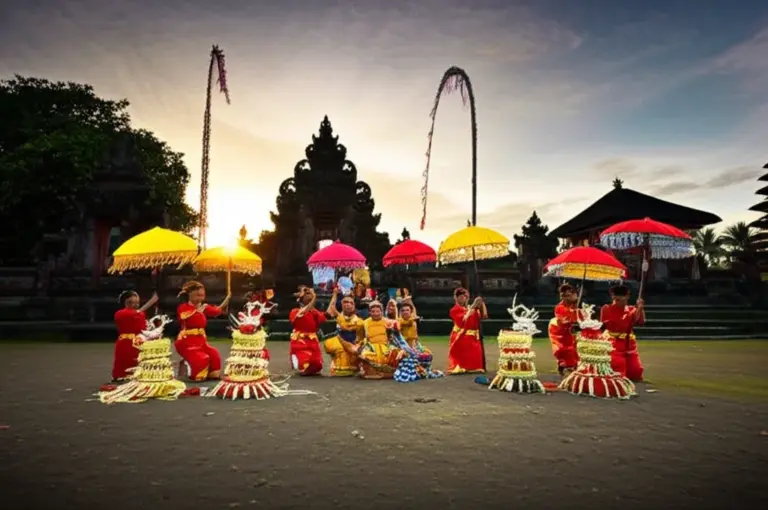
Balinese temple ceremonies are not mere performances for tourists; they are integral to the spiritual fabric of the island, a living expression of Agama Hindu Dharma, the unique form of Hinduism practiced in Bali. These ceremonies are vibrant, communal events that reflect the Balinese belief in maintaining harmony between humans, nature, and the divine. They can range from daily offerings to elaborate, multi-day temple festivals (Odalan) that occur regularly across the island’s thousands of temples. [41]
A Glimpse into Balinese Hinduism (Agama Tirta)
Balinese Hinduism, also known as Agama Tirta or ‘Religion of Holy Water,’ is a distinct blend of Indian Hinduism, Buddhism, and ancient indigenous animistic beliefs. [8, 10, 20] Water plays a central role, considered the essence of life and a powerful purifying element. [8, 13] This unique spiritual framework underpins every ceremony, imbuing each ritual with layers of meaning that connect the visible world (Sekala) with the invisible realm (Niskala).
The Philosophy of Tri Hita Karana
Central to Balinese life and its ceremonies is the philosophy of Tri Hita Karana, which translates to ‘the three causes of well-being’ or ‘three reasons for prosperity.’ [3, 5, 12] This profound concept emphasizes maintaining harmonious relationships in three key areas: with God (Parahyangan), among people (Pawongan), and with nature or the environment (Palemahan). [7, 9] Temple ceremonies are practical manifestations of Tri Hita Karana, seeking to restore and maintain this delicate balance through offerings, prayers, and communal participation. [3, 5]
Cultural Significance: Weaving Community and Tradition
The cultural significance of Balinese temple ceremonies extends far beyond religious observance; they are vital social events that reinforce community bonds, preserve ancient arts, and transmit cultural heritage across generations. [30, 35]
The Role of Offerings (Canang Sari and Banten)
Daily life in Bali is marked by the ubiquitous presence of offerings. The most common are Canang Sari, small, intricately woven palm-leaf baskets filled with colorful flowers, rice, cookies, incense, and sometimes money or cigarettes. [4, 14, 16, 17, 19, 36] These are offered to Sang Hyang Widhi Wasa (God) as an expression of gratitude and prayer, placed on shrines, pavements, and even car dashboards. [4, 14, 19] Larger offerings, known as Banten, are prepared for more significant ceremonies, demonstrating self-sacrifice and devotion. [18, 41] The act of preparing and presenting these offerings is a meditative practice, primarily undertaken by Balinese women, and is crucial for maintaining cosmic balance. [17, 19]
Sacred Dances and Music
Ceremonies are often accompanied by traditional Balinese music, particularly the mesmerizing sounds of the gamelan orchestra, and sacred dances. [30, 35] These performances are not merely entertainment but are deeply spiritual, serving as a dialogue with the divine and a way to bring Hindu epics to life. [30] Dances like the Barong and Rangda, or the Legong, tell stories of good versus evil and are considered offerings in themselves, inviting deities to partake in the festivities. [22, 30]
Community Participation and Gotong Royong
Balinese culture thrives on communal cooperation, known as Gotong Royong. [3] Temple ceremonies are prime examples of this collective spirit, where entire communities come together to prepare, participate, and contribute. [5, 38, 40] From constructing elaborate decorations (Penjor) to preparing food and transporting offerings, everyone has a role. This shared effort reinforces social cohesion and a strong sense of identity. [30, 38]
Spiritual Significance: Connecting with the Divine
For the Balinese, ceremonies are direct pathways to connect with the divine, purify the self, and ensure the well-being of the community and the cosmos. The Balinese temple ceremonies cultural and spiritual significance is most profoundly felt in these spiritual dimensions.
Purification Rituals (Melukat)
One of the most significant spiritual practices is the Melukat ceremony, a water purification ritual aimed at cleansing the body, mind, and spirit from negative energies and spiritual impurities. [2, 6, 11, 13] Performed at holy water sources like temples or natural springs, participants immerse themselves, offering prayers and intentions to wash away negativity and restore inner balance. [2, 6, 8, 11] It’s a transformative experience for both locals and visitors seeking spiritual renewal. [2, 13]
Ancestor Worship and Deification
Ancestor worship is a cornerstone of Balinese Hinduism. [15, 22] Many ceremonies, particularly those held in family temples (Pura Keluarga), are dedicated to honoring ancestral spirits and seeking their blessings. [23] The belief is that newborns carry the soul of an ancestor, and rituals mark significant life milestones, purifying the soul and appeasing spirits. [15]
The Cosmic Balance
Balinese ceremonies are deeply rooted in the concept of maintaining balance between the seen (Sekala) and unseen (Niskala) worlds. [14, 36] Offerings are made not only to appease benevolent deities but also to neutralize negative forces, ensuring harmony in the universe. [17, 18, 41] This constant striving for equilibrium is a fundamental aspect of Balinese spirituality, reflecting a holistic worldview where all elements are interconnected.
Why Understanding Balinese Temple Ceremonies Matters for Visitors
For visitors to Bali, understanding these ceremonies is more than just appreciating local customs; it’s about respectful engagement and enriching the travel experience.
Fostering Respect and Appreciation
Respect for local traditions is paramount. Visitors should be mindful of their behavior and attire when near temples or ceremonies. This includes wearing appropriate clothing (sarong and sash, covering shoulders), refraining from entering sacred areas if menstruating or having open wounds, and maintaining a respectful demeanor. [27, 28, 31, 34] By showing respect, visitors contribute positively to the preservation of Bali’s cultural integrity.
Enhancing the Travel Experience
An informed visitor can move beyond superficial tourism to a deeper, more meaningful engagement with Bali. Witnessing a ceremony with an understanding of its underlying philosophy transforms it from a mere spectacle into a profound cultural immersion. [35] It offers insights into the Balinese worldview, their resilience, and their dedication to spiritual life.
Practical Etiquette and Guidelines
- Dress Code: Always wear a sarong and sash, and ensure shoulders are covered when visiting temples. Many temples offer rentals. [27, 31]
- Footwear: Remove shoes before entering temple grounds. [28]
- Photography: Be discreet and respectful. Avoid taking photos during prayer sessions or in restricted areas. Always ask permission if unsure. [31, 34]
- Prohibited Entry: Women who are menstruating and individuals with open wounds are generally prohibited from entering temples, as they are considered impure. [28, 34]
- Offerings: Be mindful of Canang Sari placed on the ground; step around them respectfully, especially while the incense is burning. [17, 36]
- Behavior: Maintain a quiet and respectful demeanor, especially during ceremonies. Avoid loud conversations or disruptive actions. [31]
Popular Balinese Temples and Their Ceremonies
Bali is home to thousands of temples (Pura), each with its own unique history and ceremonial calendar. Some notable temples where visitors can often observe ceremonies (with proper etiquette) include:
- Pura Besakih: Known as the ‘Mother Temple’ of Bali, it’s the largest, most important, and holiest temple complex. [15, 21, 26]
- Pura Tirta Empul: Famous for its holy spring water purification rituals (Melukat). [6, 21]
- Pura Tanah Lot: A stunning sea temple, often a site for Melasti rituals. [21, 25]
- Pura Ulun Danu Bratan: A picturesque water temple dedicated to the lake goddess. [21]
Each of these temples plays a crucial role in the spiritual landscape of Bali, hosting various ceremonies throughout the Balinese calendar, particularly during their Odalan (anniversary) celebrations. [41]
Conclusion
The cultural and spiritual significance of Balinese temple ceremonies is profound, offering a window into a way of life deeply rooted in devotion, community, and harmony. For visitors, understanding these intricate rituals and their underlying philosophy of Tri Hita Karana transforms a trip to Bali into an enriching journey of cultural immersion and spiritual appreciation. By approaching these sacred practices with respect and an open mind, visitors can not only witness but also connect with the authentic heart and soul of the Island of the Gods, fostering a more meaningful and memorable travel experience.
คำถามที่พบบ่อย (FAQ)
References
- Melukat Bali
- Tri Hita Karana – Wikipedia
- Canang Sari – Wikipedia
- Tri Hita Karana – A Balinese Concept for harmonious Living – Udara Bali
- Melukat Ceremony: Balinese Hindu Ritual at Tirta Empul
- Tri Hita Karana : Three Balinese Wisdom Concept – Bali Hotels
- Bali purification ceremony : what is it & where can you do it
- Understanding Tri Hita Karana – Monkey Forest Ubud
- Balinese Hinduism – History and Source – Bali.com
- Melukat Ceremony: The Balinese Water Purification Ritual – Bali Holiday Secrets
- Tri Hita Karana – Balinese Principles – Bali.com
- Experience the Healing Power of Melukat Bali: A Guide to Purification – FINNS Beach Club
- Canang Sari: A Daily Offering in Bali – Putu Jess Patra
- Watch your step: Appreciating Canang Sari in Bali – Wicked Adventures
- A Quick Introduction to Balinese Hinduism | Ocean Earth Travels
- Balinese Cultures Hindu religion are very complex and Unique – Bali Star Island
- Balinese Canang Sari: Meaning & Ritual Offering in Ubud – Ubud Villas Rental
- Canang Sari – Beautiful Facts about Bali’s Daily Offerings – Bali Holiday Secrets
- Balinese Hinduism – Wikipedia
- Balinese temple – Wikipedia
- The significance of temples in Balinese homes – The Travellist Indonesia
- Balinese Hinduism Explained: History, Beliefs, & Traditions – Bali Holiday Secrets
- Explore Balinese Temple Architecture in Denpasar – Puri Mesari Hotel
- The architecture of a Balinese temple – Bali Live
- Balinese Temples: 6 Things You Must Know – Ubud Villas Rental
- Bali Temple Etiquette/Dress Code | Sarong and sash are compulsory – YouTube
- What Are The Cultural Rules For Visiting Temples In Bali? – Beach Tour Guide – YouTube
- Sacred Water Blessing Ritual In Bali – YouTube
- Discover a Balinese Temple Festival: A Journey into Spirituality – YouTube
- What Are the New Rules for Temple Visits in Bali? – Exploring Southeast Asia – YouTube
- Respecting Balinese Culture & Temples – YouTube
- Inside Balinese Temple Celebrations | A Short Documentary | Léon Wodtke – YouTube
- Odalan – Balinese Temple Festival | BaliSpirit
- Experiencing Balinese Ceremonies: Temple Etiquette, Dress, and Offerings Guide for Respectful Visitors
- How to dress appropriately for Balinese temples: sarong rules, kebaya, modest clothing, and tips for tourists
- Step-by-step temple etiquette: entry procedures, behavior during rituals, photography do’s and don’ts, and interacting with clergy