Must-See Volcanoes and Scenic Detours: Mount Tangkuban Perahu, Mount Bromo, Ijen Crater, and Photo Stops
- Must-See Volcanoes and Scenic Detours: Mount Tangkuban Perahu, Mount Bromo, Ijen Crater, and Photo Stops
Indonesia, the world’s largest archipelago, is defined by its ‘Ring of Fire’ geology. For travelers seeking adventure, geological marvels, and unparalleled photography opportunities, embarking on an Indonesia Volcanoes Tour is a rite of passage. This journey across Java takes you from the accessible craters of West Java to the mystical landscapes of East Java, culminating in the fiery blue spectacle of Ijen. This guide provides an expert itinerary covering Mount Tangkuban Perahu, Mount Bromo, and Ijen Crater, ensuring you hit all the critical scenic detours and photo stops along the way.
Mount Tangkuban Perahu: The Upside-Down Boat (West Java)
Located just 30 kilometers north of Bandung, Mount Tangkuban Perahu is a highly accessible stratovolcano famous for its distinctive shape, which, according to local legend, resembles an ‘upturned boat.’ This volcano serves as an excellent introduction to Indonesia’s volcanic landscape. The main crater, Kawah Ratu (Queen’s Crater), allows visitors to drive almost directly to the rim, making it suitable for all fitness levels.
Essential Photo Stops in Bandung and Lembang
- Kawah Ratu Rim: The most straightforward spot, offering panoramic views of the steaming, sulfurous crater floor. Capture the stark contrast between the lush surrounding pine forests and the barren crater walls.
- Ciater Hot Springs: A perfect scenic detour after visiting the crater. The natural hot springs, fed by the volcano’s geothermal activity, offer relaxing photo opportunities amidst beautiful greenery.
- Floating Market Lembang: While not geological, this nearby market offers colorful, unique cultural photo ops and is a must-visit West Java stop.
Mount Bromo: The Iconic Sunrise and Sea of Sand (East Java)
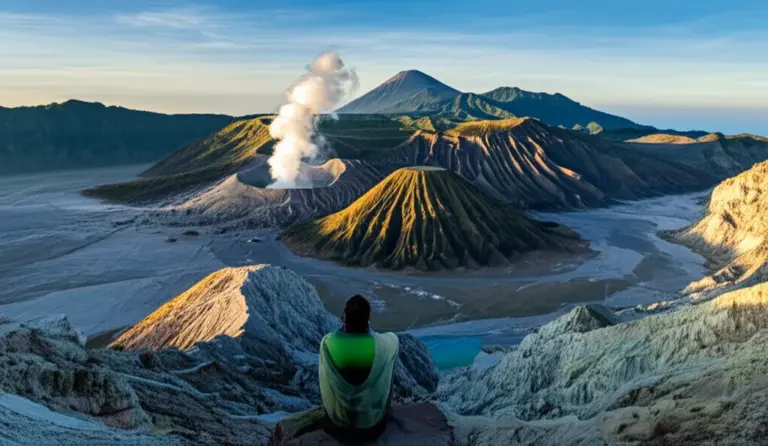
Mount Bromo is arguably the most famous stop on any Indonesia Volcanoes Tour. Part of the massive Tengger Massif, Bromo sits within the spectacular ‘Sea of Sand’ (Lautan Pasir), a protected nature reserve. The experience involves a pre-dawn wake-up call to witness the sunrise from a viewpoint overlooking the caldera, followed by a trek across the sandy plain to Bromo’s own smoking crater rim.
Planning Your Bromo Sunrise Experience
| Activity | Best Time | Key Photo Spot |
|---|---|---|
| Sunrise Viewing | 3:30 AM – 6:00 AM | Penanjakan Viewpoint (or King Kong Hill for fewer crowds) |
| Crater Ascent | 7:00 AM – 9:00 AM | The final staircase leading to Bromo’s rim. |
| Sea of Sand Exploration | 9:00 AM – 11:00 AM | Teletubbies Hill or Pura Luhur Poten (Hindu Temple) |
The sheer scale of the caldera, with Bromo, Mount Batok, and Mount Semeru smoking in the distance, provides one of the most dramatic landscapes in Southeast Asia. Ensure you wear layers; the temperature before dawn can be near freezing, contrasting sharply with the daytime heat.
Ijen Crater: The Electric Blue Fire Phenomenon (East Java)
Ijen Crater, located near Banyuwangi, offers an experience unlike any other: the ethereal blue fire. This phenomenon is caused by the combustion of sulfuric gases that emerge from cracks at temperatures up to 600°C. When these gases meet the air, they ignite, creating stunning electric-blue flames that are only visible in the absolute dark before sunrise.
Safety and Gear for the Ijen Trek
The trek to see the blue fire starts around 1:00 AM and is moderately challenging, involving a steep 3-kilometer ascent followed by a dangerous descent into the crater. Safety is paramount here due to the highly acidic gases and the presence of sulfur miners. A crucial piece of gear is a reliable gas mask, which should be provided by your tour operator. Sturdy shoes and a headlamp are mandatory.
See the stunning landscapes and understand the logistics of traveling between these three iconic volcanoes:
Scenic Detours and Maximizing Your Photo Opportunities
The journey between these volcanic sites is often as rewarding as the destinations themselves. Java is rich in rice paddies, waterfalls, and cultural sites that make excellent scenic detours and supplementary photo stops.
-
Madakaripura Waterfall (Bromo Detour)
This magnificent curtain waterfall is often included in Bromo itineraries and provides incredible macro and long-exposure photography opportunities. Located deep in a valley, it offers a refreshing break from the arid volcanic landscape.
-
Jawatan Benculuk (Ijen Detour)
Near Banyuwangi, this enchanting forest features enormous, ancient teak trees covered in moss, creating a mystical, fairytale-like atmosphere. It’s a perfect spot for portrait photography or dramatic landscape shots.
-
Tea Plantations (Tangkuban Perahu Detour)
The hills around Tangkuban Perahu are carpeted with lush green tea plantations. Stop at a local warung (small café) for tea and capture the stunning symmetry of the terraces.
Planning Your Volcanic Journey Logistics
While Mount Tangkuban Perahu is an easy day trip from Bandung, traveling between Bromo and Ijen requires careful planning. Most travelers hire private drivers or join organized multi-day package tours originating from Surabaya or Malang. The roads are generally good, but the travel time is extensive, making comfortable transport essential for this demanding Indonesia Volcanoes Tour itinerary.
คำถามที่พบบ่อย (FAQ)
What is the best time of year for an Indonesia Volcanoes Tour?
The dry season, generally April to October, offers the best weather for trekking and sunrise viewing. The visibility is highest during this period, which is crucial for maximizing your photo opportunities at Bromo and Ijen.
Is it safe to visit the Ijen Crater blue fire?
While generally safe, the trek is challenging and requires a high-quality gas mask due to concentrated sulfur fumes. The descent into the crater is steep and rocky. Always hire a local guide and strictly follow their safety instructions.
How long does it take to travel between Bromo and Ijen?
The drive typically takes 6 to 8 hours, depending on traffic and road conditions and where you start (e.g., from Cemoro Lawang to Banyuwangi). It is often done overnight or starting very early in the morning to save time.
Do I need a guide for Mount Tangkuban Perahu?
No, Tangkuban Perahu is easily accessible by car, and you can view the main crater (Kawah Ratu) from designated viewpoints without a professional trekking guide. However, local vendors offer to guide you to smaller secondary craters for a fee.
References
- Indonesia Travel Official Guide to Tangkuban Perahu
- National Geographic coverage of Mount Bromo
- Volcano Discovery: Ijen Crater Information