Why Visit Borobudur and Prambanan? History, Cultural Significance, and Best Time to Go
- Why Visit Borobudur and Prambanan? History, Cultural Significance, and Best Time to Go
For any traveler setting foot on the island of Java, the question isn’t *if* they should visit the colossal temples, but rather, Why Visit Borobudur and Prambanan? These two UNESCO World Heritage sites, standing proudly near Yogyakarta, represent the zenith of ancient Javanese artistry, spirituality, and architectural prowess. They are not just piles of ancient stone; they are living narratives of Hinduism and Buddhism that shaped Indonesian civilization. Understanding their historical context and cultural significance is key to appreciating the majesty of these sites.
The Dual Majesty: Borobudur vs. Prambanan
While often visited on the same trip, Borobudur and Prambanan offer distinctly different spiritual windows. Borobudur, the world’s largest Buddhist temple, and Prambanan, the largest Hindu temple complex in Indonesia, stand as powerful testaments to the religious tolerance and artistic exchange that characterized ancient Java. Exploring both provides a holistic view of the region’s sophisticated past.
Borobudur: The Mandala of Enlightenment
Built in the 9th century by the Sailendra Dynasty, Borobudur is a massive stepped pyramid structure designed to represent the Buddhist cosmos, or *mandala*. Its design guides pilgrims upward, from the realm of desire (*Kamadhatu*) to the realm of form (*Rupadhatu*), culminating in the formless realm of enlightenment (*Arupadhatu*).
Architectural Marvel and Narrative Carvings
The true genius of Borobudur lies in its thousands of relief panels that wrap around its terraces. These carvings illustrate the journey of Siddhartha Gautama and various Jataka tales. Walking the circumambulation path is akin to reading an epic stone book. Ascending to the top, visitors are greeted by 72 perforated stupas, each enshrining a statue of the Dhyani Buddha.
Prambanan: The Abode of the Trimurti
In stark contrast, Prambanan, built around the 9th century by the Sanjaya Dynasty, is a towering monument dedicated to the Hindu Trimurti: Brahma (the Creator), Vishnu (the Preserver), and Shiva (the Destroyer). Rising sharply from the plains, its central Shiva temple soars to 47 meters, symbolizing Mount Meru, the axis of the universe in Hindu cosmology. The intricate carvings here depict the epic Ramayana.
Profound Cultural Significance
The reason Why Visit Borobudur and Prambanan transcends mere sightseeing; it is a pilgrimage into the soul of Indonesian heritage. These sites were abandoned for centuries, swallowed by jungle and volcanic ash, only to be rediscovered and meticulously restored, symbolizing national resilience.
Borobudur: A Symbol of Buddhist Revival
Borobudur is a UNESCO masterpiece, recognized for its unique architectural style that blends Indian stupa design with native Indonesian volcanic rock masonry. Its survival and restoration are central to modern Indonesian Buddhist identity. It hosts the massive annual Waisak (Vesak) celebration, commemorating the birth, enlightenment, and passing of the Buddha.
Prambanan: The Hindu Apex
Prambanan complex tells the story of the Hindu gods through its detailed bas-reliefs, especially those illustrating the *Ramayana*. The site is crucial for Indonesian Hindus, and the atmosphere during major festivals like Nyepi (Day of Silence) or during regular temple ceremonies is electric with cultural energy. The soaring spires are a statement of the Mataram Kingdom’s devotion.
Planning Your Essential Java Trip: Best Time to Go
Timing your visit correctly can drastically enhance your experience. Java’s climate is tropical, meaning two main seasons: dry and wet. For optimal temple exploration, consider these factors.
The Ideal Dry Season (April to October)
This period offers the most reliable weather for climbing Borobudur’s terraces and walking the vast Prambanan grounds.
- Best Months: May, June, and September offer fewer crowds than the peak July/August window.
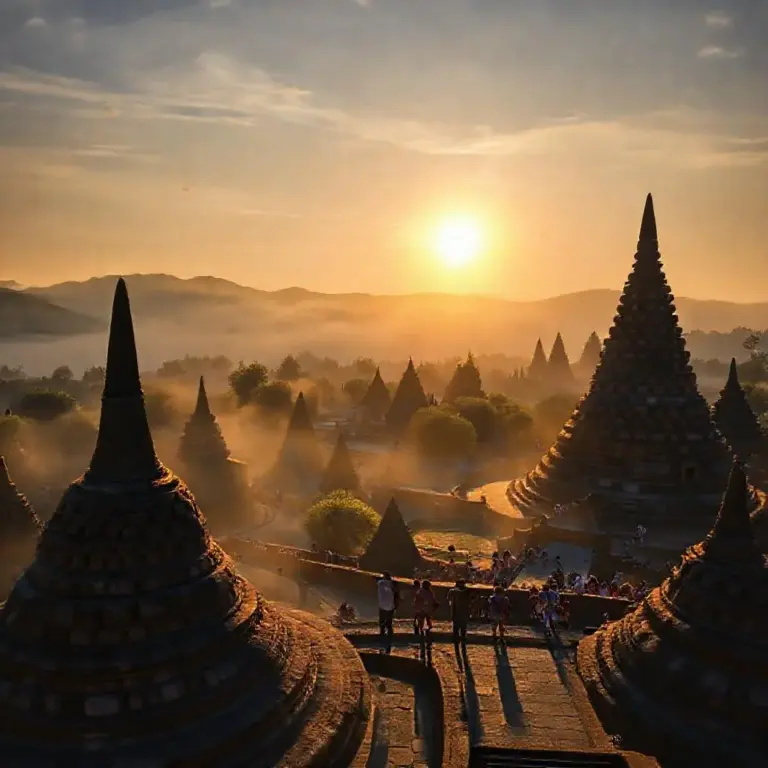
- Sunrise Viewing: The iconic sunrise view over Borobudur is best captured during the dry season when the skies are clearer.
While rain is common, it usually comes in short, heavy bursts. The advantage here is significantly lower tourist numbers and lush, vibrant green surroundings.
- Crowd Avoidance: If you dislike queues, this is your time.
- Atmosphere: The air is often cooler, making daytime exploration more comfortable.
The Ultimate Borobudur Sunrise Experience
Many argue that the single best reason Why Visit Borobudur and Prambanan is for the sunrise. To witness the first rays of light illuminating the stupas is magical. For Borobudur, you must purchase a special early entry ticket, often requiring booking via a licensed tour operator or hotel.
| Activity | Recommended Time | Notes |
|---|---|---|
| Borobudur Sunrise | 04:30 – 06:00 AM | Requires special early access ticket. |
| Prambanan Visit | Late Afternoon (3 PM onwards) | Ideal for catching the sunset glow on the Shiva temple. |
| Ramayana Ballet (Prambanan) | 7:30 PM (Dry Season Only) | Spectacular open-air performance. |
Logistics: Getting There and Exploring
Both temples are located near Yogyakarta (often called Jogja), making logistics relatively straightforward for Indonesia tourism. Borobudur is about 40 km northwest of the city center, while Prambanan is about 17 km southeast.
For maximum flexibility, hiring a private driver for a full day covering both sites is highly recommended. Alternatively, local buses are available, though significantly slower.
Essential Video Guide for Your Visit
To truly visualize the scale and beauty before you go, watching a professional documentary helps set the stage. This video offers a fantastic overview of the spiritual journey these sites represent.
The sheer scale and the detailed craftsmanship visible in the video underscore the primary reason Why Visit Borobudur and Prambanan: they are irreplaceable global cultural treasures that demand to be seen in person. Prepare for long walks, but know that every step reveals another layer of Javanese history.
Conclusion: A Journey Through Time
Borobudur and Prambanan are the cornerstones of historical exploration in Indonesia. They offer a profound look at the powerful interplay between ancient Buddhist and Hindu traditions that coexisted and flourished on this island. From the ascending path to enlightenment at Borobudur to the soaring tributes to the Hindu gods at Prambanan, these temples provide an unparalleled cultural and historical experience. Plan your trip during the dry season for the best views, and prepare to be humbled by the legacy of the ancient Javanese kingdoms.
คำถามที่พบบ่อย (FAQ)
Is it possible to visit both Borobudur and Prambanan in one day?
Yes, it is possible, but it requires an early start (often before 4:00 AM for Borobudur sunrise) and dedicated transportation. It will be a long, intense day, usually involving 10-12 hours of touring, but logistically feasible with a private driver.
Are climbing the terraces at Borobudur still allowed?
As of recent regulations aimed at preservation, visitors are generally restricted from climbing onto the main stupa platforms of Borobudur. Access is usually limited to the lower circular terraces, though this policy is subject to change based on conservation efforts.
What is the main difference in religious focus between the two temples?
Borobudur is dedicated to Buddhism, illustrating the path to Nirvana through its tiered structure and narrative reliefs. Prambanan is dedicated to Hinduism, focusing on the Trimurti (Brahma, Vishnu, Shiva) and depicting Hindu mythology, particularly the Ramayana.
Which temple is better for photography?
Borobudur is renowned for its iconic sunrise silhouette shots with the surrounding mist. Prambanan, with its sharp, tall spires, offers dramatic architectural photography, especially beautiful during golden hour or sunset.
References
- UNESCO World Heritage Centre: Borobudur Temple Compounds
- UNESCO World Heritage Centre: Prambanan Temple Compounds
- Borobudur and Prambanan: The Ultimate Visitor’s Guide to Java’s Majestic Temples — Tickets, Tours, and Tips for First-Time Travelers
- Planning Your Trip: How to Get There, Buy Tickets, Choose Guided Tours, and Book Sunrise/Sunset Experiences
- Exploring the Temples: Site Maps, Key Reliefs and Shrines, Photography Tips, and Accessibility Information