Handweaving techniques and motifs: materials, process, meanings, and how to identify authentic Lombok textiles
Lombok, an island in Indonesia’s West Nusa Tenggara province, is renowned not only for its pristine beaches but also for its profound cultural heritage. Central to this heritage are Lombok textiles, specifically the traditional handwoven fabrics known as Songket and Ikat. For the Sasak people, weaving is more than a craft; it is a rite of passage, a spiritual practice, and a visual language that communicates the island’s history and values.
The Sacred Process: From Cotton to Cloth
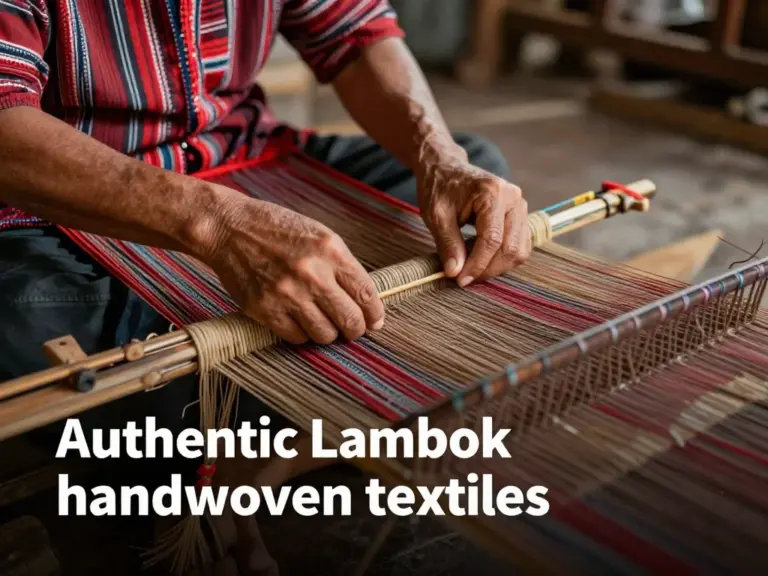
The creation of authentic Lombok textiles is a labor-intensive journey that begins long before the loom is touched. Traditionally, the process involves several meticulous stages. First, raw cotton is harvested and spun by hand into thread. This thread is then strengthened using a unique process involving rice water.
Natural dyes are a hallmark of high-quality Sasak weaving. Artisans source colors from the environment: mahogany bark for deep browns, indigo leaves for blues, and turmeric for vibrant yellows. The actual weaving is performed on a back-strap loom (gedogan), where the weaver sits on the floor, using her body weight to provide tension for the warp threads. A single piece of complex Songket can take anywhere from several weeks to three months to complete.
Symbolism in Motifs: More Than Just Patterns
Every pattern in Lombok textiles carries a specific meaning, often rooted in the Sasak philosophy of life and nature. Understanding these motifs allows a deeper appreciation of the cloth:
- Subahnale: Perhaps the most famous motif, its name translates to “Praise be to God.” It features intricate geometric shapes and represents the patience and devotion of the weaver.
- Kekek: A motif representing the lizard, symbolizing fertility, protection, and the ability to adapt to one’s environment.
- Tokek: The gecko motif is believed to bring good luck and prosperity to the household.
- Wayang: Depictions of human figures or shadows, often used in ceremonial cloths to represent ancestral spirits.
How to Identify Authentic Lombok Textiles
With the rise of mass production, distinguishing a genuine handwoven piece from a machine-made imitation is crucial for travelers. Use the following guide to ensure you are supporting local artisans and purchasing a piece of true heritage.
| Feature | Authentic Handwoven | Machine-Made (Print) |
|---|---|---|
| Texture | Slightly irregular, tactile ridges. | Perfectly smooth and uniform. |
| Reverse Side | Mirror image of the front or loose threads. | Often white or faded on the back. |
| Smell | Earthy, organic scent (from natural dyes). | Chemical or plastic scent. |
| Price | Higher (reflecting weeks of labor). | Unusually cheap. |
Where to Experience Weaving in Lombok
To see these textiles in their cultural context, a visit to the central and southern parts of the island is essential. The village of Sukarara is the primary hub for Songket, where visitors can even try their hand at the loom. Sade Village offers a more traditional setting, where the Sasak lifestyle remains largely unchanged, and textiles are displayed against the backdrop of thatched-roof houses.
คำถามที่พบบ่อย (FAQ)
Q: What is the difference between Songket and Ikat?
A: Songket involves weaving gold or silver metallic threads (or colored cotton) into the base fabric to create a raised pattern. Ikat is a resist-dyeing technique where the threads are dyed before they are woven into the cloth.
Q: Are natural dyes better than synthetic ones?
A: Natural dyes are highly valued for their eco-friendliness and soft, organic hues that age beautifully. However, they are more labor-intensive and expensive than synthetic dyes.
Q: Can men weave in Lombok culture?
A: Traditionally, weaving is a skill passed down from mothers to daughters. In many Sasak villages, a woman must master weaving before she is allowed to marry. Men typically handle the farming and external trade.
References
- Indonesia Travel – Traditional Textiles
- UNESCO Intangible Cultural Heritage – Indonesian Craftsmanship
- Sasak Villages of Lombok Handweaving Architecture and Etiquette: A Complete Guide for Visitors and Cultural Enthusiasts
- Overview of Sasak village history, cultural context, and the role of weaving in Lombok society
- Traditional Sasak house architecture: layout, materials, symbolism, and preservation efforts