When is the best time to see dolphins in Lovina and what seasonal/weather factors affect sightings (best months, sunrise times, tides)?
- When is the best time to see dolphins in Lovina and what seasonal/weather factors affect sightings (best months, sunrise times, tides)?
- The Best Months for Dolphin Watching in Lovina
- Sunrise Times and Daily Schedules
- How Weather and Tides Affect Your Sightings
- Expert Tips for a Successful Trip
- คำถามที่พบบ่อย (FAQ)
- What is the absolute best month to visit Lovina for dolphins?
- Are dolphin sightings guaranteed in Lovina?
- What time do the dolphin tours start?
- Does it matter if it rains?
Lovina Beach, nestled on the quiet northern coast of Bali, is a world-renowned destination for marine life enthusiasts. Unlike the high-energy surf breaks of the south, Lovina offers calm, dark volcanic sands and crystal-clear waters. The primary draw here is the sunrise dolphin watching tour, an iconic experience for anyone visiting Indonesia. However, to ensure a successful sighting, understanding the best time to see dolphins in Lovina is crucial. Seasonal shifts, daily weather patterns, and even the lunar cycle play significant roles in how these majestic creatures interact with the traditional Jukung boats.
The Best Months for Dolphin Watching in Lovina
While dolphins reside in the waters off North Bali year-round, the quality of the experience is heavily dictated by Bali’s two distinct seasons: the dry season and the rainy season. For the highest probability of sightings and the most comfortable boat ride, the dry season (April to October) is widely considered the peak period.
During these months, the sea is generally flat and calm, making it much easier to spot the dorsal fins breaking the surface. July and August are particularly popular as the weather is consistently sunny. Conversely, during the rainy season (November to March), while dolphins are still present, heavy morning downpours or choppy swells can lead to tour cancellations or reduced visibility. If you visit in the shoulder months like May or September, you often find a perfect balance of great weather and fewer tourists.
Sunrise Times and Daily Schedules
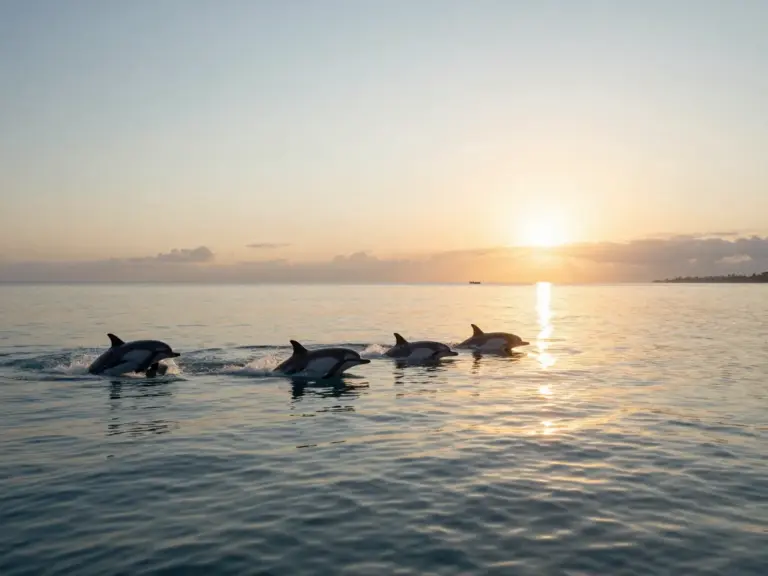
Timing is everything when it comes to the best time to see dolphins in Lovina. The dolphins are most active near the shore during the early morning hours as they hunt for small fish and squid that move toward the surface in the low light. Standard tours typically begin at 6:00 AM, just as the first light of dawn begins to paint the sky.
Being on the water between 6:00 AM and 8:00 AM provides two major benefits. First, the lighting is spectacular for photography, offering a silhouette effect against the rising sun over the mountains. Second, the water temperature is cooler, which dolphins prefer. As the sun rises higher and the water warms up, the dolphins tend to move further offshore and dive deeper, making them harder to track.
How Weather and Tides Affect Your Sightings
Weather and oceanographic factors are the invisible hands that guide dolphin behavior. While rain doesn’t necessarily bother the dolphins, it significantly impacts the human experience. High winds create “white caps” on the waves, which camouflage the dolphins, making them nearly impossible to find for the boat captains.
| Factor | Impact on Sightings | Optimal Condition |
|---|---|---|
| Wind Speed | High wind creates waves that hide dolphins. | Low wind (< 10 knots) |
| Tides | Affects the proximity of prey to the shore. | Incoming/High Tide |
| Cloud Cover | Affects visibility and photography light. | Clear or Partly Cloudy |
Tides also play a subtle role. Many local captains believe that an incoming tide brings more nutrient-rich water closer to the coast, which in turn attracts the schools of fish that dolphins feed on. However, in Lovina, the depth drops off quite quickly, so the tidal influence is less drastic than in southern Bali locations like Sanur or Nusa Dua.
Expert Tips for a Successful Trip
To maximize your chances and enjoy the trip responsibly, consider these expert recommendations:
- Book a Private Boat: While more expensive, a private Jukung allows you to stay longer in one spot or move away from the crowds of other boats.
- Check the Forecast: Use apps like Windguru or Windy to check for swell height and wind speed before booking your morning.
- Respect the Wildlife: Ensure your captain does not chase the dolphins or cut off their path. Ethical watching leads to more natural behavior and better sightings.
คำถามที่พบบ่อย (FAQ)
References
- Responsible Dolphin Watching in Lovina: Best Time, Ethical Guidelines, and Responsible Operators for a Sustainable Experience
- What ethical practices should visitors follow during dolphin tours in Lovina to minimize disturbance (distance, noise, no feeding, boat behavior)?
- How to choose responsible dolphin-watching operators in Lovina (credentials, permits, community involvement, eco-certifications, reviews)?