Indonesia Drone Rules, Permits, and No-Fly Zones: Complete Guide for Safe and Legal Flying
Capturing the emerald rice terraces of Bali or the volcanic peaks of Java from the sky is a dream for many travelers. However, navigating the Indonesia drone rules is essential to ensure your trip remains stress-free and legal. As drone technology becomes more accessible, the Indonesian government has implemented specific regulations to manage airspace safety and privacy across the archipelago.
Understanding the Legal Framework for Drones in Indonesia
The primary authority governing drone operations in Indonesia is the Ministry of Transportation, specifically through the Directorate General of Civil Aviation (DGCA). The regulations are largely based on the weight of the drone and the purpose of the flight (recreational vs. commercial). For most tourists, flying a drone under 2kg for recreational purposes is straightforward, provided you follow the basic safety distance rules.
Key Indonesia Drone Rules for Tourists
To fly safely in Indonesia, you must adhere to the following core guidelines established by the PM 163 of 2015 and subsequent updates:
- Maximum Altitude: Do not fly higher than 150 meters (approx. 492 feet) above ground level.
- Visual Line of Sight (VLOS): You must maintain a direct, unaided visual contact with your drone at all times.
- Weight Restrictions: Drones weighing more than 2kg require official registration and certification.
- Distance from Airports: Stay at least 15km away from any airport or heliport.
- Crowd Safety: Avoid flying directly over crowds or densely populated areas.
Permits and Registration: Do You Need Them?
If you are a hobbyist flying a standard consumer drone (like a DJI Mini or Air series) for personal use, you generally do not need a pilot license. However, if your drone exceeds 2kg or if you are filming for commercial gain (sponsored content, professional film), you must register your drone through the SIDOPI (Sistem Registrasi Drone dan Pilot Indonesia) online portal.
| Drone Type | Permit Required | Registration Required |
|---|---|---|
| Recreational (< 2kg) | No (Mostly) | No |
| Commercial | Yes | Yes |
| Heavy (> 2kg) | Yes | Yes |
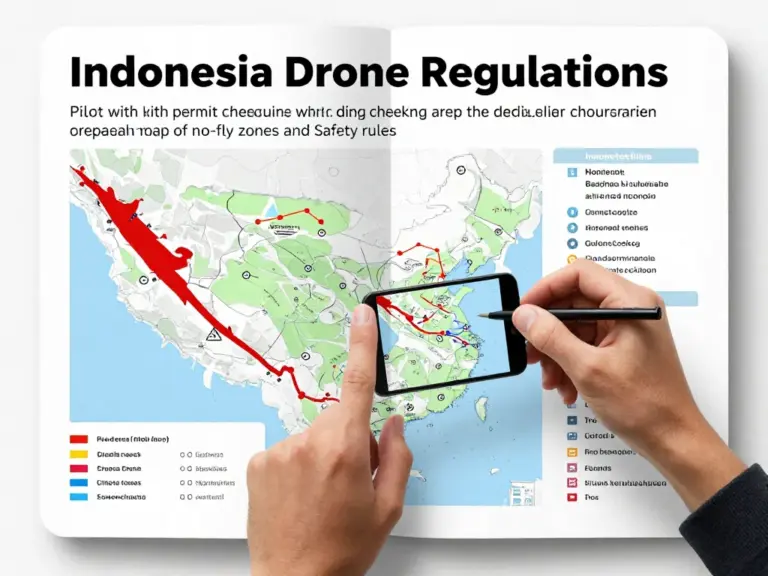
Identifying No-Fly Zones (NFZ) in Indonesia
Indonesia has several restricted areas where drone flight is strictly prohibited or requires special military clearance. These include:
- Prohibited Areas: Airspace over the Presidential Palace, military installations, and national strategic objects.
- Restricted Areas: Certain national parks (like Komodo National Park) require an additional permit (SIMAKSI) and a fee to fly.
- Airports: Major hubs like Soekarno-Hatta (Jakarta) and Ngurah Rai (Bali) have massive geofenced zones.
To stay updated, it is highly recommended to use apps like ‘AirMap’ or ‘DJI Fly’ which integrate local NFZ data, though always cross-reference with official DGCA notices.
คำถามที่พบบ่อย (FAQ)
Can I bring my drone into Indonesia through customs?
Yes, you can bring a drone for personal use. It is recommended to carry it in your carry-on luggage with batteries properly protected in LiPo safety bags.
Do I need a permit to fly a drone in Bali?
For small drones under 2kg used recreationally, no specific permit is needed for general areas. However, sacred temples and specific beaches may have local bans or require a small donation/fee to the local Banjar.
What are the penalties for breaking drone laws in Indonesia?
Violations can lead to heavy fines (up to 4 billion IDR) and potential imprisonment for endangering aviation safety. Confiscation of equipment is also common for unauthorized flying in restricted zones.
Is insurance mandatory for drone flying in Indonesia?
While not strictly mandatory for recreational flyers under 2kg, it is highly recommended to have third-party liability insurance to cover any accidental damage or injury.
References
- Directorate General of Civil Aviation (DGCA) Indonesia
- Official Indonesia Tourism Portal
- SIDOPI Drone Registration System
- How to determine if your drone requires registration or a permit in Indonesia (including weight limits, commercial vs recreational use, and the Directorate General of Civil Aviation requirements)
- Understanding Indonesia’s no-fly zones and restricted airspace (military areas, airports, government facilities, and temporary restrictions during events)
- Step-by-step process to apply for drone permits and flight authorization in Indonesia (required documents, online portals, timelines, and fees)