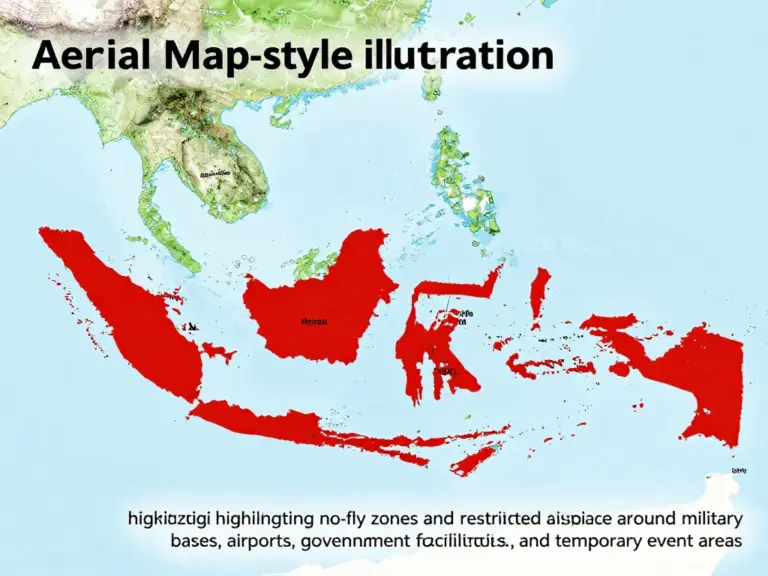
Understanding Indonesia’s no-fly zones and restricted airspace (military areas, airports, government facilities, and temporary restrictions during events)
- Understanding Indonesia’s no-fly zones and restricted airspace (military areas, airports, government facilities, and temporary restrictions during events)
Exploring the vast archipelago of Indonesia from the air offers breathtaking perspectives, whether you are a commercial pilot, a drone enthusiast, or a traveler curious about aviation safety. However, navigating the skies requires a deep understanding of Indonesia’s no-fly zones and restricted airspace. From bustling international airports to sensitive military installations and sprawling government complexes, the Indonesian government maintains strict regulations to ensure national security and public safety.
The Legal Framework of Indonesian Airspace
The management of Indonesia’s sovereign airspace is governed primarily by Law No. 1 of 2009 on Aviation and Government Regulation No. 4 of 2018 regarding the Security of the Airspace of the Republic of Indonesia. These laws categorize airspace into several types, including Prohibited Areas, Restricted Areas, and Danger Areas. For tourists and drone operators, staying informed about these zones is not just a matter of courtesy—it is a legal obligation that carries significant penalties if ignored.
Military Areas and Strategic Assets
Indonesia maintains several permanent restricted zones over military bases and strategic installations. These include Air Force bases like Halim Perdanakusuma in Jakarta or Iswahjudi in East Java. Flying near these areas without explicit military clearance is strictly prohibited. These zones are often marked as ‘Restricted’ (R) or ‘Prohibited’ (P) on aeronautical charts. Security forces are highly vigilant, and unauthorized entry into these zones can lead to the interception of aircraft or the confiscation of equipment.
Airport Buffer Zones and Aviation Safety
Safety is the top priority near Indonesia’s busy airports, such as Soekarno-Hatta (Jakarta), Ngurah Rai (Bali), and Juanda (Surabaya). No-fly zones typically extend in a radius around the airport and along the approach and departure paths. For drone users, the standard regulation prohibits flying within 5 kilometers of any airport perimeter or within the Controlled Airspace (CTR). This prevents dangerous mid-air collisions with commercial aircraft carrying hundreds of passengers.
| Zone Type | Description | Typical Restriction |
|---|---|---|
| Prohibited (P) | National Defense Sites | No flight allowed at any time |
| Restricted (R) | Military Training/Gov Facilities | Flight allowed only with permit |
| Danger (D) | Live Fire Exercises/Volcanoes | Flight is hazardous |
Government Facilities and National Landmarks
In addition to military bases, certain government facilities are designated as no-fly zones. This includes the Istana Merdeka (Presidential Palace) in Jakarta and other official residences. Furthermore, sensitive infrastructure such as oil refineries, power plants, and chemical storage facilities are often protected by restricted airspace to prevent accidents or intentional interference. When visiting cultural landmarks like Borobudur or Prambanan, visitors should check for local drone bans often implemented to preserve the integrity of the heritage site.
Temporary Restrictions During Major Events
Indonesia frequently hosts international events, such as the G20 Summit or the ASEAN Summit. During these times, the Ministry of Transportation and the Indonesian National Armed Forces (TNI) issue temporary flight restrictions (TFR). These zones are dynamic and can cover entire cities or specific venues for the duration of the event. It is essential for travelers and operators to check NOTAMs (Notice to Airmen) or official government announcements before flying during high-profile international gatherings.
Drone Regulations for Tourists
If you are bringing a drone to Indonesia for tourism, you must adhere to PM 163 of 2015 and its subsequent updates. Key rules include:
- Maximum flight altitude of 150 meters (approx. 500 feet).
- Maintaining a visual line of sight (VLOS) at all times.
- No flying over crowds or densely populated areas.
- No flying at night without a specific permit.
Failure to comply can result in heavy fines or even imprisonment under the Aviation Law.
คำถามที่พบบ่อย (FAQ)
Can I fly a drone in Bali?
Yes, but you must avoid no-fly zones like Ngurah Rai Airport, military areas, and certain sacred temples. Always check with local authorities and follow the 150m altitude limit.
How do I know where the no-fly zones are in Indonesia?
You can use official apps like ‘SIDOPI’ (from the Indonesian Ministry of Transportation) or check aeronautical charts and NOTAMs for real-time updates.
What happens if I fly in a restricted military zone?
Unauthorized flight in military airspace is a serious offense in Indonesia. Your equipment may be jammed or confiscated, and you could face legal prosecution under national security laws.
Do I need a permit for a small hobbyist drone?
For drones weighing less than 2kg used for recreational purposes, you generally do not need a permit as long as you stay outside restricted areas and follow basic safety rules. However, commercial use always requires a permit.
References
- Directorate General of Civil Aviation (DGCA) Indonesia
- Indonesian National Armed Forces (TNI) Official Portal
- Wonderful Indonesia Official Tourism Website
- Indonesia Drone Rules, Permits, and No-Fly Zones: Complete Guide for Safe and Legal Flying
- How to determine if your drone requires registration or a permit in Indonesia (including weight limits, commercial vs recreational use, and the Directorate General of Civil Aviation requirements)
- Step-by-step process to apply for drone permits and flight authorization in Indonesia (required documents, online portals, timelines, and fees)