Why Community-Based Tourism Matters in Sumba: Benefits for Local Weavers, Conservation, and Cultural Preservation
Sumba, an island in eastern Indonesia, is a land where time seems to stand still. Known for its rugged landscapes, megalithic tombs, and the intricate art of Ikat weaving, Sumba is rapidly becoming a focal point for sustainable travel. Central to this evolution is community-based tourism in Sumba, a model that ensures the benefits of travel flow directly to the people who call this island home. Unlike mass tourism, this approach prioritizes the well-being of local residents, the health of the environment, and the sanctity of indigenous traditions.
The Economic Lifeline for Local Weavers
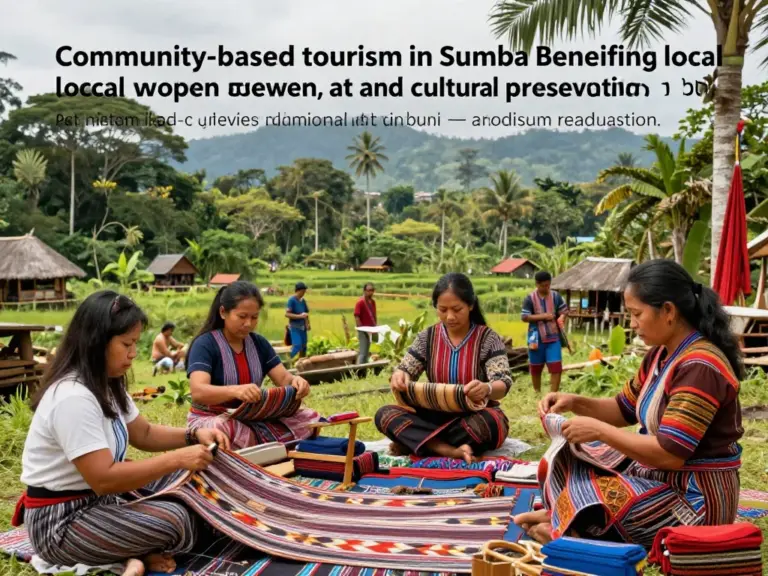
One of the most profound impacts of community-based tourism in Sumba is the support it provides to the island’s legendary weavers. Sumba Ikat is world-renowned for its complexity and symbolic depth. By visiting weaving villages directly, tourists provide a sustainable income source that bypasses exploitative middlemen. This direct commerce allows weavers to invest in high-quality natural dyes and pass their skills down to the younger generation, ensuring this ancient craft does not fade away in the face of modernization.
Conservation and Environmental Stewardship
Sumba’s ecosystem is fragile, characterized by unique savannahs and deciduous forests. Community-based tourism in Sumba incentivizes locals to protect their natural surroundings. When a forest or a pristine beach becomes a source of sustainable income through eco-trekking or guided tours, the community is more likely to defend it against illegal logging or destructive fishing practices. This creates a symbiotic relationship where the environment thrives because the community thrives.
| Benefit Category | Impact of Community-Based Tourism |
|---|---|
| Economic | Direct income for artisans and local guides. |
| Environmental | Reduced reliance on extractive industries. |
| Social | Strengthened community bonds and pride. |
Preserving the Marapu Culture
The heart of Sumba is its Marapu religion—a form of ancestral worship that dictates every aspect of life, from house construction to funeral rites. Community-based tourism in Sumba encourages the preservation of these traditions by validating their value in the eyes of the world. When travelers show genuine respect for the Pasola festival or the architecture of traditional houses (Uma Mbatangu), it reinforces the community’s desire to maintain their unique identity against the pressures of global homogenization.
คำถามที่พบบ่อย (FAQ)
What is the best way to support local weavers in Sumba?
The best way is to visit traditional villages like Prailiu or Lambanapu and purchase Ikat fabrics directly from the weavers. This ensures they receive the full value of their work.
How does tourism help conservation in Sumba?
By creating jobs that depend on healthy ecosystems (like birdwatching or nature trekking), tourism provides a financial alternative to activities that might harm the environment.
Is it respectful to visit Sumba’s traditional villages?
Yes, provided you follow local customs, such as bringing a small gift of betel nut (sirih pinang) or making a donation, and always asking for permission before taking photographs of people or rituals.
References
- Wonderful Indonesia: Exploring the Wonders of Sumba
- UNESCO: Intangible Cultural Heritage and Sustainable Tourism
- Community-Based Tourism in Sumba: Weaving Villages, Beach Cleanups, and Sustainable Community Impact
- How Weaving Villages Operate: Local Craft Practices, Visitor Experiences, and Economic Empowerment for Artisans
- Organizing Responsible Beach Cleanups in Sumba: Best Practices, Community Involvement, and Environmental Outcomes