Community-Based Tourism in Sumba: Weaving Villages, Beach Cleanups, and Sustainable Community Impact
Community-Based Tourism in Sumba represents a transformative approach to travel, where the local Marapu culture and the island’s pristine landscapes are preserved through active local participation. Unlike mass tourism destinations, Sumba offers a raw, authentic experience that prioritizes the well-being of its residents and the environment. Visitors are not just observers but active participants in a movement that supports weaving villages and environmental conservation.
The Heart of Sumba: Authentic Weaving Villages
One of the cornerstones of Community-Based Tourism in Sumba is the preservation of traditional weaving villages. Villages like Prailiu and Lambanapu are living museums where the ancient art of ‘Ikat’ weaving is passed down through generations. These textiles are more than just fabric; they are storybooks woven with natural dyes and symbolic motifs that represent the Sumba people’s spiritual beliefs. By visiting these villages, tourists provide direct financial support to female artisans, ensuring this labor-intensive craft remains a viable livelihood.
Environmental Stewardship: Beach Cleanups and Coastal Care
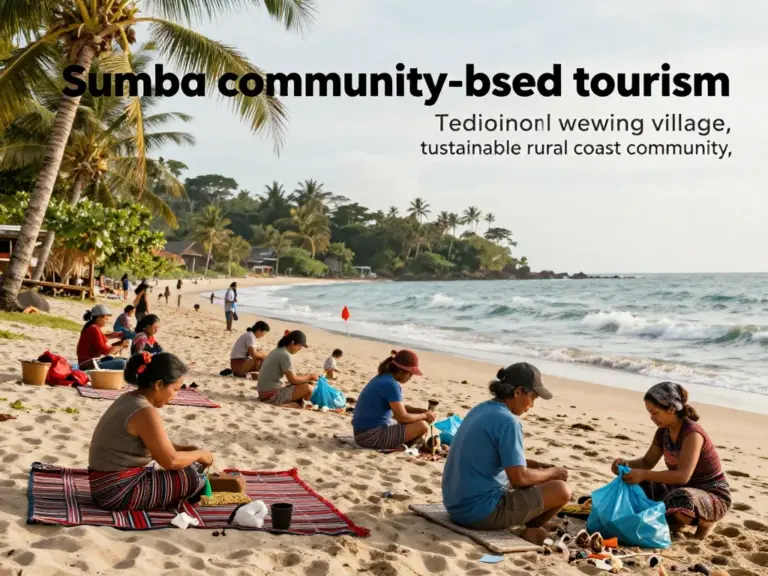
Sumba’s coastline is legendary, featuring world-class surf breaks and untouched white sands. However, the rise in global plastic pollution poses a threat to these ecosystems. Community-led initiatives have integrated beach cleanups into the tourist itinerary. Local youth groups often lead these efforts, educating visitors on the delicate marine biodiversity of Sumba. This proactive approach ensures that the ‘sustainable community impact’ is visible, keeping beaches like Nihiwatu and Walakiri pristine for future generations.
Sustainable Community Impact: Beyond the Photo
The true essence of Community-Based Tourism in Sumba lies in its long-term impact. Revenue generated from homestays, guided village tours, and local workshops is often reinvested into community projects such as clean water access and solar energy. This model empowers the Sumbanese people to manage their own resources while sharing their unique heritage with the world. It shifts the power dynamic of tourism from exploitation to a symbiotic partnership.
| Activity | Community Benefit | Environmental Impact |
|---|---|---|
| Village Homestays | Direct income for families | Low carbon footprint |
| Ikat Workshops | Preservation of culture | Use of natural organic dyes |
| Guided Nature Treks | Employment for local youth | Conservation awareness |
How to Visit Responsibly
To maximize your positive contribution, travelers are encouraged to hire local guides, respect traditional Marapu customs, and minimize waste. Engaging with Community-Based Tourism in Sumba means being mindful of the cultural etiquette, such as asking for permission before taking photos in sacred areas and purchasing crafts directly from the makers.
คำถามที่พบบ่อย (FAQ)
What is the best time to visit Sumba for community tourism?
The dry season, from May to October, is the ideal time to visit. This period allows for easier access to remote weaving villages and better conditions for beach activities and cleanups.
How does tourism help the weaving villages in Sumba?
Tourism provides a direct market for Ikat textiles, allowing weavers to earn a fair wage. It also encourages younger generations to learn the craft, preventing the tradition from disappearing.
Are the beach cleanups organized by locals?
Yes, many beach cleanups are grassroots initiatives led by local Sumba communities and eco-conscious surf camps to protect their natural heritage from plastic waste.
Do I need a guide to visit the traditional villages?
While not strictly mandatory, hiring a local guide is highly recommended. They act as cultural translators, ensuring you follow proper etiquette and that your visit truly benefits the community.
References
- Indonesia Travel – Exploring the Wonders of Sumba
- UNESCO – Intangible Cultural Heritage and Sustainable Tourism
- Why Community-Based Tourism Matters in Sumba: Benefits for Local Weavers, Conservation, and Cultural Preservation
- How Weaving Villages Operate: Local Craft Practices, Visitor Experiences, and Economic Empowerment for Artisans
- Organizing Responsible Beach Cleanups in Sumba: Best Practices, Community Involvement, and Environmental Outcomes