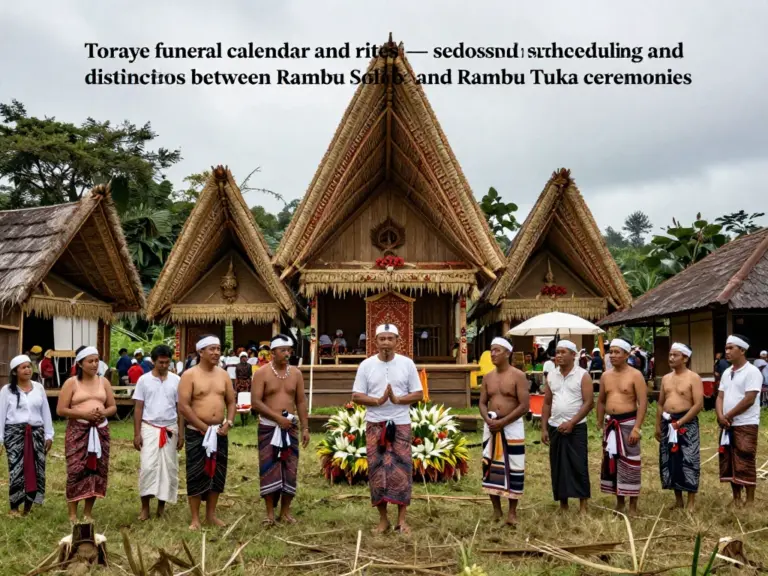
Toraja Funeral Calendar and Types of Rites — timing, differences between funeral classes (Rambu Solo’, Rambu Tuka), local seasonality, and how families schedule ceremonies
In the misty highlands of South Sulawesi, Indonesia, the Toraja people practice one of the world’s most complex and visually stunning funeral traditions. Understanding the Toraja Funeral Calendar is essential for any traveler or cultural enthusiast looking to witness these sacred events. Unlike Western cultures where funerals occur shortly after death, a Torajan funeral (Rambu Solo’) is a grand celebration of life that requires months or even years of meticulous planning, animal sacrifices, and community gathering.
Understanding the Two Pillars: Rambu Solo’ vs. Rambu Tuka
The Torajan belief system, Aluk To Dolo, divides life into two distinct spheres of ceremonies. Understanding the Toraja Funeral Calendar starts with distinguishing between these two rituals:
- Rambu Solo’ (Descending Smoke): These are the funeral rites. They are held after midday as the sun begins to descend, symbolizing the transition of the soul toward Puya (the land of souls).
- Rambu Tuka (Ascending Smoke): These are celebrations of joy, such as house warmings (Tongkonan dedication), harvests, and weddings. These must be held before noon while the sun is rising.
Crucially, these two types of ceremonies cannot overlap. A village or family cannot hold a Rambu Tuka if a Rambu Solo’ is currently in progress, ensuring the spiritual balance of the community is maintained.
The Ritual Classes of Rambu Solo’
Not all funerals are created equal. The scale and timing of the ceremony depend heavily on the social status of the deceased and the financial capability of the family. The Toraja Funeral Calendar is often dictated by which class of rite is being performed:
| Rite Class | Description | Sacrifice Requirement |
|---|---|---|
| Dipasangbongi | Lowest class, held for one night only. | 1 Buffalo |
| Dipatallungbongi | Middle class, lasting three nights. | 3-5 Buffaloes |
| Dipalimangbongi | Upper-middle class, lasting five nights. | 5-10 Buffaloes |
| Sapuran Randan | The highest noble class, lasting 7+ nights. | 24+ Buffaloes (including 1 Tedong Bonga) |
The ‘Tedong Bonga’ or albino buffalo is the most expensive element, sometimes costing upwards of $50,000 USD. The need to acquire these animals is a major factor in how families schedule ceremonies.
Seasonality and the Toraja Funeral Calendar
While funerals can technically happen year-round, the Toraja Funeral Calendar peaks during specific months. This is driven by two factors: weather and the Indonesian holiday schedule.
July and August: This is the “Grand Season.” Since many Torajans work in other parts of Indonesia or abroad (the diaspora), they return home during the school holidays. Most noble-class funerals are scheduled during this window to ensure the maximum number of relatives can attend.
December: A secondary peak occurs during the Christmas holidays. As Tana Toraja is a predominantly Christian enclave in Indonesia, the end-of-year break is another popular time for families to hold rites.
How Families Schedule the Ceremony
The scheduling process is a democratic but complex family affair. When a person dies, they are considered ‘To Makula’ (a sick person) and kept in the family home. They are not ‘dead’ until the first buffalo is sacrificed at the Rambu Solo’.
- Family Meeting (Kombongan): Relatives gather to decide the scale of the rite and the date.
- Resource Accumulation: The family saves money and sources buffaloes and pigs.
- Construction: A ‘Rante’ (ceremony site) with temporary bamboo housing (Lakkian) for guests must be built.
- Coordination: The family must coordinate with local leaders to ensure no other major rites are happening simultaneously in the same area.
คำถามที่พบบ่อย (FAQ)
Q: Can tourists attend a Toraja funeral?
A: Yes, tourists are generally welcome. However, you should bring a gift (usually a carton of cigarettes or sugar) and dress respectfully in dark colors. It is highly recommended to hire a local guide to explain the etiquette.
Q: How do I find the exact dates for a funeral?
A: There is no official digital calendar. The best way is to check with local hotels or guides in Rantepao once you arrive, as they stay informed about upcoming village schedules.
Q: Why do they wait so long to bury the body?
A: The delay allows the family to save enough money for the required animal sacrifices and gives time for distant relatives to travel back to the highlands.
References
Official Indonesia Tourism – Tana Toraja Guide
UNESCO World Heritage Centre – Tana Toraja Traditional Settlement
- Toraja Funeral Rites Explained: Customs, Calendar and Visitor Guidelines for Respectful Travel
- Overview of Toraja Funeral Traditions and Their Cultural Significance — what tongkonan houses, tau-tau effigies, and burial cliff practices mean historically and spiritually
- What to Expect at a Toraja Funeral Ceremony — step-by-step flow of events, typical rituals (slaughtering, dances, music), duration, photography etiquette, and costs visitors might encounter