What to Expect at a Toraja Funeral Ceremony — step-by-step flow of events, typical rituals (slaughtering, dances, music), duration, photography etiquette, and costs visitors might encounter
- What to Expect at a Toraja Funeral Ceremony — step-by-step flow of events, typical rituals (slaughtering, dances, music), duration, photography etiquette, and costs visitors might encounter
The Toraja funeral ceremony, known locally as Rambu Solo, is perhaps the most complex and fascinating funeral tradition in the world. For the people of Tana Toraja in South Sulawesi, Indonesia, death is not a sudden goodbye but a gradual transition that requires a grand celebration to send the soul to the land of spirits, Puya.
The Essence of Rambu Solo
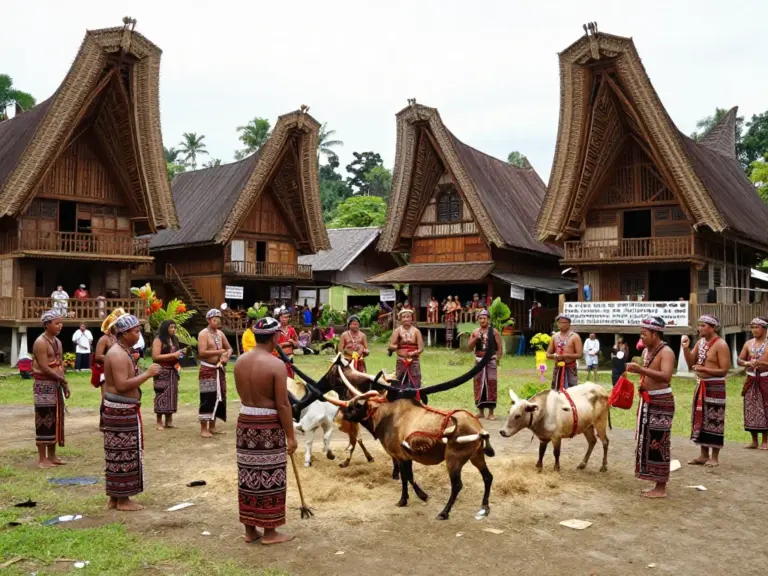
A Toraja funeral ceremony is far from a somber, quiet affair. It is a vibrant, multi-day event involving the entire community. The scale of the ceremony depends on the social status of the deceased, with the most elite families hosting festivals that last up to a week. Visitors are often welcomed, provided they follow local customs and show respect for the sanctity of the event.
Step-by-Step Flow of Events
While every ceremony varies, a typical high-noble funeral follows a specific progression over 3 to 7 days:
- Day 1: Receiving the Guests — Families arrive in traditional dress, bringing gifts like pigs or buffalo.
- Day 2-3: Ritual Performances — This includes the Ma’badong (traditional dance) and the start of animal sacrifices.
- Day 4: The Main Sacrifice — The most critical day where water buffalo are slaughtered to assist the soul’s journey.
- Day 5: The Procession — The coffin is carried from the family home (Tongkonan) to the burial site.
Typical Rituals: Slaughtering, Dances, and Music
The slaughtering of water buffalo (Tedong) is the most visceral part of the Toraja funeral ceremony. Torajans believe that the more buffalo sacrificed, the faster the soul reaches heaven. The white buffalo is the most prized and expensive.
Dances and Music: The Ma’badong is a ceremonial dance where men form a circle, link fingers, and chant soulful songs for hours. It is a mesmerizing display of communal grief and honor. Traditional bamboo flutes (Pa’pompang) often provide a hauntingly beautiful soundtrack to the proceedings.
Visitor Etiquette and Photography
As a guest, you are witnessing a sacred family moment. Follow these rules to remain respectful:
| Aspect | Requirement |
|---|---|
| Dress Code | Wear dark colors (black or dark blue). Avoid bright or revealing clothes. |
| Gifts | Never arrive empty-handed. Bring a carton of cigarettes or a bag of sugar/coffee as a gift for the family. |
| Photography | Photography is generally allowed, but always ask permission before taking close-ups of people. Do not use flash during sensitive prayers. |
| Positioning | Do not stand higher than the family or the coffin during the procession. |
Costs Visitors Might Encounter
Attending a ceremony is technically free, but there are associated costs for a respectful visit:
- Guide Fees: Hiring a local guide is essential (approx. 300,000 – 500,000 IDR per day). They act as your cultural bridge.
- Gifts: A carton of cigarettes costs around 250,000 – 350,000 IDR.
- Donations: Some villages may ask for a small entrance donation (20,000 – 50,000 IDR) to maintain the site.
คำถามที่พบบ่อย (FAQ)
When is the best time to see a Toraja funeral ceremony?
Is it okay for children to attend?
Do I need an invitation?
References
- Official Indonesia Tourism – Tana Toraja Guide
- UNESCO World Heritage Centre – Tana Toraja Traditional Settlement
- Toraja Funeral Rites Explained: Customs, Calendar and Visitor Guidelines for Respectful Travel
- Overview of Toraja Funeral Traditions and Their Cultural Significance — what tongkonan houses, tau-tau effigies, and burial cliff practices mean historically and spiritually
- Toraja Funeral Calendar and Types of Rites — timing, differences between funeral classes (Rambu Solo’, Rambu Tuka), local seasonality, and how families schedule ceremonies