How Do Orangutan Rehabilitation Programs Work and Why Do They Matter?
For many travelers visiting the lush rainforests of Indonesia, the chance to witness the ‘Person of the Forest’—the orangutan—is a bucket-list experience. However, beneath the beauty of the jungle lies a critical story of survival. Understanding how orangutan rehabilitation programs work offers a profound insight into the fragility of these great apes and the dedicated efforts required to save them from the brink of extinction.
The Critical Need for Rehabilitation
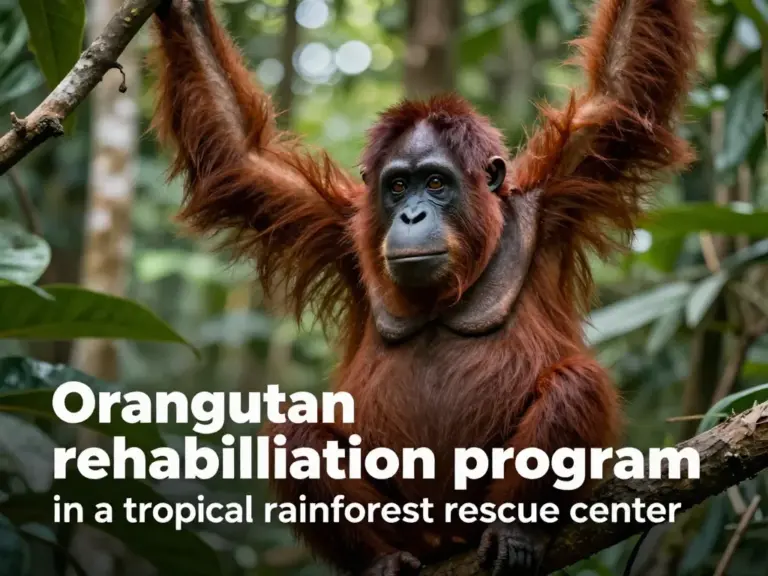
Orangutans are among our closest relatives, sharing nearly 97% of our DNA. Unfortunately, they face severe threats from habitat loss due to palm oil plantations, illegal pet trades, and human-wildlife conflict. When an infant orangutan is orphaned, it lacks the necessary survival skills typically passed down by its mother. This is where specialized centers step in. These facilities are not zoos; they are rigorous schools designed to teach orphaned apes how to be wild again.
How Do Rehabilitation Programs Work?
The journey from rescue to release is a long, multi-stage process that can take up to a decade. It is a testament to patience and scientific dedication.
1. Initial Rescue and Health Quarantine
Upon arrival, rescued orangutans are immediately placed in quarantine. Many arrive traumatized, malnourished, or carrying diseases. Veterinarians provide urgent medical care and ensure the individuals are healthy before they can interact with other orangutans, preventing the spread of potential illnesses.
2. The Forest School
This is the heart of the rehabilitation process. Young orangutans are taken to “forest school” where human caregivers—acting as surrogate mothers—teach them to climb, forage for wild food, and identify predators. They learn to navigate the canopy, a skill essential for their survival in the wild.
3. Soft Release and Monitoring
Before full independence, orangutans are often moved to a semi-wild island or a protected forest block. This “soft release” allows them to live in a natural environment while still having access to supplemental food and veterinary observation. It is a safety net that ensures they are ready for the final step.
Why These Efforts Matter
Beyond the individual survival of the ape, these programs are essential for ecosystem health. Orangutans are known as the “gardeners of the forest.” They play a crucial role in seed dispersal, which maintains the biodiversity of the Indonesian rainforests. By saving the orangutan, we are actively preserving the carbon-sequestering jungles that are vital in the fight against climate change.
| Benefit | Impact |
|---|---|
| Biodiversity | Preserves complex jungle ecosystems. |
| Climate Action | Protects peatlands and carbon sinks. |
| Tourism | Promotes ethical, sustainable wildlife tourism. |
How You Can Support
As a visitor to Indonesia, you have the power to help. Choose eco-friendly tours that respect wildlife boundaries and support organizations like the Borneo Orangutan Survival Foundation. Avoid any interactions that involve touching, feeding, or taking selfies with captive wildlife, as these practices often fuel the illegal trade that creates the need for rehabilitation in the first place.
คำถามที่พบบ่อย (FAQ)
1. Can all orangutans be released back into the wild?
Unfortunately, no. Some orangutans have health issues or injuries that make them unable to survive independently. These individuals often live in sanctuary care for the rest of their lives.
2. How long does the rehabilitation process take?
The process is extensive and can last anywhere from 5 to 10 years, depending on the age and trauma of the orangutan when it was rescued.
3. Why is it important to keep human contact minimal?
Orangutans must remain wary of humans to survive in the wild. If they become too habituated to people, they are more susceptible to poaching and human-wildlife conflict.