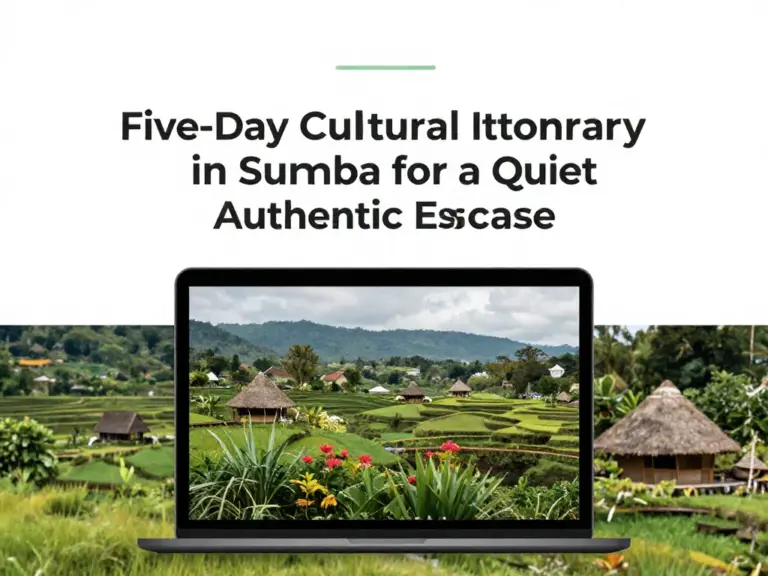
A 5-Day Cultural Itinerary in Sumba for a Quiet, Authentic Escape
- A 5-Day Cultural Itinerary in Sumba for a Quiet, Authentic Escape
Sumba remains one of the most enigmatic islands in the Indonesian archipelago. Unlike the bustling tourist hubs of Bali or Lombok, Sumba offers a profound silence, interrupted only by the rustle of dry savannah grasses and the traditional chants of the Marapu faith. For travelers seeking depth, history, and a slower pace of life, this 5-day cultural itinerary in Sumba provides a structured yet flexible path through the island’s most compelling landscapes and living traditions.
The essence of Sumba lies in its duality: the rugged, megalithic West and the textile-rich, coastal East. This itinerary balances these two sides, ensuring that your journey is not just a sightseeing trip, but an immersion into a culture that has resisted the tides of mass tourism for centuries.
5-day cultural itinerary in Sumba: Understanding the Marapu Culture
Before diving into the itinerary, it is essential to respect the Marapu belief system. This indigenous religion, which centers on ancestor worship and the balance of the universe, dictates the layout of villages and the daily lives of the Sumbanese people. You will notice the distinctive high-pitched, thatched-roof houses (Uma Mbatangu) designed to house spirits. As you travel, remember that these villages are not museums; they are homes. Always ask permission before taking photographs of people or sacred sites.
Days 1-2: The Megalithic West
West Sumba is characterized by its dramatic hills and ancient stone graves. Start your journey in Waikabubak, the gateway to the western highlands.
Day 1: Villages and Ancestors
Spend your first day visiting the traditional villages of Tarung or Prai Ijing. These villages are perched on hillsides, offering panoramic views of the surrounding valley. The megalithic tombs scattered throughout these villages are the most visible symbols of the Marapu faith. Engage with the local elders, who are often willing to share stories of the ancestors if approached with genuine interest and respect.
Day 2: The Coast and the Cliffs
Travel south toward the coast to visit the village of Ratenggaro. This village is famous for its towering traditional houses, some reaching up to 20 meters in height, set against a backdrop of the crashing Indian Ocean. Nearby, the Weekuri Lagoon offers a serene, turquoise saltwater pool separated from the ocean by a rocky cliff—an ideal spot for quiet reflection and a gentle swim.
Days 3-4: The Textile Heart of the East
Traveling east, the landscape shifts into vast savannahs and arid plains. This region is the center of Sumba’s world-renowned Ikat weaving culture.
Day 3: The Art of Ikat
Spend your third day in the areas surrounding Waingapu, the capital of East Sumba. Visit local weaving cooperatives where artisans still use natural dyes derived from roots and leaves. The process of creating a single piece of Ikat can take months, and every pattern tells a story of the weaver’s clan, social status, and spiritual beliefs. Supporting these cooperatives directly contributes to the preservation of this ancient craft.
Day 4: Savannahs and Sunsets
The landscape of East Sumba is best experienced at Wairinding Hill. During the dry season, the rolling hills turn a golden brown, creating a surreal, ethereal atmosphere. It is one of the most photogenic spots on the island, especially during the golden hour. Spend your afternoon hiking the ridges and watching the sun dip below the horizon.
| Feature | West Sumba | East Sumba |
|---|---|---|
| Landscape | Lush, hills, dramatic cliffs | Savannahs, arid, rolling plains |
| Cultural Focus | Megalithic tombs, ancestral villages | Ikat weaving, royal history |
| Atmosphere | Mystical, rugged | Spacious, serene |
Day 5: Reflection and Departure
On your final day, take time to visit a local market in Waingapu. Markets here are vibrant hubs of activity where you can find everything from betel nut to local spices. Use this time to absorb the final sights and sounds of the island before your departure. Sumba is not a place that leaves you unchanged; the quiet intensity of the island tends to linger long after you have returned home.
Checklist for a Responsible Sumba Trip
- Respect the culture: Always ask permission before photographing people or sacred sites.
- Bring cash: ATMs are scarce outside the main towns of Waikabubak and Waingapu.
- Dress modestly: Especially when visiting traditional villages, ensure your shoulders and knees are covered.
- Hire a local guide: A local guide is essential for navigating the complex village protocols and finding hidden gems.
- Pack light: Sumba is a rugged destination; heavy luggage is cumbersome.
Conclusion
Embarking on a 5-day cultural itinerary in Sumba is an invitation to slow down and witness a way of life that values community, history, and the natural world. By approaching the island with humility and a desire to learn, you will find that Sumba offers far more than just beautiful scenery—it offers a window into a resilient and vibrant culture.
Frequently Asked Questions (FAQ)
Yes, Sumba is generally safe. However, due to the lack of infrastructure and language barriers in remote areas, hiring a local driver or guide is highly recommended for a smoother experience.
The best time to visit is during the dry season, from April to October. This ensures easier access to remote villages and clear weather for exploring the savannahs.
You are not expected to participate, but you may be invited to observe. If you are invited, accept with gratitude, maintain a respectful distance, and follow the guidance of your local host.