Day 3 — Baluran National Park Safari: Wildlife, Best Trails, Guided Tours, and Conservation Notes
Welcome to Day 3 of our journey through East Java. Today, we step into a landscape that feels worlds away from the tropical jungles of Southeast Asia. Often referred to as “Africa van Java” or the Little Africa of Indonesia, the Baluran National Park Safari offers an unparalleled experience of vast savannas, ancient volcanic backdrops, and a rich tapestry of endemic wildlife. Located at the northeastern tip of Java, this park covers roughly 25,000 hectares of diverse ecosystems, including monsoon forests, mangrove forests, and the iconic Bekol Savanna.
The Heart of the Safari: Bekol Savanna
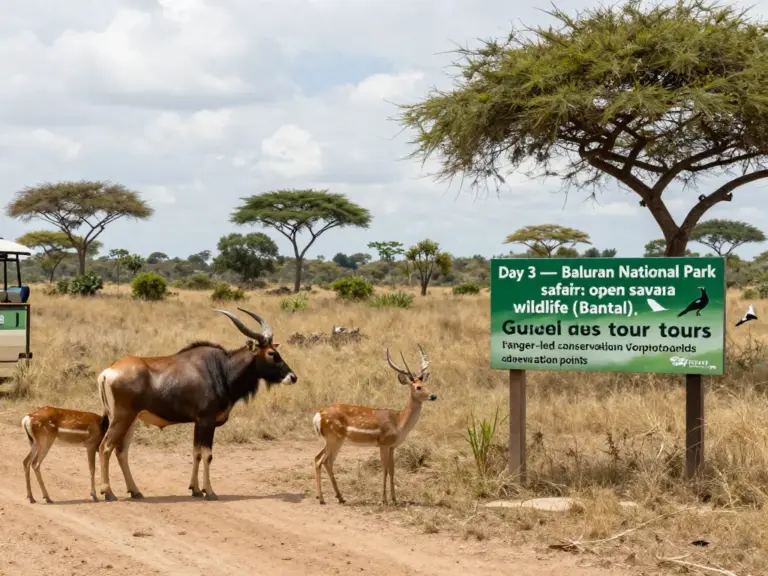
The centerpiece of any Baluran National Park Safari is the Bekol Savanna. As you drive through the park entrance, the dense forest suddenly opens up into a massive grassland. Here, the Mount Baluran volcano stands as a silent sentinel in the background. This area is the primary grazing ground for the park’s most famous residents: the Javanese Water Buffalo (Bubalus bubalis) and the endangered Javan Banteng (Bos javanicus). Watching these majestic creatures roam freely against the backdrop of a setting sun is a sight that rivals any African safari.
Aside from the large herbivores, keep your eyes peeled for the Javan Peafowl. Their vibrant feathers provide a sharp contrast to the earthy tones of the dry grass. You might also spot Long-tailed Macaques and the occasional Javan Leopard if you are incredibly lucky and quiet. The biodiversity here is a testament to Indonesia’s commitment to preserving unique ecological niches.
Best Trails and Viewpoints
To truly appreciate the scale of Baluran, you must explore its trails. While many visitors stick to the main road leading to Bama Beach, several paths offer deeper insight into the park’s flora and fauna.
- The Bekol Observation Tower: A short climb that provides a 360-degree view of the savanna and the coastline. It is the best spot for photography.
- Bama Beach Trail: This trail takes you through a lush mangrove forest. It is excellent for bird watching and seeing the macaques that frequent the shoreline.
- The Evergreen Forest Path: A 5km stretch of road that remains green year-round, even during the peak of the dry season, thanks to underground water sources.
Guided Tours and Practical Information
While it is possible to explore the park in a private vehicle, hiring a local guide for your Baluran National Park Safari is highly recommended. Guides are experts at spotting wildlife that the untrained eye might miss. They also share valuable cultural and historical context about the park’s formation and the local communities that protect it.
| Service | Estimated Cost (IDR) | Notes |
|---|---|---|
| Entrance Fee (Foreigner) | 150,000 – 200,000 | Higher on weekends/holidays |
| Local Guide | 250,000 – 400,000 | Negotiable based on duration |
| 4WD Jeep Rental | 500,000 – 700,000 | Recommended for rougher tracks |
Conservation Notes: Protecting the Javan Banteng
Conservation is at the heart of Baluran’s mission. The park is one of the last strongholds for the Javan Banteng. These wild cattle are threatened by habitat loss and competition with invasive species like the Acacia nilotica tree, which can take over the open savanna. The park management works tirelessly to clear invasive flora and maintain watering holes for the animals during the harsh dry season. As a visitor, you contribute to these efforts through your entrance fees and by following the ‘Leave No Trace’ principles.
คำถามที่พบบ่อย (FAQ)
References
- Official Indonesia Tourism – Baluran National Park
- Ministry of Environment and Forestry (KSDAE)
- WWF – Eastern Java-Bali Rain Forests and Savannas