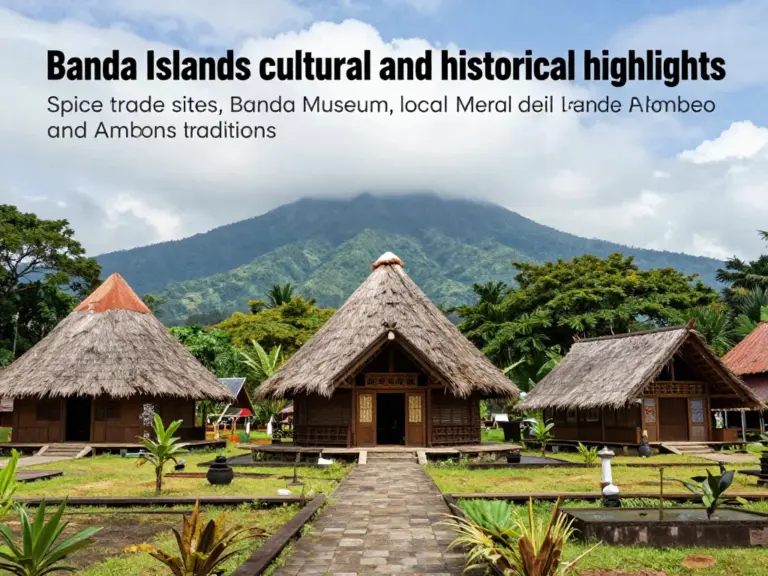
Top cultural and historical highlights: spice trade sites, Banda museum visits, local Banda and Ambon traditions, and must-see historical landmarks
- Top cultural and historical highlights: spice trade sites, Banda museum visits, local Banda and Ambon traditions, and must-see historical landmarks
The Maluku archipelago, famously known as the ‘Spice Islands,’ stands as a testament to a global history that changed the world. For centuries, the quest for nutmeg, mace, and cloves drove European explorers to these remote shores. Today, travelers can immerse themselves in a landscape where time seems to have slowed down, offering a profound look into spice trade sites and the resilient traditions of the local people. From the volcanic peaks of Banda Neira to the bustling streets of Ambon, the historical landmarks here tell a story of colonial ambition, local resistance, and cultural fusion.
The Legacy of the Spice Trade Sites
At the heart of the Maluku islands lies the history of the spice trade sites. Banda Neira was once the only place on Earth where nutmeg grew. This biological monopoly made the islands one of the most valuable pieces of real estate in the world during the 17th century. Walking through the nutmeg groves today, one can still see the ancient ‘Kenari’ trees providing shade to the precious nutmeg plants, just as they did hundreds of years ago. The ruins of colonial warehouses and the remnants of the old piers serve as silent witnesses to the ships that once carried these ‘black gold’ spices to the tables of European royalty.
Banda Museum Visits: Stepping Back in Time
A visit to the Banda Islands is incomplete without exploring the local museums. The Rumah Budaya (Cultural House) in Banda Neira is a private museum that houses a fascinating collection of colonial artifacts, including VOC coins, old maps, and traditional weaponry. It offers a poignant look at the darker side of history, including the 1621 massacre of the Banda people. Another essential stop is the Rumah Pengasingan Bung Hatta, the house where Indonesia’s first Vice President was exiled by the Dutch. These sites provide a balanced perspective on the colonial struggle and the eventual path to Indonesian independence.
Local Banda and Ambon Traditions
The culture of Maluku is a vibrant tapestry woven from indigenous roots and external influences. In Ambon, the tradition of Pela Gandong—a social system that emphasizes brotherhood between Christian and Muslim communities—remains a cornerstone of local life. Visitors can witness traditional dances like the Cakalele, a war dance performed with shields and swords, reflecting the bravery of the Moluccan warriors. In the Banda Islands, the Kora-Kora boat races are a spectacular sight, where long traditional canoes are paddled in unison to the beat of drums, celebrating the maritime heritage of the region.
Must-See Historical Landmarks
The architectural heritage of the region is dominated by formidable fortifications. Fort Belgica in Banda Neira, a pentagonal fortress built by the Dutch in 1611, offers panoramic views of the volcano Gunung Api and the turquoise harbor. In Ambon, Fort Victoria stands as the oldest fort in the city, originally built by the Portuguese. These landmarks are not just stone and mortar; they are symbols of the strategic importance these islands once held on the global stage.
| Landmark Name | Location | Historical Significance |
|---|---|---|
| Fort Belgica | Banda Neira | Dutch strategic defense for nutmeg trade. |
| Fort Amsterdam | Hila, Ambon | Blockhouse built for spice monopoly control. |
| Rumah Budaya | Banda Neira | Repository of colonial and indigenous artifacts. |
| Wapaue Old Mosque | Kaitetu, Ambon | One of the oldest mosques in Indonesia (1414). |
คำถามที่พบบ่อย (FAQ)
What are the most important spice trade sites to visit?
The most significant sites include the nutmeg plantations of Banda Neira and the various Dutch and Portuguese forts scattered across Ambon and the Banda Islands, such as Fort Belgica and Fort Amsterdam.
When is the best time to visit the Banda Islands?
The best time to visit is during the dry seasons, typically from September to November and February to April, when the seas are calm and perfect for boat travel and snorkeling.
How do I get to Banda Neira from Ambon?
You can reach Banda Neira from Ambon via a fast ferry (Susi Air) which operates on a seasonal schedule, or by a larger PELNI ship which takes longer but is more consistent.
Is it necessary to book museum visits in advance?
Generally, no. Most museums like Rumah Budaya are open during standard daylight hours, though it is always helpful to have a local guide coordinate the timing.
References
- Wonderful Indonesia: Banda Neira Guide
- UNESCO: The Historic and Marine Landscape of the Banda Islands
- Lonely Planet: Banda Islands Travel
- Offbeat Maluku 9-Day Itinerary: Exploring Ambon, Banda Islands and Spice History
- Day-by-day Ambon and Banda Islands travel plan: logistics, best seasons, accommodation, and transport tips for a smooth 9-day trip
- Outdoor adventures and island experiences: snorkeling, diving spots, hiking Banda Neira, Banda spice gardens, and boat trip recommendations