Banda Neira overview — history, geography, and why the island mattered in the spice trade
- Banda Neira overview — history, geography, and why the island mattered in the spice trade
Banda Neira is the administrative heart of the Banda Islands, a small volcanic cluster in the remote waters of Eastern Indonesia. While geographically small and isolated today, these islands—Banda Neira, Banda Besar, Pulau Ai, Run, and others—once commanded the attention of global empires. Their story is a powerful blend of stunning natural geography and a violent, transformative history driven entirely by one precious commodity: nutmeg. Understanding the Banda Islands’ significance requires delving into its unique physical setting and its pivotal role in the world’s first true global trade war.
A Remote Paradise: Banda Neira Geography
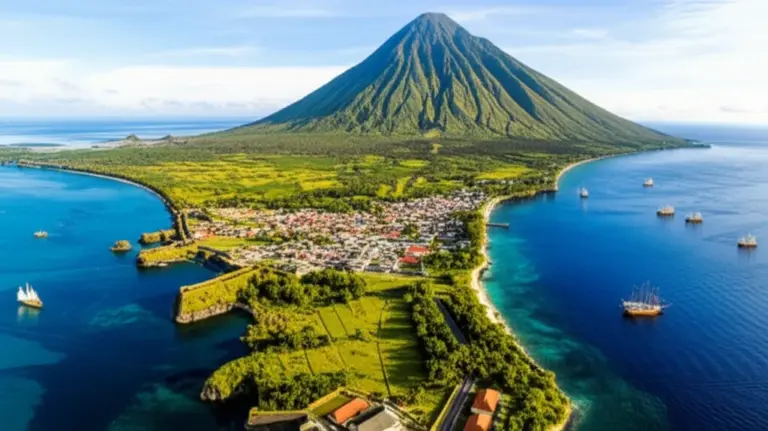
Geographically, the Banda Islands are a textbook example of volcanic activity shaping an ecosystem. They are part of the Maluku Islands (Moluccas), often dubbed the ‘Spice Islands’. Banda Neira itself is a small, crescent-shaped island dominated by the imposing presence of Gunung Api (Fire Mountain), an active stratovolcano reaching 640 meters high. This volcano is the geographical engine of the islands’ history.
- Volcanic Soil: The rich, fertile volcanic soil deposited by Gunung Api is the sole reason for the islands’ unique ability to cultivate the nutmeg tree (Myristica fragrans).
- Marine Ecosystem: Surrounded by deep, clear waters, Banda Neira is now a haven for divers and snorkelers, contrasting its turbulent past with tranquil, vibrant coral reefs.
- Isolation: Their extreme isolation, far from major trade routes, paradoxically made them the focus of intense international competition, as no one else could grow nutmeg.
The Jewel of the East: Banda Neira Spice Trade History
The history of Banda Neira is inextricably linked to the global demand for nutmeg and mace. Before the 17th century, the Bandanese people were skilled traders, maintaining sophisticated relationships with Java, China, and the Arab world. They were the sole suppliers of nutmeg, a spice that was literally worth its weight in gold in European markets.
The Allure of Nutmeg and Mace
Nutmeg (the seed) and mace (the aril covering the seed) were highly prized in Europe, not just for flavoring but also for purported medicinal properties, particularly as a cure for the plague. This extraordinary demand, coupled with the Bandas’ geographical monopoly, created an economic engine that fueled early European exploration and colonialism. The markup on nutmeg transported from Banda Neira to Amsterdam or London could exceed 60,000 percent, making control over these tiny islands an existential goal for emerging maritime powers.
The Arrival of European Powers
The Portuguese were the first Europeans to arrive in the early 16th century, followed closely by the English and the Dutch. The Dutch East India Company (VOC), established in 1602, quickly identified the Bandas as the single most valuable asset in the East. Their goal was simple: establish a complete and brutal monopoly. This ambition led directly to one of the most tragic episodes of colonial history.
A History Forged in Conflict: Colonial Rule and Fort Belgica
The struggle for control culminated in the infamous Banda Massacre of 1621, orchestrated by Jan Pieterszoon Coen, the Governor-General of the VOC. When the Bandanese resisted the Dutch monopoly agreements, Coen systematically decimated the native population. Estimates suggest that over 90% of the indigenous population was killed, enslaved, or fled. The Dutch then imported slave labor to work the nutmeg plantations (perken), solidifying their control and maintaining the spice monopoly for over a century and a half.
One of the most astonishing footnotes to this history involves Run Island, another small Bandanese island. In 1667, the Treaty of Breda settled the Anglo-Dutch Wars by exchanging Run Island (which the English claimed) for Manhattan Island (New Amsterdam). This exchange perfectly illustrates the insane value placed on these tiny spice islands in the 17th century.
Today, the most visible legacy of this colonial era is Fort Belgica, perched high above Banda Neira town. Built by the Portuguese and extensively renovated by the Dutch, the pentagonal fort stands as a stark reminder of the immense power and defensive measures required to protect the nutmeg trade. It offers stunning panoramic views and is a crucial site for understanding the Banda Neira spice trade history and its military implications.
Modern Banda Neira: Travel and Legacy
The spice monopoly eventually broke when the French and English successfully smuggled nutmeg seedlings out of the Bandas. This diversification led to the decline of the islands’ economic importance. Today, Banda Neira is a tranquil destination, appealing to history buffs, divers, and travelers seeking untouched Indonesian beauty. The islands now rely on small-scale fishing, tourism, and the residual cultivation of nutmeg.
A Visual Journey Through the Spice Islands
Video: Exploring the heritage and natural beauty of the Banda Islands.
Visitors can explore the historic colonial architecture, walk through the ancient nutmeg plantations, and climb Gunung Api for a breathtaking sunrise view. The contrast between the islands’ bloody past and their serene present makes a visit to Banda Neira a profoundly moving experience, offering a unique window into the origins of global trade and modern colonialism. For those interested in Indonesia tourism, Banda Neira offers an unparalleled combination of natural splendor and world-changing historical depth.
คำถามที่พบบ่อย (FAQ)
References
- Dutch East India Company (VOC) Historical Records
- Nutmeg’s Bloody History in the Spice Islands
- Indonesia Tourism Official Guide to Maluku
- Banda Neira Dutch Forts and Spice Legacy: A Complete Walking Guide for History Lovers and Spice Route Explorers
- Planning your visit — getting to Banda Neira, best times to go, permits, and practical tips for walking tours
- Exploring the Dutch forts — detailed walking routes, key structures (Fort Belgica, Fort Nassau), maps, and historical anecdotes