Overview of Batik and Ikat Traditions in Java and NTT: differences, cultural significance, motifs, and when to visit authentic weaving and dyeing communities
- Overview of Batik and Ikat Traditions in Java and NTT: differences, cultural significance, motifs, and when to visit authentic weaving and dyeing communities
The intricate dance of wax and dye in Javanese Batik and the mesmerizing tie-dye resist technique of NTT Ikat represent more than just fabric; they are living chronicles of communities, beliefs, and artistic mastery. While both are cherished Indonesian textiles, their origins, processes, and cultural roles diverge significantly, offering a fascinating study for any traveler. Prepare to embark on a cultural exploration that promises to enrich your understanding of Indonesia’s artistic legacy.
The Enduring Art of Batik in Java
Batik, a UNESCO-recognized Masterpiece of Oral and Intangible Heritage of Humanity, is synonymous with Java. This ancient art form involves drawing patterns on fabric using wax as a dye-resist, a process repeated multiple times to achieve complex, multi-colored designs. Javanese Batik is not merely clothing; it’s a profound cultural artifact, imbued with philosophy, history, and social status.
A Glimpse into Javanese Batik History and Cultural Significance
The origins of Batik in Java can be traced back centuries, evolving from a royal court art to a widespread craft. Historically, certain Batik patterns were reserved for royalty, reflecting social hierarchy and spiritual beliefs. Today, Batik remains central to Javanese life, worn during formal occasions, traditional ceremonies, and even daily life. It serves as a visual language, with each motif telling a story or conveying a wish for prosperity, protection, or fertility. The deep connection between Batik and Javanese identity makes it a cornerstone of the island’s cultural tourism.
Iconic Motifs and Their Meanings
Javanese Batik boasts an astonishing array of motifs, each with intricate details and symbolic meanings. Classic patterns include:
- Parang: Featuring diagonal lines resembling a sword, symbolizing power, authority, and continuous struggle. Often associated with royalty.
- Kawung: Depicting intersecting circles, representing wisdom, justice, and purity. Historically worn by the Sultan and his family.
- Truntum: A pattern of blooming flowers, symbolizing loyalty, love, and fertility. Often worn by parents of the bride and groom at weddings.
- Mega Mendung: Cloud motifs, particularly from Cirebon, symbolizing humility and the vastness of the universe.
The colors used in Batik also carry significance, with natural dyes from plants like indigo and soga wood producing earthy tones that reflect the Javanese connection to nature.
The Batik-Making Process: From Wax to Fabric
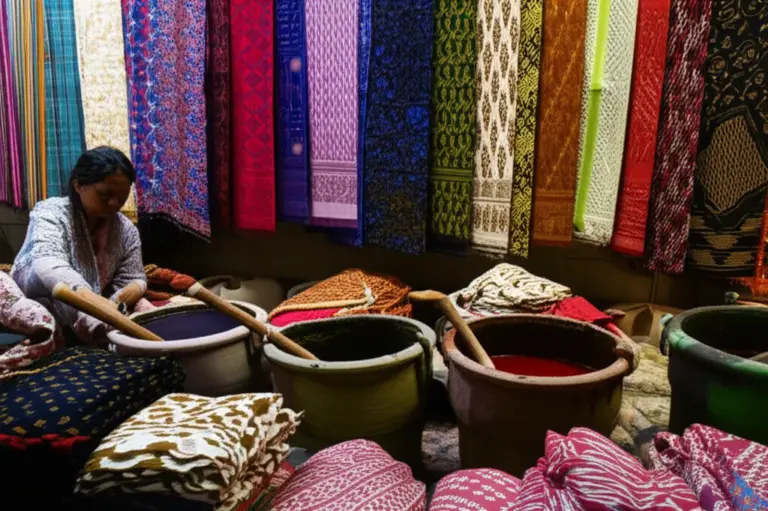
The creation of Batik is a meticulous, labor-intensive process. It begins with drawing a design on fabric, usually cotton or silk. Hot wax is then applied to areas that are to resist dye. This can be done by hand with a pen-like tool called a canting (Batik Tulis) or by stamping with a copper block (Batik Cap). The fabric is then dyed, and the wax is removed by boiling. This process is repeated for each color, resulting in layers of intricate patterns and rich hues. The skill and patience required for high-quality Batik Tulis make each piece a unique work of art.
The Vibrant World of Ikat in Nusa Tenggara Timur (NTT)
Moving east to the rugged islands of Nusa Tenggara Timur (NTT), we encounter Ikat, a textile tradition equally rich but distinct in its creation and cultural role. Unlike Batik, where the resist dyeing happens on the woven cloth, Ikat involves resist-dyeing the threads themselves before they are woven into fabric. This pre-dyeing technique creates patterns that emerge as the weaver interlaces the colored threads.
NTT Ikat: A Tapestry of Identity and Ritual
In NTT, Ikat is more than just cloth; it is a profound expression of identity, spirituality, and social status. Each island, and often each village, has its distinctive patterns and color palettes. Ikat textiles are integral to traditional ceremonies, rites of passage, and exchanges of wealth. They are used for dowries, burial shrouds, and as ceremonial garments, often believed to possess spiritual power. The creation of Ikat is often a communal activity, passed down through generations, embodying the collective memory and artistry of the community.
Regional Variations and Distinctive Motifs (Sumba, Flores, Timor)
NTT’s diverse islands contribute to a stunning variety of Ikat styles:
- Sumba Ikat: Famous for its bold, earthy colors (red, black, brown, indigo) and striking motifs depicting human figures (ancestors), animals (horses, roosters, crocodiles), and mythological creatures. Sumba Ikat often tells epic stories and is highly prized.
- Flores Ikat: Each region within Flores (e.g., Maumere, Manggarai, Ende) has distinct patterns. Maumere Ikat is known for its geometric designs and vibrant colors, while Ende Ikat often features more abstract patterns and a rich indigo base.
- Timor Ikat: Characterized by strong geometric patterns, often in reds, blacks, and whites. Motifs frequently include stylized human figures, stars, and traditional house forms, reflecting ancestral connections and tribal identity.
The natural dyes, often derived from roots, bark, and leaves, are crucial to the authenticity and cultural value of NTT Ikat, with some processes taking weeks or even months.
The Intricate Art of Ikat Weaving and Dyeing
The Ikat process begins with meticulously tying bundles of threads (warp or weft, or both) with palm leaves or plastic to create the resist pattern. These tied bundles are then dyed. The tying and dyeing process is repeated for each color, requiring immense precision to ensure the final pattern aligns correctly during weaving. Once dyed, the ties are removed, revealing the un-dyed sections. The threads are then arranged on a backstrap loom or frame loom and painstakingly woven. The slight blurring at the edges of Ikat patterns, a hallmark of the technique, is a result of this pre-dyeing and weaving process, adding to its unique charm.
Key Differences: Batik vs. Ikat
While both Batik and Ikat are celebrated Indonesian textiles, their fundamental differences lie in their technique, cultural context, and aesthetic outcomes. Understanding these distinctions is key to appreciating the rich tapestry of **Batik and Ikat Traditions Java NTT**.
| Feature | Batik (Java) | Ikat (NTT) |
|---|---|---|
| Technique | Wax-resist dyeing applied to woven fabric. | Tie-resist dyeing applied to threads before weaving. |
| Process | Waxing, dyeing, wax removal (repeated for colors). | Tying threads, dyeing, untying, weaving (repeated for colors). |
| Appearance | Sharp, crisp lines; often intricate and detailed. | Slightly blurred or feathered edges on patterns. |
| Materials | Cotton, silk. Wax (beeswax, paraffin), natural/synthetic dyes. | Cotton, sometimes silk. Natural dyes (indigo, morinda). |
| Cultural Role | Court art, social status, daily wear, ceremonies. | Ritualistic, ceremonial, dowry, burial shrouds, identity. |
| Motifs | Symbolic patterns (Parang, Kawung, Mega Mendung) often inspired by nature and philosophy. | Figurative (ancestors, animals) and geometric patterns, often tribal-specific. |
| Primary Region | Java (Yogyakarta, Solo, Cirebon, Pekalongan). | Nusa Tenggara Timur (Sumba, Flores, Timor, Rote). |
Technique and Process
The most significant difference is the stage at which the resist dyeing occurs. Batik artists apply wax directly onto already woven cloth, creating patterns layer by layer. Ikat artisans, conversely, carefully tie sections of yarn before dyeing them, and only then is the patterned yarn woven into fabric. This fundamental difference dictates the visual characteristics of each textile.
Cultural Context and Usage
While both are deeply cultural, Batik in Java often reflects the refined aesthetics of royal courts and the philosophical depth of Javanese society. It is widely used for formal attire and everyday wear. Ikat in NTT, however, is often more intimately tied to animistic beliefs, ancestral veneration, and specific tribal rituals, serving as powerful symbols of identity and spiritual connection.
Aesthetic and Material Differences
Batik typically features crisp, precise lines and often delicate, flowing patterns. Ikat’s designs, due to the nature of pre-dyed threads, usually have a characteristic ‘blurred’ or ‘feathered’ edge, which is part of its charm and authenticity. Javanese Batik often uses finer cotton or silk, while NTT Ikat frequently employs coarser hand-spun cotton, reflecting the rugged landscapes and traditional methods of the eastern islands.
Experiencing Authentic Traditions: When and Where to Visit
For travelers seeking to witness these incredible textile traditions firsthand, Java and NTT offer unique, immersive experiences. Engaging with local artisans provides invaluable insight into the dedication and skill involved in creating Batik and Ikat.
Java: Immersive Batik Experiences
The cultural heartlands of Java are ideal for experiencing Batik. Yogyakarta and Solo (Surakarta) are particularly famous for their traditional Batik workshops and galleries.
- Yogyakarta: Visit Batik factories and workshops in areas like Kampung Batik Laweyan or explore museums such as Museum Batik Yogyakarta. Many places offer hands-on Batik-making classes.
- Solo (Surakarta): Known for its classic Batik, explore the Solo Batik Carnival (if visiting in July) or visit the markets and workshops to see artisans at work.
- Pekalongan: A coastal city famous for its vibrant, colorful Batik, influenced by Chinese and Arab cultures. The Pekalongan Batik Museum is a must-visit.
NTT: Journey to Ikat Weaving Villages
Visiting NTT requires a more adventurous spirit, but the rewards are immense. The remote villages offer authentic insights into Ikat production.
- Sumba: Head to East Sumba (Waingapu) and explore villages like Prailiu or Rende. Witness women weaving intricate patterns on backstrap looms and learn about the significance of their motifs.
- Flores: In the Ende region, visit traditional villages like Ndona to see Ikat weaving and natural dyeing processes. Maumere also has several weaving communities.
- Timor: Explore villages in West Timor, such as those near Soe or Kefamenanu, to observe the unique geometric Ikat patterns and the communal aspects of their creation.
Best Times to Visit
The dry season, from May to September, is generally the best time to visit both Java and NTT. The weather is more predictable, making travel easier, especially to the more remote villages in NTT. During this period, you are also more likely to encounter local festivals and ceremonies where traditional textiles are prominently displayed, offering an even richer cultural experience.
Conclusion
The **Batik and Ikat Traditions Java NTT** represent two magnificent pillars of Indonesian cultural heritage. While Batik, with its precise wax-resist technique, speaks to the refined elegance and philosophical depth of Java, Ikat, with its intricate pre-dyed threads, embodies the raw, spiritual power and tribal identity of Nusa Tenggara Timur. Both traditions offer a window into the soul of Indonesia, showcasing incredible artistry, profound symbolism, and the enduring spirit of communities dedicated to preserving their ancestral crafts. For any visitor to Indonesia, exploring these textile traditions is not just about appreciating beautiful fabrics; it’s about connecting with a living history and understanding the vibrant heart of the archipelago.
คำถามที่พบบ่อย (FAQ)
References
- UNESCO – Batik, Indonesian cultural identity
- Indonesia.Travel – Batik Yogyakarta
- The Jakarta Post – The meaning behind batik motifs
- National Geographic – The Sacred Threads of Sumba
- Batik to Ikat: Where to Learn Traditional Textile Crafts Across Java and NTT — A Traveler’s Guide to Workshops, Schools, and Cultural Immersion
- Top Workshops and Schools to Learn Batik in Java: Yogyakarta, Solo, Pekalongan — course types, duration, pricing, and how to book hands-on batik classes
- Where to Study Ikat in Nusa Tenggara Timur (NTT): weaving centers in Sumba, Flores, and Alor — apprenticeship options, ikat techniques (warp/weft/resist), and local cooperative visits