Exploring Borobudur Temple: Architecture, Reliefs, Sunrise Tours, and Visitor Tips for Photographers
- Exploring Borobudur Temple: Architecture, Reliefs, Sunrise Tours, and Visitor Tips for Photographers
Nestled amidst the lush landscapes of Central Java, Indonesia, the majestic Borobudur Temple stands as a testament to ancient spiritual devotion and architectural brilliance. This colossal Mahayana Buddhist temple, a UNESCO World Heritage site, is not merely a structure but a profound journey through Buddhist cosmology. For those exploring Indonesia, a visit to Borobudur offers an unparalleled experience, blending historical grandeur with breathtaking natural beauty. This guide delves into its awe-inspiring architecture, the stories etched in its reliefs, the magic of its sunrise tours, and crucial tips for photographers eager to capture its timeless essence.
The Enduring Majesty of Borobudur Temple
The sheer scale and intricate detail of Borobudur are astonishing. Comprising nine stacked platforms, six square and three circular, topped by a central dome, the temple is adorned with 2,672 relief panels and 504 Buddha statues. It’s a living museum, inviting contemplation and wonder at every turn.
A Glimpse into History and Spirituality
Constructed over approximately 75 years in the 8th and 9th centuries, Borobudur represents a journey to nirvana. Pilgrims would traditionally circumambulate the temple, ascending through three levels of Buddhist cosmology: Kamadhatu (the world of desire), Rupadhatu (the world of forms), and Arupadhatu (the world of formlessness). Each level guides the devotee closer to spiritual enlightenment, culminating at the central stupa.
Architectural Grandeur: A Mandala in Stone
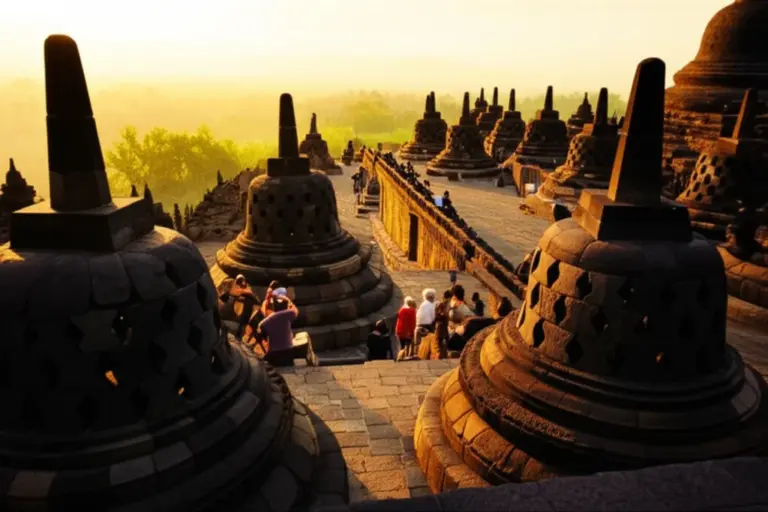
The architectural design of Borobudur Temple is a marvel. From above, it resembles a giant tantric mandala, symbolizing the universe. The lower levels are square and heavily carved, depicting earthly desires and human lives. As one ascends, the platforms become circular, featuring bell-shaped stupas, each housing a Buddha statue. The transition from square to circle represents the journey from the material world to the spiritual realm. The absence of a single large interior space speaks to its design as an outdoor walk-through sanctuary.
Unraveling the Narratives: Borobudur’s Reliefs
The 1,460 narrative relief panels that adorn Borobudur’s walls are its most captivating feature, stretching over 3 kilometers. They tell stories from Buddhist scriptures, serving as a visual sermon for pilgrims.
Jataka and Avadana Tales
These panels depict the previous lives of the Buddha (Jataka tales) and heroic deeds of other bodhisattvas (Avadana tales). They illustrate moral lessons, virtues, and the path to enlightenment, presented in a continuous narrative that unfolds as you walk clockwise around each terrace.
Karmawibhangga Gallery
Hidden at the base of the temple, the Karmawibhangga series illustrates the law of cause and effect (karma). Though largely covered, some sections are visible, offering a glimpse into the consequences of good and bad deeds.
Chasing the Golden Hour: Borobudur Sunrise Tours
Witnessing the sunrise over Borobudur is an iconic experience, often cited as one of the most magical moments in Southeast Asia. As the first rays of light illuminate the ancient stupas and the surrounding mist-shrouded volcanoes, the temple transforms into a silhouette against a canvas of vibrant colors.
The Magical Experience
Early morning access allows you to enter the temple grounds before the general public. As dawn breaks, the air is cool and quiet, offering a serene atmosphere for reflection and photography. The spectacle of the sun rising behind Mount Merapi and Mount Merbabu, casting a golden glow on the temple, is truly unforgettable.
Booking and Preparation
Sunrise tours are typically arranged through local hotels or tour operators, often involving an early start (around 4:00 AM). It’s advisable to book in advance, especially during peak season. Bring a light jacket as mornings can be chilly, and wear comfortable shoes for climbing the temple steps.
Capturing Eternity: Visitor Tips for Photographers
For photographers, Borobudur is a dream destination. Its intricate details, grand scale, and dramatic lighting offer endless opportunities. Here are some tips to make the most of your photographic journey.
Best Spots and Angles
- Sunrise: Head to the upper circular terraces for panoramic views of the stupas silhouetted against the rising sun.
- Reliefs: Use a macro lens or get close to capture the intricate carvings. Early morning or late afternoon light enhances their texture.
- Buddha Statues: Frame the statues within the bell-shaped stupas for a classic shot. Experiment with different angles to highlight their serene expressions.
- Panoramic Views: From the top, capture the surrounding landscape, including the distant volcanoes and lush rice paddies.
Essential Gear and Settings
A wide-angle lens is essential for capturing the vastness of the temple, while a telephoto lens can isolate details or bring distant elements closer during sunrise. A sturdy tripod is invaluable for low-light conditions and long exposures, especially during sunrise. Use a low ISO to minimize noise and a small aperture (f/8-f/11) for maximum depth of field, ensuring both the foreground and background are sharp.
Respectful Photography Etiquette
Remember that Borobudur is a sacred site. Be mindful of other visitors and pilgrims. Avoid climbing on stupas or statues, and always ask for permission before photographing individuals. Drones typically require special permits and are often restricted in sensitive areas. Check with local authorities or your tour guide regarding current regulations.
Watch a Borobudur Travel Guide!
Planning Your Visit: Practical Information
To ensure a smooth and enjoyable visit to Borobudur, consider these practical tips.
Getting There
Borobudur is located approximately 40 kilometers (25 miles) northwest of Yogyakarta, Central Java. The easiest way to get there is by taxi, ride-sharing apps, or a pre-arranged tour. Public buses are available but can be less convenient. Many visitors choose to stay in Yogyakarta and take an early morning tour to Borobudur.
Accommodation and Local Delights
While many opt for hotels in Yogyakarta, there are also charming guesthouses and hotels closer to Borobudur, offering a more tranquil experience. Don’t forget to sample local Javanese cuisine, known for its sweet and savory flavors, at nearby eateries.
Best Time to Visit
The dry season (April to October) is generally the best time to visit, offering clear skies and pleasant weather. However, the temple can be crowded, especially during holidays. Visiting early in the morning for sunrise, or late in the afternoon, allows you to avoid the midday heat and larger crowds.
Conclusion
Borobudur Temple is more than just an ancient monument; it’s a profound cultural and spiritual experience that captivates every visitor. From its intricate architecture and narrative reliefs to the unforgettable spectacle of a Borobudur sunrise, this UNESCO World Heritage site promises a journey through history, art, and spirituality. With careful planning and respect for its sacred nature, photographers and travelers alike can capture and cherish the timeless beauty of this Indonesian masterpiece.
คำถามที่พบบ่อย (FAQ)
| Question | Answer |
|---|---|
| How early should I arrive for a Borobudur sunrise tour? | You typically need to arrive at the temple entrance around 4:00 AM to allow enough time to get to the upper terraces before sunrise, which is usually between 5:30 AM and 6:00 AM. |
| What is the best way to get to Borobudur Temple from Yogyakarta? | The most convenient ways are by pre-booked taxi, private car with a driver, or joining an organized tour. Ride-sharing services are also an option. |
| Are there any dress code requirements for visiting Borobudur? | Yes, visitors are expected to dress modestly. Shoulders and knees should be covered. Sarongs are often provided at the entrance if your attire is deemed inappropriate. |
| Can I use a drone at Borobudur? | Drone usage is generally restricted and requires special permits from local authorities. It’s best to inquire in advance or through your tour operator, as rules can change. |
| What makes Borobudur Temple unique compared to other temples? | Borobudur is unique for its massive scale as the world’s largest Buddhist temple, its distinct mandala-like terraced architecture, and its extensive collection of narrative relief panels that tell the story of Buddhist cosmology and the life of Buddha. |