Cultural encounters and homestays: Wae Rebo village experience, Bajawa traditional villages, local markets, etiquette, and sustainable tourism practices
- Cultural encounters and homestays: Wae Rebo village experience, Bajawa traditional villages, local markets, etiquette, and sustainable tourism practices
When exploring the vast archipelago of Indonesia, the most profound memories often come not from the luxury resorts, but from the raw, authentic interactions within remote communities. Indonesia Tourism is currently witnessing a paradigm shift, where travelers seek deeper connections through cultural encounters and traditional homestays. In the heart of Flores, the highland villages of Wae Rebo and the ancestral settlements of Bajawa offer a window into a lifestyle that has remained largely unchanged for centuries.
The Mystical Journey to Wae Rebo Village
Wae Rebo is perhaps the most iconic cultural destination in Flores. Tucked away in a remote valley surrounded by dense rainforests and mist-shrouded peaks, this village is famous for its Mbaru Niang—conical, five-storied tall thatched houses. Reaching Wae Rebo is an adventure in itself, requiring a three-to-four-hour trek through the lush wilderness. This isolation has preserved the Manggarai heritage, making it a cornerstone of authentic Indonesia Tourism.
Upon arrival, visitors must participate in the Waelu ceremony. You are led to the main house to meet the village elder, where a small symbolic offering is made to ask for protection and permission from the ancestors. This ritual isn’t just for show; it is a vital part of their social fabric. Staying overnight in a Mbaru Niang, sleeping on woven mats, and sharing a communal meal of locally grown rice and vegetables provides a sense of belonging that no hotel can replicate.
Bajawa: The Ancestral Heart of the Ngada People
Moving further east to the central highlands of Flores, the town of Bajawa serves as the gateway to the traditional villages of the Ngada people. Unlike Wae Rebo, villages like Bena and Luba are more accessible but no less spiritual. Bena, situated at the foot of Mount Inerie, is a megalithic site where stone formations serve as shrines to ancestors.
In these villages, you will notice the Ngadhu (umbrella-like structures representing the male ancestor) and the Bhaga (miniature houses representing the female ancestor). The architecture here is a physical manifestation of their belief system, balancing the masculine and feminine energies. Engaging with the weavers in Bena, who produce intricate Ikat textiles, allows travelers to contribute directly to the local economy while learning about the symbolic meanings behind the patterns.
Local Markets: The Pulse of Flores
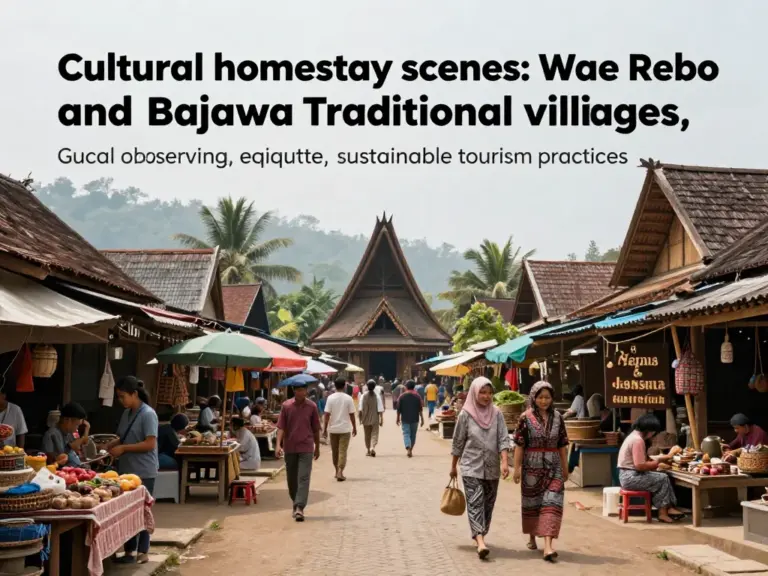
To truly understand the daily rhythm of life in Flores, one must visit the local markets in Ruteng or Bajawa. These markets are sensory overloads in the best possible way. You will find mounds of vibrant chilies, fresh cloves drying on tarps, and the famous Flores Arabica coffee beans.
- Ruteng Market: Known for its vast variety of highland produce and traditional Manggarai clothing.
- Bajawa Market: A great place to observe the trade of betel nut (sirih pinang), which is central to social interactions.
Etiquette and Cultural Sensitivity
When engaging in Indonesia Tourism within traditional villages, respecting local customs is paramount. These communities are welcoming, but they hold their traditions sacred. Following basic etiquette ensures that your presence is a blessing rather than a burden.
| Action | Recommendation |
|---|---|
| Dress Code | Wear modest clothing that covers shoulders and knees. |
| Photography | Always ask for permission before taking photos of people or their homes. |
| Gifts | Instead of candy, consider useful items like books or supporting the community fund. |
| Interaction | Use your right hand for giving and receiving items. |
Sustainable Tourism Practices
Sustainable tourism in Flores is about more than just the environment; it is about cultural preservation and economic equity. By choosing homestays over large-scale developments, your travel funds go directly to the families who maintain these heritage sites. This support incentivizes the younger generation to stay in the villages and keep their traditions alive.
Furthermore, being a sustainable traveler involves minimizing waste in these remote areas where waste management is often non-existent. Carry a reusable water bottle, avoid single-use plastics, and be mindful of your water consumption. Remember, in places like Wae Rebo, every resource is precious and hard-earned.
Conclusion
A journey through Wae Rebo and the Bajawa villages is a transformative experience. It challenges your perspectives on modern comfort and reconnects you with the fundamental values of community and ancestral respect. As Indonesia Tourism continues to evolve, these cultural encounters remain the most potent way to experience the true spirit of the archipelago. By traveling with respect, curiosity, and a commitment to sustainability, you contribute to the ongoing story of these remarkable highland cultures.
คำถามที่พบบ่อย (FAQ)
What is the best time to visit Wae Rebo?
Do I need a guide for the Bajawa villages?
What should I bring for a homestay in Wae Rebo?
Is it possible to visit these villages with children?
References
- Official Indonesia Tourism: Wae Rebo Village
- UNESCO: Wae Rebo Cultural Landscape
- Flores Tourism Management Office
- Flores Overland 10-Day Itinerary: Ultimate Guide to Bajawa, Ruteng, Wae Rebo, and Kelimutu
- Best time, logistics, and travel tips for a 10-day Flores overland trip (flights, ferry, transport, permits, packing, and safety)
- Day-by-day route plan: detailed daily schedule from Ende to Bajawa, Ruteng, Wae Rebo, Kelimutu, and back (distances, travel times, must-see stops)