Overview of Indonesian Currency and How Exchange Rates Work for Tourists
Traveling to the Emerald of the Equator requires more than just a packed suitcase and a sense of adventure; it requires a solid understanding of Indonesian currency and exchange rates. Indonesia, a sprawling archipelago of over 17,000 islands, uses the Indonesian Rupiah (IDR) as its sole legal tender. For many first-time visitors, the sheer number of zeros on the banknotes can be overwhelming. However, mastering the local currency is the first step toward a seamless and budget-friendly Indonesian holiday, whether you are lounging in Bali or exploring the bustling streets of Jakarta.
Understanding the Indonesian Rupiah (IDR)
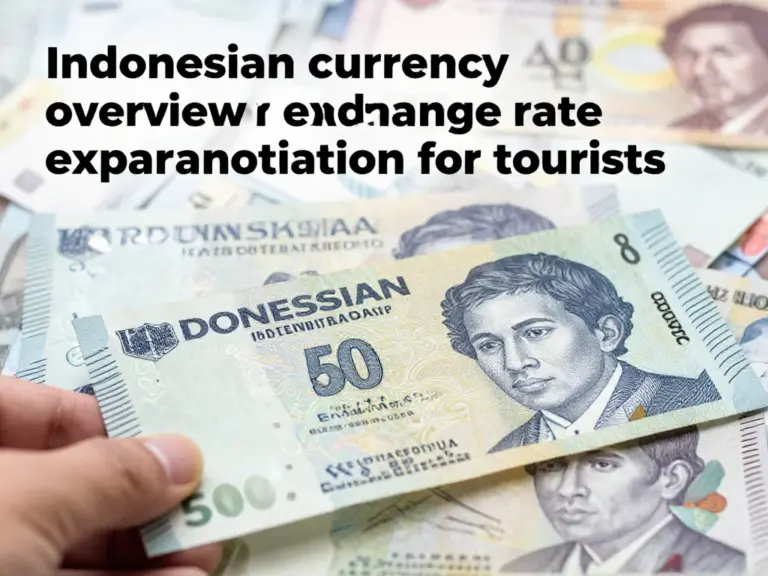
The official currency of Indonesia is the Rupiah, abbreviated as IDR and locally referred to with the symbol “Rp.” Because of historical inflation, the denominations are quite high. You will frequently handle notes ranging from Rp 1,000 to Rp 100,000. For most tourists, the easiest way to manage the math is to “drop the last three zeros.” For example, Rp 150,000 is often colloquially referred to as “150” by locals. Understanding these denominations is crucial for navigating Indonesian currency and exchange rates effectively.
Banknotes currently in circulation include Rp 1,000, Rp 2,000, Rp 5,000, Rp 10,000, Rp 20,000, Rp 50,000, and Rp 100,000. There is also a special Rp 75,000 commemorative note, though it is less common in daily transactions. Coins exist in denominations of Rp 100, Rp 200, Rp 500, and Rp 1,000, though they are primarily used for small change in supermarkets or for parking fees.
How Indonesian Currency and Exchange Rates Work for Tourists
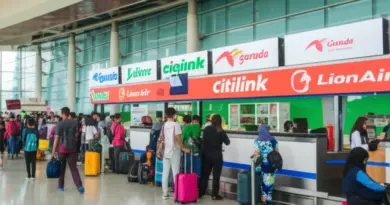
The exchange rate for the Rupiah fluctuates daily based on global market conditions. Generally, major currencies like the US Dollar (USD), Euro (EUR), Australian Dollar (AUD), and Singapore Dollar (SGD) are widely accepted at exchange bureaus. When you arrive in Indonesia, you will notice that the exchange rate offered at the airport is usually less favorable than what you will find in the city centers. To get the most out of your travel budget, it is advisable to exchange only a small amount at the airport for immediate transport and save the rest for reputable money changers in town.
| Currency | Typical Exchange Rate (Approx) | Acceptance Level |
|---|---|---|
| US Dollar (USD) | 15,500 – 16,000 IDR | Very High |
| Australian Dollar (AUD) | 10,000 – 10,500 IDR | Very High (Bali) |
| Euro (EUR) | 16,500 – 17,500 IDR | High |
Where to Safely Exchange Money
Safety should be your priority when dealing with cash. Always look for “Authorized Money Changers” that display a certification from Bank Indonesia. These establishments are more likely to provide fair rates and won’t use “sleight of hand” tricks to shortchange you. Avoid small, back-alley booths that offer rates significantly higher than the market average, as these are often scams. Always count your money carefully before leaving the counter, and never let the teller take the money back after you have finished counting it.
Using ATMs and Credit Cards in Indonesia
For many modern travelers, ATMs are the most convenient way to access Rupiah. ATMs are ubiquitous in cities and tourist hubs like Kuta, Ubud, and Seminyak. Most ATMs accept Visa and Mastercard. However, be aware of two things: withdrawal limits and bank fees. Most machines dispense either Rp 50,000 or Rp 100,000 notes, with a maximum per-transaction limit usually between Rp 1,250,000 and Rp 3,000,000. Always use ATMs located inside bank branches or secure shopping malls to minimize the risk of card skimming.
Credit cards are widely accepted in hotels, high-end restaurants, and large shopping malls. However, for smaller cafes, local markets (Pasar), and transport, cash is still king. Be prepared for a 2% to 3% surcharge on credit card transactions in some smaller establishments, which is a common practice in Indonesia to cover the merchant’s processing fees.
Digital Payments and the Rise of QRIS
Indonesia has seen a massive surge in digital payment systems. QRIS (Quick Response Code Indonesian Standard) is now found almost everywhere, from luxury boutiques to street-side ‘Warungs.’ While most QRIS systems require a local bank account or e-wallet (like GoPay or OVO), some international digital banks and apps are beginning to support cross-border QR payments. Exploring these options can sometimes offer better Indonesian currency and exchange rates than traditional cash methods.