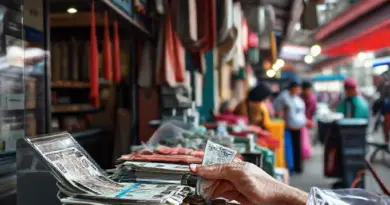
Understanding the Indonesian Rupiah (IDR): denominations, security features, and how to read banknotes and coins
- Understanding the Indonesian Rupiah (IDR): denominations, security features, and how to read banknotes and coins
Welcome to Indonesia! As you embark on your adventure across the archipelago, one of the most essential pieces of knowledge you need is Understanding the Indonesian Rupiah (IDR): denominations, security features, and how to read banknotes and coins. Familiarity with the local currency, known as Rupiah (Rp), will ensure smooth transactions, from buying street food in Bali to paying for transport in Jakarta. This comprehensive guide is designed for tourists, providing you with the expertise needed to handle Indonesian money like a local.
The Basics of the Indonesian Rupiah (IDR)
The official currency of the Republic of Indonesia is the Rupiah, symbolized by Rp or the international code IDR. Unlike many Western currencies, the Rupiah does not use subunits (like cents). The smallest physical unit is the 100 Rupiah coin, though transactions are usually rounded up or down in practice, especially for lower values. Understanding the denominations is crucial, as Indonesia uses a large numerical system that can initially feel overwhelming.
Denominations Overview
Indonesian currency comes in two forms: banknotes (paper money) and coins (metal money). Current banknotes primarily circulate in denominations from Rp 1,000 up to Rp 100,000. Coins range from Rp 100 up to Rp 1,000.
| Type | Denomination (IDR) | Common Name/Color |
|---|---|---|
| Banknote | Rp 100,000 | Blue (Featuring Sukarno & Hatta) |
| Banknote | Rp 50,000 | Red (Featuring Wage Rudolf Supratman) |
| Banknote | Rp 20,000 | Green (Featuring Ki Hajar Dewantara) |
| Banknote | Rp 10,000 | Brown/Purple (Featuring Frans Kaisiepo) |
| Banknote | Rp 5,000 | Grey/Brown (Featuring Tuanku Imam Bonjol) |
| Banknote | Rp 2,000 | Grey/Blue (Featuring Mohammad Hatta) |
| Banknote | Rp 1,000 | Grey (Featuring I Gusti Ketut Pudja) |
| Coin | Rp 1,000 | Gold/Silver color |
| Coin | Rp 500, Rp 200, Rp 100 | Various metallic colors |
How to Read Indonesian Banknotes: A Tourist’s Guide
The key to quickly recognizing denominations is focusing on the large numerals printed on the bills and their distinct color palettes. For tourists, the higher denominations (Rp 20,000 and above) are the most frequently used. When you are Understanding the Indonesian Rupiah (IDR): denominations, security features, and how to read banknotes and coins, remember that Indonesian banknotes prominently feature national heroes on the front and unique Indonesian cultural or natural heritage on the back.
Identifying Key Features on Banknotes
Bank Indonesia (BI) issues new series periodically, but the core design elements remain consistent. Here is what you should look for:
- The Portrait: The front always features a portrait of a national hero (Pahlawan Nasional).
- The Value: Large, clear numbers indicate the value (e.g., 50000).
- The Back: This side showcases Indonesian biodiversity (like Rafflesia flower or Bird of Paradise) or cultural landmarks.
Reading Coins
Coins are less common in daily change for large purchases but essential for small vendors. The Rp 100 coin is rarely seen due to inflation. The most common coin you will encounter is the Rp 500 or Rp 1,000 coin. They are generally easy to identify by their size and metallic color.
Essential Security Features for Authenticity
Ensuring you receive genuine currency is key to a stress-free trip. Bank Indonesia incorporates several sophisticated features into its banknotes. When Understanding the Indonesian Rupiah (IDR): denominations, security features, and how to read banknotes and coins, use the ‘Feel, Look, Tilt’ method:
Feel: Textured Elements
- Raised Ink: Genuine banknotes have slightly raised ink, particularly on the portrait and the denomination numbers. Run your finger across these areas.
- Paper Quality: Indonesian Rupiah paper feels distinct—crisp and slightly rougher than standard paper.
Look: Transparent Elements
- Watermark: Hold the note up to the light to see a faint image of the portrait or a geometric pattern, visible on the unprinted area.
- Security Thread: Look for a thin strip embedded vertically in the note. On higher denominations, this thread may show micro-text of the denomination when held to the light.
Tilt: Color-Shifting Elements
- Optically Variable Ink (OVI): On denominations Rp 20,000 and higher, tilting the note should reveal a color change in specific areas, often a circular or geometric pattern.
- Latent Image: Tilt the note horizontally at eye level to see a hidden image (often the denomination number) appear in a designated area.
Practical Tips for Tourists Using IDR
For the best travel experience, knowing where and how to exchange money is as important as knowing the bills themselves. Always prioritize official exchange points.
Exchanging Currency
Use official Money Changers (look for licensed outlets often bearing the Bank Indonesia logo) or ATMs associated with major banks (BCA, Mandiri, BRI). Avoid accepting large denominations like Rp 100,000 notes for small purchases if you only have a large bill, as vendors may struggle to provide change.
The YouTube Guide to Indonesian Currency
To further assist you in Understanding the Indonesian Rupiah (IDR): denominations, security features, and how to read banknotes and coins, here is a helpful visual guide:
A Note on Inflation and Old vs. New Notes
Indonesia has experienced significant inflation over the decades, which is why the denominations are numerically large. While older series of notes are technically still legal tender, newer series (especially those issued post-2016) are preferred by merchants and are more widely accepted due to enhanced security features. If you receive a very old, worn, or slightly torn note, it may be rejected in smaller shops, though banks will always accept them.
Handling Torn Currency
คำถามที่พบบ่อย (FAQ)
How much is 1 USD approximately in Indonesian Rupiah?
Currency exchange rates fluctuate daily. Generally, 1 US Dollar (USD) is equivalent to approximately Rp 15,000 to Rp 16,500 IDR. Always check the current rate at an official exchange counter upon arrival for the most accurate figure.
Is it safe to use credit cards in Indonesia?
Credit cards are widely accepted in hotels, large malls, and upscale restaurants, particularly in major tourist hubs like Bali, Jakarta, and Yogyakarta. However, cash (IDR) remains essential for local markets, street food vendors, taxis, and smaller establishments.
What is the best way to get Indonesian Rupiah?
The best methods are withdrawing cash from ATMs affiliated with major Indonesian banks or exchanging foreign currency at reputable, licensed money changers. Avoid exchanging large sums at the airport, as rates are often less favorable.
Are the Rp 1,000 and Rp 2,000 notes worth carrying?
Yes, they are very useful for tipping, buying small snacks, or paying for short local transport rides where vendors may not have change for a Rp 50,000 note.
Do I need to worry about the coins?
While coins exist down to Rp 100, the Rp 500 and Rp 1,000 coins are the most practical. Smaller coins (Rp 100, Rp 200) are often ignored or rounded up in transactions, but keeping a few is useful for small temple donations or parking fees.
References
Bank Indonesia Official Website
Numismatic Catalog of Indonesian Currency
- Money in Indonesia: A Practical Guide to Currency, Exchange, and Everyday Use
- Where and how to exchange money in Indonesia: best practices, hidden fees, and using banks, money changers, and ATMs
- Payments for travelers and locals: cash vs cards, mobile wallets (OVO, GoPay, Dana), tipping, and typical transaction customs