Waterfalls, hiking, and cultural stops: Sendang Gile, Tiu Kelep, Mount Rinjani viewpoints, and local Sasak villages
Lombok, the gem of the Lesser Sunda Islands, offers an unparalleled blend of raw natural beauty and deep-rooted cultural heritage. For travelers seeking an escape from the bustling crowds of neighboring Bali, the northern region of Lombok provides a sanctuary of mist-covered peaks, thunderous waterfalls, and ancient traditions. This guide explores the essential waterfalls, hiking, and cultural stops that define the spirit of Indonesia tourism, focusing on the majestic Sendang Gile, the mystical Tiu Kelep, breathtaking Mount Rinjani viewpoints, and the authentic Sasak villages.
The Majestic Waterfalls: Sendang Gile and Tiu Kelep
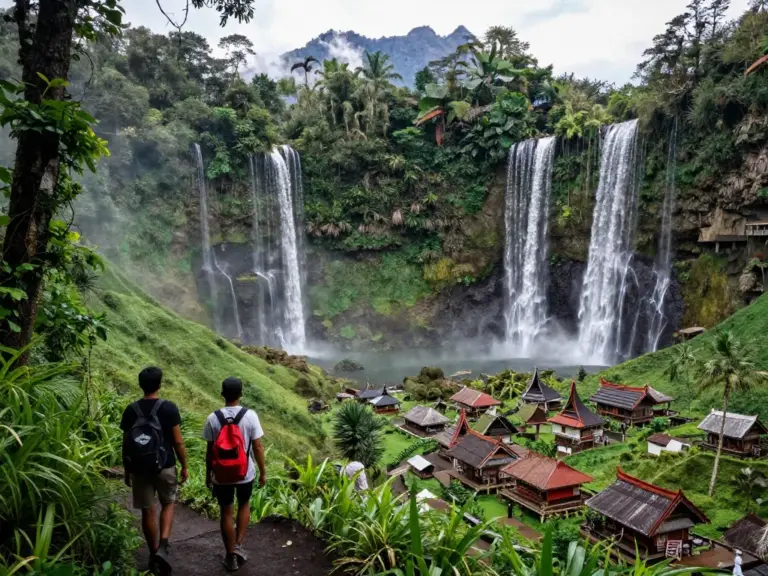
Located in the village of Senaru, the gateway to Mount Rinjani, lie two of Indonesia’s most iconic waterfalls. The journey usually begins with Sendang Gile. A short walk down a well-maintained flight of stairs reveals a two-tiered cascade that plunges gracefully into a shallow pool. Local legend suggests that bathing in these waters can provide eternal youth, a belief that adds a touch of magic to the refreshing mist.
For the more adventurous, the trail continues to Tiu Kelep. This trek involves crossing shallow rivers and navigating lush jungle paths for about 45 minutes. Tiu Kelep is a sight to behold; a powerful main fall is framed by a curtain of smaller streams flowing through the mossy cliffside. The force of the water creates a natural whirlpool, perfect for a bracing swim after the hike.
Hiking to Mount Rinjani Viewpoints
While a full summit trek of Mount Rinjani (3,726m) takes several days, many visitors opt for shorter hikes to spectacular viewpoints. The Senaru Crater Rim is a popular choice, offering a panoramic vista of the Segara Anak crater lake and the active volcano cone, Gunung Baru Jari. The sight of the turquoise lake nestled within the caldera as the sun rises is a bucket-list experience for any outdoor enthusiast.
For those preferring a less strenuous activity, the foothills of Sembalun offer rolling hills and strawberry farms with the massive silhouette of Rinjani as a backdrop. These waterfalls, hiking, and cultural stops provide a comprehensive view of the island’s diverse topography without the need for professional climbing gear.
Cultural Immersion: Local Sasak Villages
No trip to Lombok is complete without engaging with the Sasak people, the indigenous inhabitants of the island. Villages like Beleq in Senaru or Sade in the south offer a glimpse into a lifestyle that has remained largely unchanged for centuries. The architecture is particularly striking, featuring ‘Lumbung’ (rice barns) and houses made of bamboo, thatch, and clay.
- Traditional Weaving: Witness the intricate process of creating ‘Songket’ fabrics.
- Architecture: Learn why floors are traditionally cleaned with cow dung to repel insects.
- Customs: Discover the unique marriage traditions and music of the Sasak people.
Planning Your Visit
| Destination | Activity Type | Difficulty |
|---|---|---|
| Sendang Gile | Sightseeing | Easy |
| Tiu Kelep | Hiking/Swimming | Moderate |
| Senaru Rim | Trekking | Hard |
| Sasak Villages | Cultural Tour | Easy |
คำถามที่พบบ่อย (FAQ)
What is the best time to visit the waterfalls and Rinjani?
The best time is during the dry season from April to October. During the rainy season (November to March), trails can be slippery and some parts of Rinjani National Park may be closed for safety.
Do I need a guide for Tiu Kelep?
While the path is somewhat defined, a guide is highly recommended to help navigate the river crossings and ensure you don’t get lost in the jungle sections.
What should I wear for these activities?
Wear comfortable hiking shoes with good grip for the trails and bring water shoes or sandals for the river crossings at Tiu Kelep. Don’t forget swimwear and a light jacket for the cooler mountain air.
Are the Sasak villages open to tourists?
Yes, many villages are open to the public. Visitors are expected to dress modestly and it is customary to leave a small donation or purchase local handicrafts to support the community.
References
Official Indonesia Tourism – Mount Rinjani
Rinjani National Park Information
- Lombok and the Gili Islands in 7 Days: The Ultimate Beaches, Waterfalls, and Quiet Escapes Itinerary
- Best time to visit Lombok and the Gili Islands: weather, crowds, and 7-day sample calendar
- Top beaches and snorkeling spots: Tanjung Aan, Selong Belanak, Gili Trawangan, Gili Air — where to swim, snorkel, and relax