What Are the Melasti and Nyepi Ceremonies in Bali?
Bali is often called the Island of the Gods, a moniker that becomes abundantly clear when witnessing its profound spiritual traditions. Among the most significant events in the Balinese Hindu calendar are the Melasti and Nyepi ceremonies in Bali. These rituals are not merely tourist attractions; they are deeply ingrained practices of purification, reflection, and renewal that dictate the rhythm of life on the island. For travelers, understanding these traditions offers a rare glimpse into the soul of Balinese culture.
As we approach the Saka New Year, the atmosphere in Bali shifts. The vibrant energy of the purification rites gives way to the absolute silence of the Day of Silence. Whether you are planning a trip or simply curious about Indonesian heritage, understanding the sequence and significance of these days is essential for a respectful and enriching experience.
Understanding the Melasti Ritual: Purification of the Universe
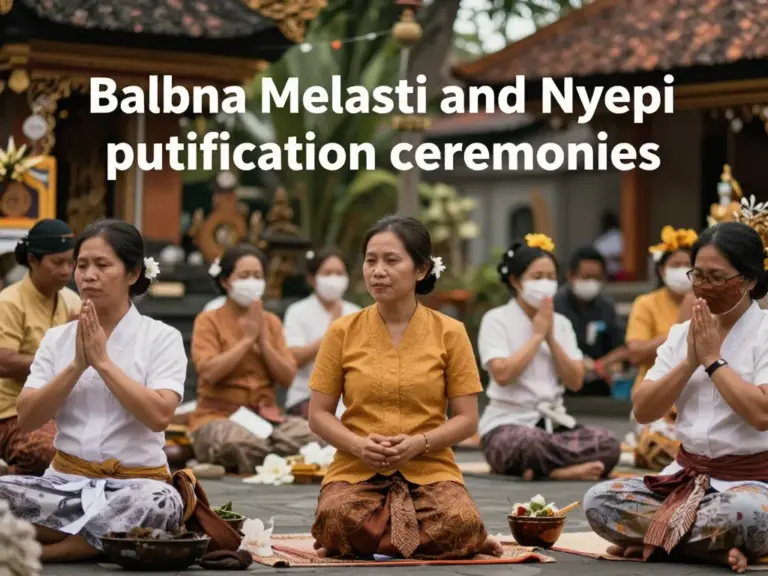
Melasti is a sacred purification ceremony held a few days before Nyepi. The primary objective of Melasti is to cleanse the universe (Bhuana Agung) and the human body (Bhuana Alit) of negative energy, sins, and bad influences accumulated over the past year. In Balinese Hindu philosophy, the ocean is considered the source of life and the ultimate purifier of all impurities.
During this time, you will witness long, colorful processions. Villagers dressed in traditional white ceremonial attire carry Pratima (sacred effigies of deities) and temple heirlooms from their local temples toward the sea or holy water sources. The procession is accompanied by the rhythmic sounds of Gamelan music, creating a mesmerizing and solemn atmosphere. Once at the beach, prayers are offered to the God of the Sea, Baruna, asking for the purification of the world’s waters and the restoration of spiritual balance.
The Significance of Nyepi: The Day of Silence
Following the purification of Melasti comes Nyepi, the Balinese Day of Silence. Unlike New Year celebrations elsewhere in the world that involve fireworks and parties, Nyepi is a day of absolute introspection. It marks the start of the Balinese Saka New Year. On this day, the entire island shuts down. This is not a symbolic closure; it is a literal cessation of all activity.
The four prohibitions of Nyepi, known as Catur Brata Penyepian, are strictly observed by the local community:
- Amati Geni: No fire or light, including electricity.
- Amati Karya: No working.
- Amati Lelungan: No traveling or leaving the house.
- Amati Lelanguan: No entertainment or merrymaking.
The logic behind this silence is to deceive the evil spirits (Buta Kala) that roam the island. By making the island appear completely deserted, the spirits believe no one is present and move on, leaving the island pure and peaceful for the new year ahead.
Ogoh-Ogoh: The Night Before Nyepi
Before the silence descends, the night prior to Nyepi—known as Pengerupukan—is one of the most vibrant experiences in Bali. Communities create massive, grotesque papier-mâché statues called Ogoh-Ogoh. These statues represent malevolent spirits and demons. As dusk falls, these statues are paraded through the streets with flaming torches and loud music to attract the negative energy of the spirits into the effigies. Following the parade, these statues are traditionally burned, symbolizing the destruction of evil influences before the silence of Nyepi begins.
Important Information for Travelers
If you are visiting during this period, it is important to respect local customs. While hotels usually maintain operational staff for essential services, guests are restricted to their hotel grounds. It is a unique opportunity to see the stars clearly, as there is zero light pollution on the island during the night. The stillness is profound and offers a rare chance for personal reflection.
คำถามที่พบบ่อย (FAQ)
A: Tourists are welcome to observe the Melasti processions respectfully from a distance. However, Nyepi must be observed by everyone on the island, including tourists. You must remain inside your accommodation and refrain from using lights, noise, or outdoor areas on the Day of Silence.
A: The Ngurah Rai International Airport is completely closed for 24 hours on Nyepi. No flights arrive or depart. It is highly recommended to avoid scheduling travel to or from Bali on this specific date.
A: Yes, hotels remain open to guests, but they operate with limited staff and dimmed lights. Most hotels organize special indoor activities for guests, but you are not permitted to leave the hotel grounds.
A: It is a day of spiritual detoxification. By ceasing all activity and light, the Balinese believe they are tricking the malevolent spirits into thinking the island is uninhabited, allowing the community to start the new year with a clean, peaceful slate.