Matrilineal Society Explained: How Minangkabau Inheritance, Family Roles, and Clan Systems Shape Homestay Life
- Matrilineal Society Explained: How Minangkabau Inheritance, Family Roles, and Clan Systems Shape Homestay Life
When exploring the diverse archipelago of Indonesia, travelers often seek more than just scenic landscapes; they seek profound cultural immersion. In the highlands of West Sumatra, the Matrilineal Society Explained through the lives of the Minangkabau people offers one of the most unique social structures in the world. As the largest matrilineal society on Earth, the Minangkabau define their identity through the female line, a system that fundamentally reshapes everything from property ownership to the daily operations of local homestays.
Understanding the Minangkabau Matrilineal Core
At its heart, the Minangkabau culture is built on the principle of Matrilineal Society Explained as a balance between Adat (customary law) and Islam. Unlike most cultures where surnames and assets pass from father to son, here, the clan name, ancestral land, and the family home are inherited by daughters. This ensures that women remain the pillars of the community, providing them with economic security and a central role in decision-making processes.
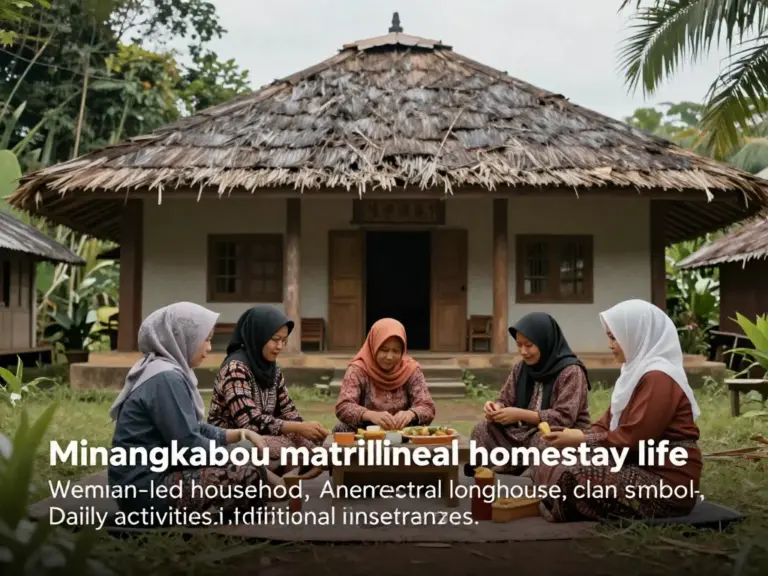
For a tourist visiting a village like Pariangan or the Harau Valley, this system is immediately visible. The large, horn-roofed houses are owned by the senior women of the family. When you book a homestay in West Sumatra, you aren’t just renting a room; you are entering a space managed and preserved by a lineage of women who have held the title to that land for generations.
Family Roles: The Mamak and the Father
In this Matrilineal Society Explained, the role of men is equally fascinating. A man has two primary responsibilities: as a father to his children and as a Mamak (maternal uncle) to his sister’s children. The Mamak is the guardian of the clan’s heritage and the advisor to the female heads of the household. This dual role creates a complex but harmonious social fabric that emphasizes collective responsibility over individual ownership.
- Bundo Kanduang: The ‘True Mother’ or female leader who holds the highest moral authority in the house.
- Mamak: The maternal uncle who manages the legal and customary affairs of the lineage.
- Suku: The clan system that prevents inter-marriage within the same matrilineal line.
How the Clan System Shapes the Homestay Experience
When you participate in Indonesia tourism in West Sumatra, the homestay life is a direct reflection of these clan systems. Most homestays are integrated into the family’s daily life. You will notice that the grandmother or the eldest daughter often holds the keys and manages the finances. This empowerment leads to a unique hospitality style where guests are treated as extended members of the clan rather than mere customers.
| Feature | Patrilineal System | Minangkabau Matrilineal System |
|---|---|---|
| Inheritance | Father to Son | Mother to Daughter |
| Family Name | Paternal Line | Maternal Line (Suku) |
| Home Ownership | Often Patriarchal | Communal Female Ownership |
| Social Focus | Individual/Nuclear Family | Clan/Extended Family |
Living the Legend: Homestay Etiquette and Culture
Staying in a Minangkabau homestay requires an appreciation for communal living. The architecture of the Rumah Gadang features a large open hall where the family gathers, eats, and sleeps. As a guest, you are invited into this inner sanctum. The food you will eat—such as the world-famous Rendang—is often prepared by the women of the house using recipes passed down through the matrilineal line. This culinary heritage is a point of pride and a vital part of the Matrilineal Society Explained through the lens of daily survival and celebration.
Conclusion: Why It Matters for Your Next Trip
Understanding the Minangkabau way of life enriches your travel experience far beyond the physical beauty of West Sumatra. It challenges conventional views on social organization and provides a model of female empowerment that has existed for centuries. When you choose a homestay in this region, you are supporting a system that values heritage, community, and the enduring strength of the female lineage.
คำถามที่พบบ่อย (FAQ)
References
- Official Indonesia Tourism – Bukittinggi and West Sumatra
- UNESCO – Cultural Heritage of Indonesia
- Britannica – Minangkabau People and Culture