Safety Tips, Skill Levels & Training for Canyoning in North Bali: Preparing for Jumps, Rappels, and Rapids
North Bali is a hidden paradise for adrenaline seekers, offering some of the most breathtaking tropical gorges in the world. However, engaging in canyoning in North Bali requires more than just a spirit of adventure; it demands a solid understanding of safety protocols, physical preparation, and technical skill. Whether you are navigating the volcanic rock of Sambangan or the hidden waterfalls of Gitgit, being prepared is the key to a memorable experience.
Understanding Canyoning Skill Levels
Before booking a tour, it is crucial to assess your own capabilities. Canyoning in North Bali is generally categorized into three levels:
- Discovery (Beginner): Suitable for those with no prior experience. Focuses on fun jumps and short rappels (up to 15m).
- Intermediate: Requires good physical condition and a lack of fear of heights. Expect longer rappels and more technical water movements.
- Advanced/Pro: Designed for experienced canyoneers. Involves high-altitude rappels (50m+), technical rope work, and heavy aquatic sections.
Essential Safety Tips for the North Bali Jungle
Safety is the cornerstone of every successful descent. When participating in canyoning in North Bali, always adhere to the following rules:
1. Never go alone: Always hire a certified ICOpro (International Canyoning Organization for Professionals) guide.
2. Gear Check: Ensure your helmet, harness, and wetsuit are in top condition.
3. Proper Footwear: Use canyoning shoes with high-grip soles to navigate slippery volcanic rocks.
4. Hydration: The humidity in North Bali can lead to rapid dehydration during the approach hikes.
Technical Training: Jumps, Rappels, and Rapids
Mastering the technical aspects of canyoning ensures you stay safe while having fun.
Preparing for Jumps: Always wait for the guide to check the water depth. Keep your body vertical, arms crossed over your chest, and legs tight together upon entry.
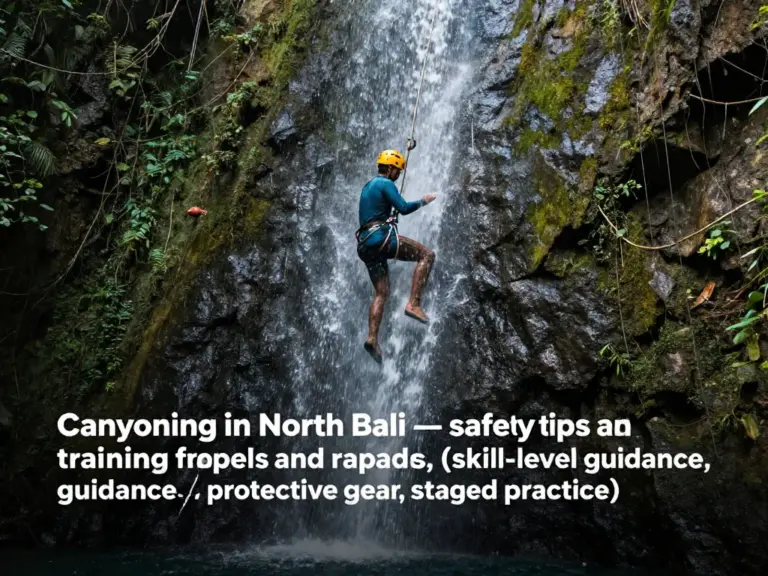
The Art of Rappelling: Also known as abseiling, this involves using a rope and descender to move down a vertical face. Lean back, keep your feet shoulder-width apart, and maintain a steady pace. In North Bali, you will often rappel directly through waterfalls, which requires focus and breath control.
Navigating Rapids: When caught in moving water, adopt the ‘white water floating position’—on your back, feet downstream and up, to avoid foot entrapment in rocks.
| Skill Category | Beginner Focus | Advanced Focus |
|---|---|---|
| Rappelling | Basic descent technique | Guided rappels & Re-belays |
| Jumping | Max 5 meters | Up to 10-15 meters |
| Swimming | Standard buoyancy | Strong current management |
คำถามที่พบบ่อย (FAQ)
Q: Do I need to be a strong swimmer to go canyoning in North Bali?
A: While you don’t need to be an Olympic swimmer, you should be comfortable in the water. Life jackets and wetsuits provide extra buoyancy, and guides are always there to assist.
Q: What is the best time of year for canyoning?
A: The dry season (April to October) is ideal. During the wet season, some canyons may become too dangerous due to high water levels.
Q: Is there an age limit for canyoning?
A: Most discovery tours allow children from age 8-10, while advanced tours may require participants to be at least 16 or 18 years old.
Q: What should I bring?
A: Bring a swimsuit, a change of clothes, sunscreen, and a waterproof camera if you have one. Most operators provide technical gear.
References
Official Indonesia Tourism Website
International Canyoning Organization for Professionals