What Makes Prambanan and Borobudur Must-Visit Heritage Sites in Yogyakarta?
When planning a trip to Indonesia, the cultural heartland of Java stands out as an unmissable destination. Specifically, the region surrounding Yogyakarta is home to two of the most significant archaeological wonders on the planet: the colossal Borobudur and the intricate Prambanan. Understanding What Makes Prambanan and Borobudur Must-Visit Heritage Sites in Yogyakarta goes beyond mere sightseeing; it is about stepping back into a time of architectural mastery, spiritual devotion, and artistic brilliance that continues to captivate the modern world.
The Architectural Splendor of Borobudur
Borobudur is not just a temple; it is the world’s largest Buddhist monument. Built in the 9th century during the Sailendra Dynasty, this massive structure is designed as a giant mandala representing the Buddhist cosmology. Visitors are often struck by its sheer scale, featuring 504 Buddha statues and over 2,600 relief panels that narrate the teachings of Buddha.
The Mythical Grandeur of Prambanan
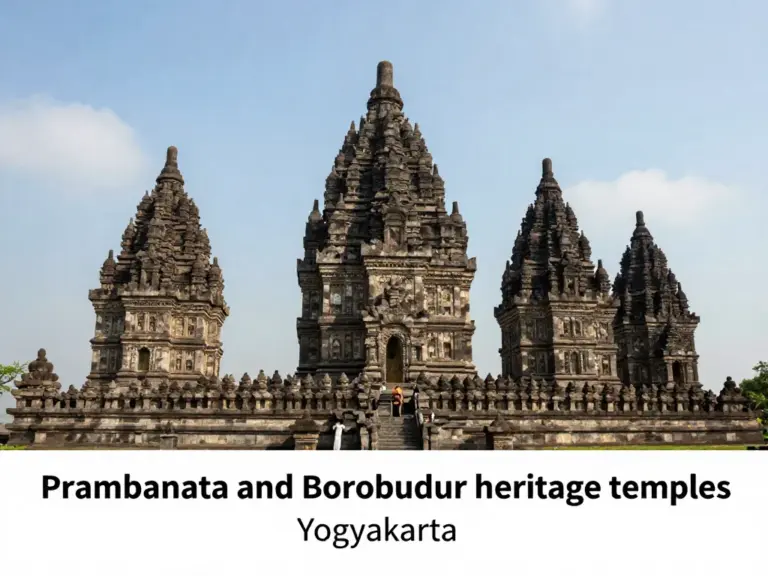
While Borobudur represents Buddhist heritage, Prambanan stands as a testament to Hindu architecture in Indonesia. As a UNESCO World Heritage site, Prambanan is famous for its towering, pointed spires that reach toward the sky. Dedicated to the Trimurti—Brahma the Creator, Vishnu the Preserver, and Shiva the Destroyer—the complex is a masterpiece of 9th-century Hindu art.
The central Shiva temple, rising 47 meters into the air, is the highlight of the site. Surrounding it are hundreds of smaller temples, known as candi, which create a sprawling archaeological park. Exploring the relief carvings depicting the Ramayana epic is an essential part of the experience, offering deep insights into the cultural narratives that have shaped Javanese history for a millennium.
Geographic Context
Why They Are Essential for Every Traveler
The coexistence of these two massive religious monuments in such close proximity serves as a powerful symbol of Indonesia’s history of religious tolerance and cultural diversity. Visiting both sites provides a comprehensive look at the evolution of ancient Javanese civilization. Whether you are a history enthusiast, an architecture buff, or a spiritual seeker, these sites provide a profound connection to the past.
| Feature | Borobudur | Prambanan |
|---|---|---|
| Religion | Buddhism | Hinduism |
| Architecture | Stupa-based | Spire-based |
| Vibe | Contemplative & Serene | Dramatic & Epic |
คำถามที่พบบ่อย (FAQ)
Q: Is it possible to visit both Borobudur and Prambanan in one day?
A: Yes, it is possible, though it makes for a long day. Many travelers choose to visit Borobudur early in the morning and Prambanan in the afternoon to avoid the midday heat.
Q: What is the best time of year to visit these heritage sites?
A: The dry season, which runs from May to September, is generally the best time to visit as the weather is sunny and ideal for exploring the open-air temple complexes.
Q: Do I need a guide to explore the temples?
A: While you can explore on your own, hiring a local guide is highly recommended to fully appreciate the complex history and religious significance behind the carvings and architecture.