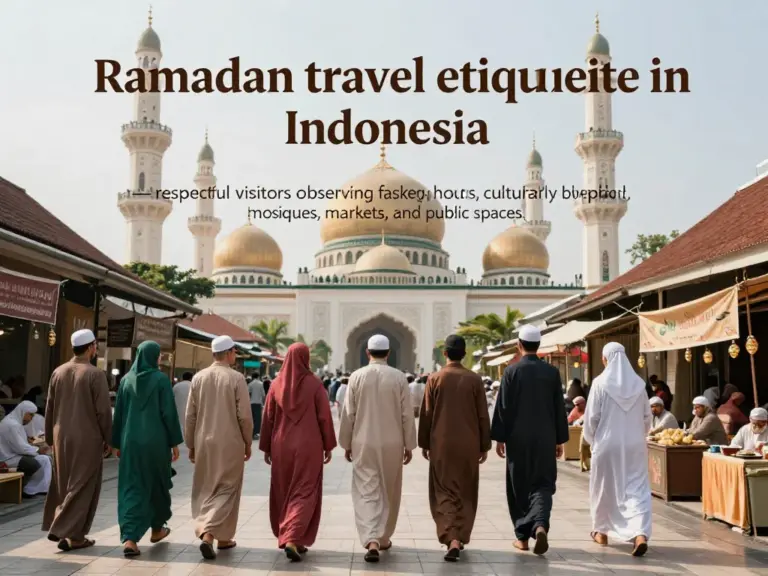
Ramadan Travel Etiquette in Indonesia: Fasting Hours, Cultural Do’s and Don’ts for Respectful Visitors
- Ramadan Travel Etiquette in Indonesia: Fasting Hours, Cultural Do’s and Don’ts for Respectful Visitors
Visiting Indonesia during the holy month of Ramadan offers a unique window into the soul of the world’s most populous Muslim-majority nation. While the pace of life slows down during the day, the evenings burst into vibrant celebrations of faith, family, and food. Understanding Ramadan Travel Etiquette in Indonesia is essential for any traveler wishing to navigate this period with grace and respect. From the bustling streets of Jakarta to the cultural heart of Yogyakarta, observing local customs ensures a meaningful and friction-free journey.
Understanding Ramadan and Fasting Hours
In Indonesia, Ramadan follows the lunar calendar, meaning the dates shift every year. During this month, Muslims abstain from eating, drinking, smoking, and impure thoughts from dawn (Imsak) until sunset (Maghrib). Given Indonesia’s proximity to the equator, fasting hours remain relatively consistent, typically lasting about 13 to 14 hours. Generally, the fast begins around 4:30 AM and ends near 6:00 PM.
For travelers, this means that while most international hotels and major tourist hubs continue to serve food, many local ‘warungs’ (small eateries) may close their front curtains or shut entirely during daylight hours. Being aware of these timing shifts is the first step in practicing proper Ramadan Travel Etiquette in Indonesia.
Cultural Do’s for Respectful Visitors
To show respect and integrate smoothly into the local atmosphere, consider these positive actions:
- Dress Modestly: While Indonesia is generally tolerant, Ramadan calls for extra conservative attire. Ensure shoulders and knees are covered when in public spaces.
- Join an ‘Iftar’ (Buka Puasa): If invited to break the fast with locals, accept! It is a gesture of great hospitality. Bringing a small gift of dates or sweet snacks is highly appreciated.
- Greet with ‘Ramadan Kareem’: Using the local greeting ‘Selamat Menunaikan Ibadah Puasa’ (Happy Fasting) shows you value their culture.
- Plan for Traffic: Be aware of ‘Ngabuburit’—the time before sunset when locals go out to buy snacks. Traffic can become extremely congested between 4:00 PM and 6:00 PM.
Cultural Don’ts to Avoid Offense
To avoid unintentional disrespect, keep the following ‘don’ts’ in mind:
- Don’t Eat or Drink Publicly: Avoid consuming food, water, or smoking in open public areas during daylight. If you must eat, do so inside your hotel or in a screened-off restaurant.
- Don’t Play Loud Music: Keep noise levels down, especially near mosques, as people may be resting or in prayer.
- Avoid Public Displays of Affection: PDA is generally frowned upon in Indonesia, but during Ramadan, it is particularly sensitive.
- Don’t Expect Fast Service: Understand that energy levels may be lower for staff who are fasting. Patience is a virtue during this month.
Dining and Business Hours During Ramadan
Business hours often change during the holy month. Many offices and government buildings open earlier and close by 3:00 PM to allow employees to return home for Iftar. For tourists, this means planning excursions and administrative tasks for the morning hours.
| Service Type | Daytime Status | Evening Status |
|---|---|---|
| Malls & Shopping | Open (Quiet) | Very Busy / Vibrant |
| Local Warungs | Closed or Curtained | Open for Iftar |
| Tourist Attractions | Open (Usually) | Normal Hours |
| Nightclubs/Bars | Often Closed/Restricted | Limited Operations |
The Joy of Eid al-Fitr (Lebaran)
The end of Ramadan is marked by the celebration of Eid al-Fitr, known locally as Lebaran. This is the biggest holiday in Indonesia. Be prepared for ‘Mudik’—a massive migration where millions of people travel from cities to their home villages. Public transport will be fully booked weeks in advance, and many shops may close for several days as families celebrate together.
คำถามที่พบบ่อย (FAQ)
Is it okay for non-Muslims to eat during the day?
Yes, non-Muslims are not expected to fast. However, out of respect for those who are, you should eat and drink in private or inside restaurants that have curtains covering the windows.
Are tourist attractions like Borobudur open during Ramadan?
Yes, major tourist attractions remain open. However, some may have slightly shortened operating hours, so it is always best to check the official website or ask your hotel concierge in advance.
Can I find alcohol in Indonesia during Ramadan?
Alcohol availability is significantly restricted during Ramadan. Many bars and clubs close entirely, and even high-end hotels may limit service to specific areas or hours. Bali is an exception where restrictions are less strict.
What should I wear when visiting a mosque during Ramadan?
Both men and women should wear clothing that covers the arms and legs. Women should also carry a scarf to cover their hair. Always remove your shoes before entering.
References
- Wonderful Indonesia Official Tourism Portal
- Ministry of Foreign Affairs of the Republic of Indonesia
- Understanding Ramadan in Indonesia: significance, local customs, and expected public behaviors for travelers
- Fasting Hours and Practical Tips: typical suhoor and iftar times by region, how to plan travel and meals, and what to do if you’re not fasting
- Public Etiquette and Dress Code: respectful clothing, public displays of affection, and behavior in mosques and holy sites