Togian Islands diving and island-hopping guide: how to get there, top dive sites, snorkeling spots, and eco-friendly stay options
Tucked away in the Tomini Bay of Central Sulawesi, the Togian Islands (Kepulauan Togean) represent one of Indonesia’s last true frontiers. This archipelago of 56 islands offers a serene escape from the modern world, where the internet is scarce, and the rhythm of life is dictated by the tides. This comprehensive Togian Islands diving and island-hopping guide will help you navigate this remote paradise, ensuring you experience the best of its underwater wonders and pristine landscapes.
How to Get to the Togian Islands
Reaching the Togian Islands requires patience and a spirit of adventure. There are two primary routes to reach the main hubs of Wakai or Bomba. The most common route is via Gorontalo in the north or Ampana in the south. From Gorontalo, the public ferry ‘Tuna Tomini’ runs overnight several times a week. From Ampana, daily speedboats and public ferries are available, taking between 2 to 5 hours depending on the vessel and your final destination island.
Top Dive Sites in the Togian Islands
The diving here is legendary because it is one of the few places on Earth where you can find three types of reef environments in one area: atoll, barrier, and fringing reefs. The visibility is often spectacular, ranging from 20 to 40 meters.
- The B-24 Bomber Wreck: A remarkably intact WWII aircraft lying at 16-24 meters depth. It is covered in corals and serves as a home to schools of batfish.
- Una Una: An active volcanic island offering dramatic black sand slopes and massive walls. Sites like ‘Apollo’ and ‘The Pinnacle’ are famous for huge schools of barracuda and jackfish.
- The Atolls: These outer reefs offer vertical walls dropping into the deep blue, where you can spot reef sharks and eagle rays.
Snorkeling Spots and Island-Hopping Adventures
If you aren’t a diver, the snorkeling is equally world-class. A highlight of any Togian Islands diving and island-hopping guide is the Jellyfish Lake (Danau Mariona). Similar to the famous lake in Palau, here you can swim with thousands of stingless jellyfish in a surreal, turquoise setting. Another must-visit is the Karina Beach, known for its powdery white sand and crystal-clear shallows.
Eco-Friendly Stay Options
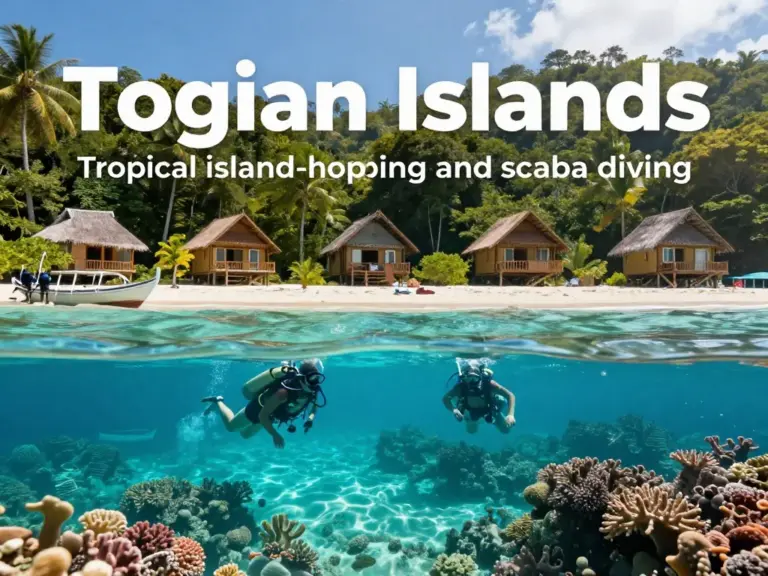
Sustainability is key in the Togians. Most resorts are eco-conscious by necessity, using solar power and gravity-fed water systems. For a truly immersive experience, consider staying at Kadidiri or Malenge. These areas offer wooden bungalows built over the water or nestled in the jungle, focusing on minimal environmental impact while supporting the local Bajau (Sea Nomad) communities.
| Resort Area | Vibe | Best For |
|---|---|---|
| Kadidiri | Social & Central | Divers & Backpackers |
| Malenge | Remote & Quiet | Nature Lovers |
| Bomba | Accessible | Short Trips |
คำถามที่พบบ่อย (FAQ)
Q: When is the best time to visit the Togian Islands?
A: The best time is during the dry season, from May to September, when the seas are calmest and visibility is at its peak.
Q: Is there ATM or Wi-Fi on the islands?
A: No. There are no ATMs on the islands (the last one is in Ampana or Gorontalo). Wi-Fi is almost non-existent, making it a perfect spot for a digital detox.
Q: Do I need a permit to visit the National Park?
A: Yes, the islands are part of a National Park. Most resorts will include the small entrance fee in your bill or help you process it upon arrival.
References
Official Indonesia Tourism – Togian Islands
Lonely Planet Guide to Sulawesi
- Two Weeks in Sulawesi: The Ultimate 14-Day Tana Toraja, Togian Islands, and Makassar Itinerary for Culture, Diving, and Adventure
- Best time to visit Sulawesi and travel logistics: flights, regional transfers, and packing tips for Tana Toraja, Togian Islands, and Makassar
- Tana Toraja cultural immersion: traditional ceremonies, village tours, trekking, and recommended accommodations near Rantepao