What Is Waisak at Borobudur? Meaning, Timing, and Cultural Significance for Visitors
- What Is Waisak at Borobudur? Meaning, Timing, and Cultural Significance for Visitors
For travelers seeking a profound cultural and spiritual experience, witnessing Waisak at Borobudur is an unparalleled opportunity. This annual Buddhist festival, celebrated with immense devotion at the magnificent Borobudur Temple in Central Java, Indonesia, offers a glimpse into the heart of Buddhist traditions and Indonesian heritage. It’s a time when thousands of monks, devotees, and visitors gather to commemorate the most significant events in the life of Gautama Buddha, transforming the ancient monument into a vibrant center of faith and unity.
Introduction: Experiencing Waisak at Borobudur
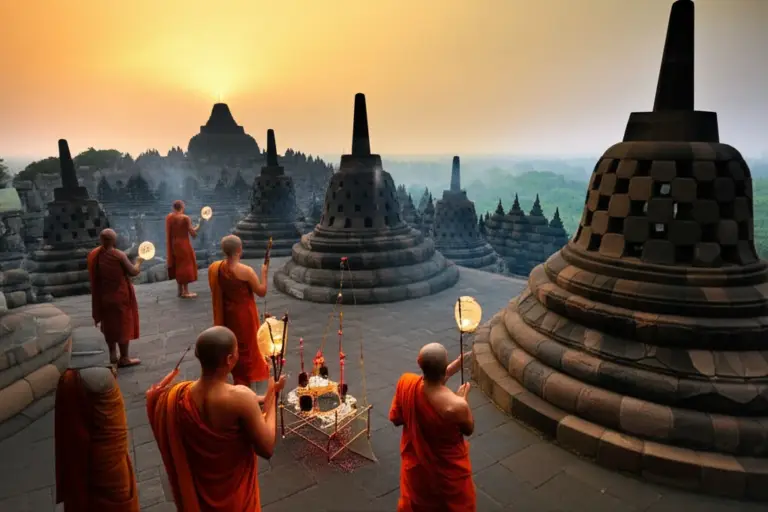
Waisak, known globally as Vesak or Buddha Purnima, is more than just a public holiday in Indonesia; it’s a deeply spiritual observance that marks the birth, enlightenment, and passing of Prince Siddhartha Gautama, who became the Buddha. The celebration at Borobudur, the world’s largest Buddhist temple, is particularly special due to the temple’s historical and architectural grandeur. For visitors, it’s a chance to witness ancient rituals, feel the collective devotion, and be part of an event that transcends cultural boundaries, fostering peace and understanding. [12, 17, 20]
What is Waisak (Vesak)?
Waisak Day, or Vesak, is the most sacred day for Buddhists worldwide. It commemorates three pivotal events in the life of Gautama Buddha: his birth as Prince Siddhartha Gautama, his attainment of perfect enlightenment (Nirvana), and his passing away (Parinirvana). These three events are collectively referred to as ‘Tri Suci Waisak’ (Three Sacred Waisak). [16, 20] The festival serves as a time for Buddhists to reflect on Buddha’s teachings, reaffirm their commitment to leading a noble life, develop their minds, and practice kindness and peace towards all beings. [17, 20]
The Significance of Vesak
The significance of Vesak extends beyond mere remembrance; it’s an active practice of Buddhist principles. Devotees engage in meditation, chanting, and performing good deeds such as offering food to the needy and releasing captive animals, symbolizing compassion and freedom. [4, 5, 20] The United Nations even recognizes Vesak as an international holiday, highlighting its universal message of peace and human dignity. [2, 6, 9]
Why Borobudur for Waisak?
Borobudur Temple, a UNESCO World Heritage site, is not just an architectural marvel but also the spiritual heart of Buddhist celebrations in Indonesia. Built in the 8th and 9th centuries during the reign of the Syailendra Dynasty, it stands as one of the greatest Buddhist monuments globally. [3, 7, 8] Its intricate design, featuring multiple terraces adorned with thousands of relief panels and Buddha statues, represents the path to enlightenment. [3, 10, 11]
The Majestic Borobudur Temple
The temple’s structure itself is a three-dimensional mandala, embodying Buddhist cosmology. Pilgrims traditionally circumambulate its levels, ascending towards the central stupa, symbolizing a spiritual journey towards Nirvana. [8, 10] Its sheer scale and artistic detail make it a breathtaking backdrop for the solemnity and joy of Waisak. [3, 11]
The Spiritual Heart of Waisak Celebrations
While Waisak is celebrated by Buddhists across Indonesia, the ceremonies at Borobudur are the most prominent and attract thousands. The temple’s historical connection to Buddhism and its architectural symbolism provide a deeply resonant setting for the festival, making it a focal point for spiritual energy and collective worship. [8, 12, 20]
Timing of Waisak: When to Plan Your Visit
Waisak Day does not fall on a fixed date in the Gregorian calendar. It is observed on the full moon day of the lunar month of Vesakha, which typically occurs in April, May, or June. [2, 5, 6, 17] This variation means that travelers need to check the specific dates for the year they plan to visit. For example, in 2025, Waisak is expected to be celebrated on Monday, May 12th. [9, 15, 21]
The Lunar Calendar’s Role
The timing is determined by the Buddhist calendar, which is lunar-based. The full moon signifies the peak of spiritual energy, making it an auspicious time for the commemorative events. Due to differences in lunar calendar interpretations, the exact date can vary slightly between countries and even within different Buddhist traditions. [9, 17]
Planning Your Trip Around Waisak
To experience Waisak at Borobudur, it is crucial to plan well in advance. Accommodation in and around Magelang (where Borobudur is located) can become fully booked, and travel arrangements should be secured early. Be prepared for large crowds, especially during the main procession and the lantern release ceremony. [12, 21]
Cultural Significance and Rituals for Visitors
The Waisak celebration at Borobudur is a multi-day event, with the main rituals culminating on the full moon day. The atmosphere is one of profound reverence, spiritual introspection, and communal celebration. Visitors can observe a series of captivating rituals that showcase the depth of Buddhist faith.
The Procession and Puja
A highlight of Waisak is the grand procession that begins at Mendut Temple, located a few kilometers east of Borobudur. Monks and devotees carry sacred items, including holy water collected from Jumprit Springs and an eternal flame from Mrapen, symbolizing purity and enlightenment, respectively. [7, 16, 21] The procession makes its way to Pawon Temple and then culminates at Borobudur, where participants engage in ‘Pradaksina’ – circling the temple clockwise while chanting mantras and meditating. [12, 17, 21]
The Lantern Release (Lampion Terbang)
Perhaps the most iconic and visually stunning event of Waisak is the release of thousands of sky lanterns (Lampion Terbang) into the night sky from the grounds of Borobudur. Each lantern carries the wishes and prayers of those who release them, symbolizing enlightenment, peace, and letting go of negativity. [12, 13, 18, 19] This spectacle creates a truly magical and unforgettable experience. It’s important to note that tickets for the lantern release are often limited and sell out quickly. [12, 21]
A Moment of Reflection and Unity
Beyond the grand ceremonies, Waisak offers a profound sense of unity. People from diverse backgrounds, both Buddhist and non-Buddhist, come together to witness and participate in this celebration of peace and spiritual awakening. It’s a time for quiet reflection, meditation, and a renewed commitment to humanitarian values. [5, 12, 16]
Tips for Visitors Attending Waisak
Attending Waisak at Borobudur is an incredible experience, but it requires careful planning and respect for the sacred nature of the event.
Respecting Sacred Traditions
Visitors are encouraged to dress modestly, covering shoulders and knees, as a sign of respect for the religious site and the ongoing ceremonies. Maintaining silence or speaking softly during rituals, avoiding flash photography during sensitive moments, and following instructions from organizers are essential. [21]
Accommodation and Logistics
Book your accommodation and transportation well in advance, as the area becomes extremely busy. While Borobudur is generally open to visitors, it may be closed for regular tourism during peak Waisak ceremonies, particularly on the main day, reopening for specific events like the lantern release. Check official schedules closer to the date. [15, 21]
คำถามที่พบบ่อย (FAQ)
References
- Vesak – Wikipedia
- Borobudur Temple Compounds – UNESCO World Heritage Centre
- History – Taman Wisata Candi – Borobudur Temple
- Waisak Day Festival – Borobudur and the Birthright of Humanity
- Waisak At Borobudur: Witnessing The Majesty And Impressive Activities – Yogyakarta Tours
- Waisak Day in Borobudur – Indonesia Travel Guide
- How to Join Waisak at Borobudur in 2025 – Backindo
- Meaning of Waisak Day for Buddhists | SBS Indonesian