Yogyakarta’s Prambanan and Borobudur: The Ultimate Guide to Visiting, History, and Cultural Heritage Conservation
- Yogyakarta’s Prambanan and Borobudur: The Ultimate Guide to Visiting, History, and Cultural Heritage Conservation
Welcome to the heart of Java, where ancient wonders stand testament to Indonesia’s rich spiritual and cultural tapestry. Yogyakarta, often dubbed the cultural capital, is home to two of the world’s most magnificent temple complexes: Borobudur and Prambanan. This ultimate guide to visiting Yogyakarta’s Prambanan and Borobudur will immerse you in their profound history, intricate architecture, and the crucial efforts dedicated to their conservation, offering a comprehensive overview for any traveler eager to explore these UNESCO World Heritage sites. Prepare to embark on a journey through time, spirituality, and breathtaking beauty.
Discovering Borobudur: A Journey Through Buddhist Grandeur
Borobudur, the largest Buddhist temple in the world, is an awe-inspiring masterpiece of ancient engineering and profound spiritual symbolism. Rising majestically from the plains of Central Java, its sheer scale and intricate detail captivate every visitor. Built in the 9th century during the reign of the Sailendra Dynasty, this massive stupa complex served as a monument to the Buddha and a pilgrimage site, guiding devotees through various levels of Buddhist cosmology. It was mysteriously abandoned in the 14th century and lay hidden under volcanic ash and jungle foliage for centuries before its rediscovery in the 19th century. [3, 5]
History and Significance
Borobudur’s construction is a testament to the powerful influence of Buddhism in ancient Java. Its design is a mandala, a diagram of the cosmos, guiding pilgrims on a spiritual ascent. The monument comprises nine stacked platforms, six square and three circular, topped by a central dome. The lowest levels represent the ‘Realm of Desire’ (Kamadhatu), adorned with narratives of human karma. The middle levels depict the ‘Realm of Form’ (Rupadhatu), showcasing the life of Buddha and Jataka tales. The upper, circular terraces, with their bell-shaped stupas, symbolize the ‘Realm of Formlessness’ (Arupadhatu), representing enlightenment and Nirvana. [3, 5]
Architectural Marvels and Symbolism
The temple is adorned with 2,672 relief panels and 504 Buddha statues. The intricate carvings on its walls tell stories from Buddhist scriptures, serving as a visual sermon. Walking clockwise along each terrace, pilgrims would absorb these teachings, gradually ascending towards spiritual liberation. The open-air stupas on the upper levels house statues of Buddha, some of which are visible through the latticework, adding to the temple’s mystique. The central stupa, the largest, is empty, symbolizing the ultimate void and perfect wisdom of Nirvana. [3, 5]
Visiting Borobudur: Tips for an Unforgettable Experience
To truly experience Borobudur’s magic, consider a sunrise visit. While direct access to the temple’s top for sunrise is currently limited, nearby viewpoints like Punthuk Setumbu offer breathtaking panoramic views as the sun illuminates the temple. Arriving early also helps beat the crowds and the tropical heat. Remember to wear comfortable walking shoes and modest attire. Drones are not permitted. [8]
Prambanan: The Majestic Hindu Temple Complex
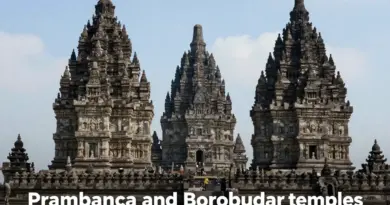
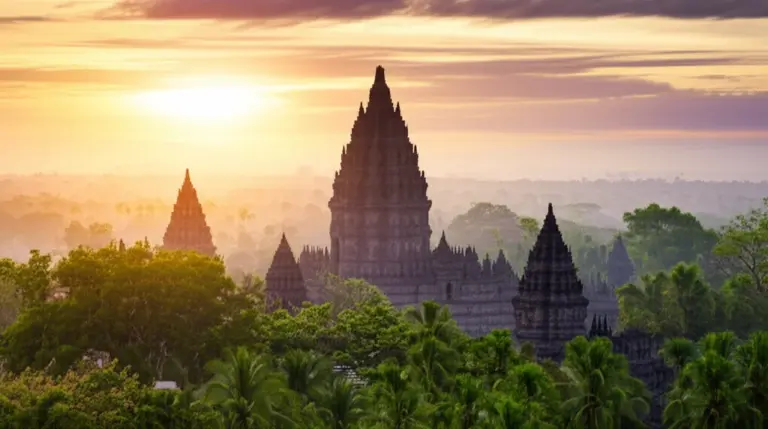
In stark contrast to Borobudur’s Buddhist serenity, Prambanan stands as Indonesia’s largest Hindu temple complex, a vibrant testament to the country’s Hindu past. Located just east of Yogyakarta, this UNESCO World Heritage site is dedicated to the Trimurti – Brahma (the Creator), Vishnu (the Preserver), and Shiva (the Destroyer). Its towering, ornate spires dominate the skyline, reflecting the architectural prowess of the ancient Mataram Kingdom. [5, 9]
Tales of Gods and Goddesses: History and Mythology
Built around the 9th century, Prambanan was likely constructed to commemorate the return of a Hindu dynasty to power in Java or to rival the Buddhist Borobudur. The complex consists of eight main shrines and 250 smaller ones. The three primary temples are dedicated to the Trimurti, with the tallest and most prominent dedicated to Shiva. The walls are intricately carved with reliefs depicting the epic Ramayana story, a cornerstone of Hindu mythology. [9]
The Art of Shiva and Vishnu: Architectural Highlights
The central Shiva temple, soaring 47 meters high, is a marvel of Hindu temple architecture. Inside, four chambers house statues of Shiva, his consort Durga (often referred to as Roro Jonggrang, the ‘Slender Virgin’ in local legend), and his divine teachers and sons. The temples dedicated to Brahma and Vishnu are smaller but equally detailed. Each temple is accompanied by a smaller shrine dedicated to its respective vahana (vehicle) – Nandi for Shiva, Hamsa for Brahma, and Garuda for Vishnu. The precision and artistry of the stone carvings are exceptional, illustrating scenes from Hindu epics and celestial beings. [9]
Exploring Prambanan: Practical Advice
Prambanan offers a different experience from Borobudur. While there isn’t a specific ‘sunrise’ tour, visiting in the late afternoon allows for beautiful golden hour photography and a chance to witness the sunset over the temple spires. The complex is vast, so comfortable shoes are essential. Consider hiring a local guide to fully appreciate the intricate carvings and the stories they tell. The site also hosts regular Ramayana ballet performances, which are a cultural highlight. [5]
The Cultural Heritage Conservation Efforts
Both Borobudur and Prambanan have undergone extensive restoration and conservation efforts, particularly after natural disasters like volcanic eruptions and earthquakes. Their inscription as UNESCO World Heritage sites underscores their global significance and the international commitment to their preservation. These efforts involve meticulous archaeological work, structural reinforcement, and ongoing maintenance to protect the delicate stone carvings from erosion and environmental damage. [5, 9]
Preserving Ancient Wonders
Conservation goes beyond physical restoration. It includes scientific research, documentation, and the implementation of sustainable tourism practices. Managing visitor flow, particularly at Borobudur, is crucial to prevent wear and tear on the ancient stones. Rules regarding climbing and access are in place to ensure the longevity of these invaluable structures. The delicate balance between allowing public access and ensuring preservation is a continuous challenge.
Sustainable Tourism and Community Involvement
Local communities play a vital role in the conservation of these sites. Their involvement in tourism, from providing guiding services to selling local crafts, helps foster a sense of ownership and responsibility for the heritage. Sustainable tourism initiatives aim to benefit the local economy while minimizing the environmental and cultural impact, ensuring that future generations can also marvel at the splendor of Yogyakarta’s Prambanan and Borobudur.
Planning Your Visit: Essential Tips for Yogyakarta’s Temples
To make the most of your trip to Yogyakarta’s Prambanan and Borobudur, consider these practical tips:
Best Time to Visit
The dry season, from April to October, is generally the best time to visit, offering clear skies and more comfortable temperatures. However, even during the rainy season (November to March), showers are often brief, and the temples can be less crowded. Visiting early in the morning for Borobudur and late afternoon for Prambanan is recommended to avoid the midday heat and larger crowds. [8]
Getting There
Both temples are easily accessible from Yogyakarta. You can hire a private car with a driver, which offers flexibility and comfort, especially for early morning or late afternoon visits. Ride-hailing apps are also available. Public buses are a more budget-friendly option, though they may take longer. Borobudur is about an hour’s drive northwest of Yogyakarta, while Prambanan is about 30-45 minutes east. [3, 8]
Tickets and Opening Hours
Check the official Borobudur Park and Prambanan Park websites for the most up-to-date information on ticket prices and opening hours. There are often combined tickets available for both sites, which can be cost-effective. Note that Borobudur recently implemented new regulations for climbing the temple, often requiring a special ‘structure ticket’ with a guided tour and specific time slots. It’s advisable to book these online in advance. [7, 8, 10]
Combining Your Visit: Borobudur Sunrise and Prambanan Sunset
Many visitors opt to see both temples in a single day. A popular itinerary involves an early start for Borobudur sunrise (from a viewpoint), followed by a visit to the temple itself, then heading to Prambanan in the afternoon to catch the sunset. This allows you to experience the unique atmosphere of both sites at their most magical times. [8]
Accommodation and Local Delights in Yogyakarta
Yogyakarta offers a wide range of accommodation options, from luxury resorts to budget-friendly guesthouses, catering to all preferences. Staying in the city provides easy access to local attractions, vibrant markets, and delicious Javanese cuisine.
Where to Stay
For convenience, consider hotels near Malioboro Street, the city’s bustling main thoroughfare, offering proximity to shopping, dining, and cultural experiences. If you prefer a quieter retreat, there are resorts nestled amidst rice fields closer to Borobudur, providing a serene escape.
Culinary Experiences
Don’t leave Yogyakarta without sampling its culinary delights. Try Gudeg, a traditional sweet jackfruit stew, or Nasi Goreng (fried rice). The city’s street food scene is vibrant and offers an authentic taste of local life. From fine dining to humble warungs, there’s something to satisfy every palate.
Visiting Yogyakarta’s Prambanan and Borobudur is an unforgettable journey into Indonesia’s spiritual and historical heart. These magnificent temples, each with its unique allure, stand as enduring symbols of human faith, artistic brilliance, and the ongoing commitment to preserving our shared cultural heritage. By understanding their history, appreciating their architectural grandeur, and supporting conservation efforts, travelers can ensure these ancient wonders continue to inspire for generations to come. Plan your trip wisely, embrace the local culture, and prepare to be enchanted by the timeless beauty of Java.
คำถามที่พบบ่อย (FAQ)
Q: What are the main differences between Borobudur and Prambanan?
A: Borobudur is the world’s largest Buddhist temple, known for its massive stupa structure and intricate relief panels depicting Buddhist cosmology. Prambanan is the largest Hindu temple complex in Indonesia, characterized by its tall, pointed spires dedicated to the Hindu Trimurti (Brahma, Vishnu, Shiva) and reliefs illustrating the Ramayana epic. [5, 9]
Q: Can I visit both Borobudur and Prambanan in one day?
A: Yes, it is a popular itinerary to visit both temples in one day. Many tours offer a combined package, often starting with Borobudur at sunrise (from a viewpoint) and concluding with Prambanan in the afternoon, allowing for a full day of exploration. [8]
Q: Are there any specific rules for visiting the temples?
A: Visitors are generally advised to dress modestly, covering shoulders and knees. Comfortable walking shoes are recommended. At Borobudur, there are specific regulations for climbing the temple structure, often requiring a special ‘structure ticket’ with a guide and timed entry to protect the monument. Drones are not allowed at either site. [8, 10]
Q: What are the conservation efforts for these temples?
A: Both Borobudur and Prambanan are UNESCO World Heritage sites, benefiting from ongoing international and national conservation efforts. These include meticulous archaeological restoration, structural reinforcement, environmental protection against erosion, and the implementation of sustainable tourism practices to manage visitor impact and ensure their long-term preservation. [5, 9]
References
- Exploring Yogyakarta: Your Travel Guide to Borobudur and Prambanan – YouTube
- Prambanan and Borobudur – The Temples of Central Java – YouTube
- How to Visit Borobudur and Prambanan Temples in Java, Indonesia – J’s Travel Diaries
- Prambanan Vacation Travel Video Guide – YouTube
- Everything You Need To Know When Visiting Borobudur Temple In Indonesia – YouTube
- Visiting Indonesia? Prambanan & Borobodur YOGYAKARTA is a MUST! – YouTube