Colonial and Chinatown Heritage Walks in Jakarta: A Self-Guided Route with Food Stops for History and Street Food Lovers
- Colonial and Chinatown Heritage Walks in Jakarta: A Self-Guided Route with Food Stops for History and Street Food Lovers
Jakarta, the sprawling capital of Indonesia, is a city of layers. Beneath its modern skyline lies a rich tapestry of history that dates back centuries. For those looking to experience the soul of the city, embarking on Colonial and Chinatown Heritage Walks in Jakarta offers an unparalleled journey through time. This self-guided route takes you from the grand, whitewashed buildings of the Dutch colonial era in Kota Tua to the vibrant, incense-filled alleys of Glodok, Jakarta’s historic Chinatown. Along the way, we have curated specific food stops to ensure your palate is as enlightened as your mind.
The Grandeur of Old Batavia: Starting at Kota Tua
Your journey begins in Kota Tua (Old Town), formerly known as Batavia during the Dutch East Indies era. This area was the center of commerce and administration for the Dutch East India Company (VOC). As you walk into Fatahillah Square, you are immediately transported to the 17th century. The cobblestone square is surrounded by majestic buildings that once housed the colonial government.
The centerpiece is the Jakarta History Museum, housed in the former Stadhuis (City Hall). Spend some time admiring the architecture before heading to the nearby Wayang Museum to see the intricate world of Indonesian puppetry. The atmosphere here is a unique blend of historical reverence and modern local life, with colorful ‘Onthel’ bicycles available for rent to add a splash of color to your photos.
Food Stop 1: A Taste of Colonial Luxury at Cafe Batavia
No heritage walk in Kota Tua is complete without a stop at Cafe Batavia. Located in the second oldest building in the square, this restaurant is a time capsule of the 1930s. With its high ceilings, dark wood shutters, and walls adorned with vintage photographs, it offers a sophisticated atmosphere to enjoy a morning coffee or a plate of Bitterballen (Dutch meat-based snacks). It perfectly encapsulates the ‘Colonial’ aspect of your walk before you transition toward the bustling energy of Chinatown.
Transitioning to Glodok: The Spirit of Jakarta’s Chinatown
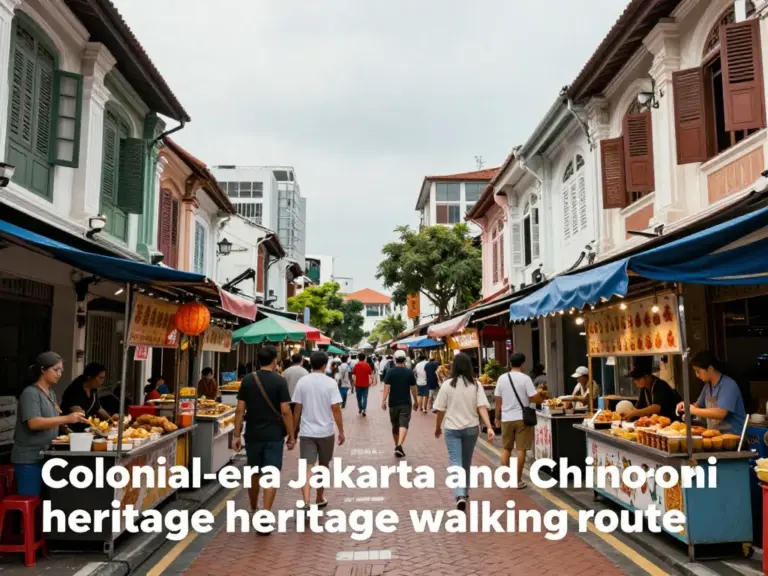
From Kota Tua, a short 15-minute walk south leads you into Glodok, the oldest Chinatown in Indonesia. The transition is palpable; the wide colonial squares give way to narrow, winding lanes filled with the aroma of medicinal herbs and street food. Glodok has been the heart of the Chinese-Indonesian community since the 1700s and remains a vital center for trade and culture.
Navigate your way to Petak Sembilan Market. This wet market is a sensory explosion. You will find everything from exotic fruits and fresh seafood to traditional Chinese lanterns and red envelopes. It is the perfect place to witness the daily rhythm of local life in Jakarta.
Spiritual Landmarks: Dharma Bhakti Temple
Deep within the alleys of Glodok lies Vihara Dharma Bhakti (Kim Tek Ie), the oldest Chinese temple in Jakarta, built in 1650. The air here is thick with the scent of burning incense. The temple serves as a place of worship for Taoism, Buddhism, and Confucianism, showcasing the religious harmony that exists within the community. The intricate carvings and vibrant red pillars provide a stunning backdrop for understanding the cultural heritage of the area.
Food Stop 2: Glodok Street Food Extravaganza
Now for the highlight for street food lovers. Glodok is a culinary goldmine. Your first stop should be Kopi Es Tak Kie, a legendary coffee shop that has been serving its signature iced coffee since 1927. The interior remains virtually unchanged, offering a nostalgic drinking experience.
For something more substantial, look for these local favorites:
- Bakmi Amoy: Famous for its springy noodles and savory toppings, located right in the heart of the market alleys.
- Rujak Shanghai Encim: A unique seafood salad with a thick, reddish sauce that you won’t find anywhere else.
- Pantjoran Tea House: Located at the entrance of Glodok, this restored building offers a traditional tea ceremony experience and a history lesson on the area’s ‘free tea’ tradition for travelers.
Summary of the Self-Guided Route
To make the most of your Colonial and Chinatown Heritage Walks in Jakarta, follow this sequence: Start at Fatahillah Square (Kota Tua) → Visit Jakarta History Museum → Brunch at Cafe Batavia → Walk south to Glodok → Explore Petak Sembilan Market → Visit Dharma Bhakti Temple → End with a food crawl through Gang Gloria and Pantjoran. This route covers approximately 3-4 kilometers and can be completed in 4-6 hours depending on your pace and appetite.
| Location | Highlight | Recommended Food |
|---|---|---|
| Kota Tua | Dutch Architecture | Bitterballen & Coffee |
| Fatahillah Square | Museums & Onthel Bikes | Kerak Telur (Street Food) |
| Petak Sembilan | Vibrant Market Life | Fresh Tropical Fruits |
| Gang Gloria | Historic Food Alley | Bakmi & Kopi Es Tak Kie |
คำถามที่พบบ่อย (FAQ)
Q1: Is it safe to walk between Kota Tua and Glodok?
A: Yes, it is generally safe. However, the sidewalks can be uneven or blocked by vendors, so watch your step. Keep an eye on your belongings in crowded market areas.
Q2: What is the best time of year to visit?
A: The dry season (May to September) is ideal for walking tours. If you visit during the rainy season, try to start your walk as early as possible, as rain often falls in the afternoon.
Q3: Are the food stops vegetarian-friendly?
A: While Glodok is famous for meat and seafood, you can find vegetarian options like Gado-Gado (peanut sauce salad) or various traditional cakes (Jajan Pasar) that are meat-free.
Q4: Do I need a guide for this heritage walk?
A: While a guide can provide deeper historical context, this route is easily navigable using a smartphone and this guide. It allows you to explore at your own pace.
References
Official Indonesia Tourism – Jakarta Old Town
Jakarta Tourism Board – Heritage Sites
UNESCO Tentative Lists – The Old Town of Jakarta
- Why this walk matters: overview of colonial and Chinese-Indonesian heritage, best times, safety, and what to expect on a self-guided route in Jakarta
- Planning your route: step-by-step itinerary from Kota Tua to Glodok, map tips, transportation between stops, walking times, and accessibility considerations
- Top historical sites and stories en route: must-see colonial landmarks, temples, museums, and the cultural significance of each stop with suggested visit durations