Experiencing Balinese Ceremonies: Temple Etiquette, Dress, and Offerings Guide for Respectful Visitors
- Experiencing Balinese Ceremonies: Temple Etiquette, Dress, and Offerings Guide for Respectful Visitors
- The Heart of Bali: Understanding Balinese Ceremonies
- Temple Etiquette: Navigating Sacred Spaces with Reverence
- Dress Code for Balinese Temples: Respectful Attire
- Offerings (Canang Sari and Beyond): A Gesture of Devotion
- Participating in a Ceremony (If Invited)
- Beyond the Temples: Everyday Balinese Rituals
- คำถามที่พบบ่อย (FAQ)
- What should I wear to a Balinese temple?
- Can I take photos during a Balinese ceremony?
- What is a Canang Sari?
- Should I participate in a Balinese ceremony if invited?
Bali, often called the “Island of the Gods,” offers an immersive cultural experience deeply rooted in its unique form of Hinduism, Agama Hindu Dharma. For visitors to this enchanting island, witnessing or even participating in Balinese ceremonies is a profound privilege. These vibrant rituals are not mere spectacles but integral parts of daily life, celebrating everything from birth and marriage to temple anniversaries and the triumph of good over evil. To truly appreciate and respect this rich spiritual tapestry, understanding the proper temple etiquette, dress codes, and the significance of offerings is paramount. This guide provides essential insights for any respectful traveler eager to engage with the authentic spirit of Bali and its captivating Balinese ceremonies.
The Heart of Bali: Understanding Balinese Ceremonies
Balinese Hinduism is a syncretic religion, blending elements of Hinduism, Buddhism, and indigenous animist beliefs. This creates a spiritual landscape where every aspect of life is intertwined with ritual and devotion. Ceremonies are held frequently, ranging from daily offerings made at homes and businesses to elaborate temple festivals that can last for days. These events are not just about prayer; they are vibrant community gatherings filled with music, dance, and a palpable sense of devotion. [2, 3, 4]
A Glimpse into Balinese Hinduism
The core philosophy of Balinese Hinduism is Tri Hita Karana, which emphasizes maintaining harmony between God, humans, and nature. This belief system influences architecture, agriculture, and, most visibly, the myriad of ceremonies. With over 20,000 temples across the island, each with its own specific function and calendar of rituals, visitors are likely to encounter a ceremony at some point during their stay. [4]
The Significance of Rituals and Offerings
Balinese rituals are performed to connect with gods, ancestors, and the community. Offerings, known as sesajen, are made daily from agricultural products and are believed to maintain peace and balance. These acts of devotion are deeply personal yet publicly displayed, providing a constant reminder of the spiritual connection that permeates Balinese society. [4, 9]
Balinese temples (pura) are sacred places of worship. Visitors are welcomed, but it is crucial to observe certain rules to show respect for the local culture and religious practices. Ignoring these guidelines can be seen as highly disrespectful.
Key Temple Etiquette Reminders:
- Always wear a sarong and sash.
- Cover your upper body (shoulders).
- Remove shoes before entering certain areas.
- Do not enter if menstruating or if you have an open wound.
- Do not point your feet towards shrines.
- Do not stand higher than the priest.
- Be mindful of ongoing prayers and ceremonies.
Before You Enter: Mindset and Purity
Purity is a significant concept in Balinese spiritual practice. Therefore, certain conditions are considered impure and prohibit entry into temples. Women who are menstruating, individuals with open wounds, or those who have recently given birth (within 6 weeks) should refrain from entering. This is not meant to be discriminatory but rather to maintain the sanctity of the sacred space. [11]
Inside the Temple: Behavior and Movement
Once inside, move respectfully and quietly. Avoid walking in front of people who are praying. Feet are considered unclean, so avoid pointing them towards shrines or holy objects. When seated during a ceremony, men typically sit cross-legged, while women often kneel. It is also considered disrespectful to have your head higher than that of a priest (pemangku). [11]
Photography and Observation
While photography is generally allowed, always be discreet and respectful. Never use a flash during a ceremony or point your camera directly into someone’s face without permission. If you wish to observe a ceremony, do so from a distance that does not intrude or disrupt the participants. A good rule of thumb is to ask for permission if you are unsure.
Dress Code for Balinese Temples: Respectful Attire
The dress code for visiting Balinese temples is strict and non-negotiable. It is a sign of respect and a requirement for entry. The good news is that appropriate attire is readily available and often provided at temple entrances. [10, 11]
The Essentials: Sarong and Sash
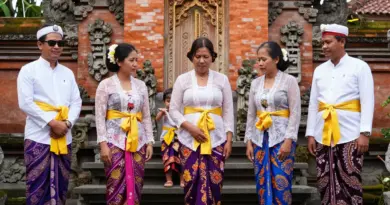
Every visitor to a Balinese temple must wear a sarong (kain) and a sash (selendang). The sarong is a piece of fabric wrapped around the waist, covering the legs. The sash is tied around the waist over the sarong. Many popular temples offer sarongs and sashes for rent or include them in the entrance fee. However, carrying your own can be convenient. [10, 11]
General Modesty Guidelines
In addition to the sarong and sash, your upper body must be covered. This means wearing a top that covers your shoulders. Avoid tank tops, strapless tops, or overly revealing clothing. Modest clothing in general, such as a t-shirt or blouse with sleeves, is recommended. For men, a traditional Balinese headgear called an udeng is worn during ceremonies, though it’s not strictly required for tourists unless participating in a specific ritual. [11, 12, 13]
Where to Obtain Appropriate Attire
Sarongs and sashes can be purchased in markets across Bali for a few dollars, making for a lovely souvenir. Alternatively, as mentioned, many temples provide them at the entrance. It’s always a good idea to have a sarong handy when exploring the island, as you might encounter a temple or ceremony unexpectedly.
Offerings (Canang Sari and Beyond): A Gesture of Devotion
Offerings are a ubiquitous sight in Bali, from tiny, intricate baskets on sidewalks to elaborate displays in temples. Understanding their purpose enhances your appreciation of Balinese spirituality.
Understanding Canang Sari
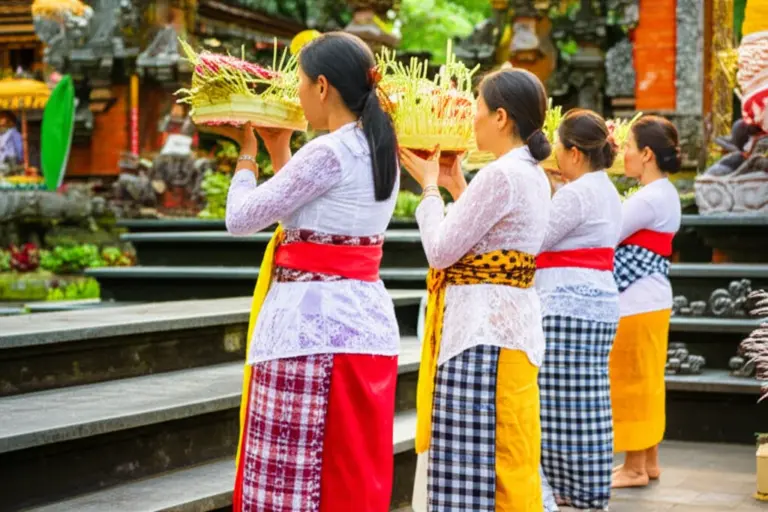
The most common daily offering is the Canang Sari. These small, square baskets woven from palm leaves are filled with flowers of different colors (each representing a Hindu deity), rice, cookies, and sometimes a small amount of money or cigarettes. They are offered with incense and a silent prayer, a gesture of gratitude and self-sacrifice to the gods and spirits. You will see them everywhere – on shrines, altars, sidewalks, and even car dashboards. [3, 9]
How to Participate (or Observe Respectfully)
While tourists are not expected to make daily Canang Sari, it’s essential to be mindful of them. Avoid stepping on them, especially when they are freshly laid. If you accidentally step on one, a simple apology or gesture of respect is appreciated. During ceremonies, you might see larger, more elaborate offerings being presented. Observe from a distance and avoid touching them unless explicitly invited.
Other Common Offerings
Beyond Canang Sari, larger offerings are prepared for specific ceremonies, often involving fruit, cakes, and even roasted pigs. These are meticulously arranged and carried in grand processions to temples, demonstrating the deep devotion and artistic skill of the Balinese people. [2]
Participating in a Ceremony (If Invited)
Occasionally, visitors might be invited to participate in a Balinese ceremony, such as a purification ritual (Melukat) or a temple festival (Odalan). This is a unique and cherished opportunity. [3, 6, 8]
What to Expect
If invited, you will likely be guided by a local. They will instruct you on the appropriate attire and behavior. You might be asked to sit, pray, or receive holy water. Embrace the experience with an open mind and heart. [3]
General Guidelines for Participation
Always follow the lead of your host and the priest. If you are unsure about something, politely ask. Remember that you are a guest in a sacred event, and your respectful participation is a testament to your appreciation of their culture.
Beyond the Temples: Everyday Balinese Rituals
The spiritual life of Bali extends far beyond the grand temple complexes. It is woven into the fabric of daily existence.
Daily Offerings at Homes and Shops
Even in the busiest streets, you’ll notice small offerings placed outside homes, shops, and businesses each morning. These daily acts of devotion are a way of honoring deities and ancestors, seeking blessings, and maintaining harmony with the spiritual world. [3, 9]
Understanding the Spiritual Landscape
From the vibrant decorations of Galungan and Kuningan, celebrating the victory of good over evil, to the solemn silence of Nyepi (Balinese New Year), every season brings its own set of significant Balinese ceremonies. These events provide deep insights into the island’s soul and are a testament to the Balinese people’s unwavering faith. [2, 5, 8]
Embracing the spiritual side of Bali means approaching its traditions with an open heart and a respectful attitude. By understanding and adhering to the guidelines for temple etiquette, dress, and offerings, visitors can ensure their experience of Balinese ceremonies is not only memorable but also deeply appreciative of this extraordinary culture. Your mindful presence contributes to preserving the sacredness that makes Bali truly unique.
คำถามที่พบบ่อย (FAQ)
References
- 13 Important Ceremonies in Bali You Should Know – Ubud Story Walks
- Discover the Best Balinese Ceremonies You Should Experience – FINNS Beach Club
- Balinese Culture and Traditions | Viceroy Bali Blog
- Galungan, Nyepi, Melasti, Kuningan – Bali’s holidays and festivials
- Traditional Balinese rituals and ceremonies you should know about – City Game
- 5 Balinese Hindu Ceremonies You Should See in Bali – Lotus Bungalows
- Bali Cultural Ceremony and Ritual | BaliSpirit
- Ceremonies in Bali – Balicasa Properties
- Bali Temple Etiquette/Dress Code | Sarong and sash are compulsory – YouTube
- Bali temple etiquette and temple dress code – Vilondo
- How to dress for a Balinese temple – Bali.live
- What Is The Appropriate Dress Code In Bali? – Exploring Southeast Asia – YouTube
- What Are The Cultural Rules For Visiting Temples In Bali? – Beach Tour Guide – YouTube
- What is the cultural and spiritual significance of Balinese temple ceremonies and why understanding them matters for visitors
- How to dress appropriately for Balinese temples: sarong rules, kebaya, modest clothing, and tips for tourists
- Step-by-step temple etiquette: entry procedures, behavior during rituals, photography do’s and don’ts, and interacting with clergy