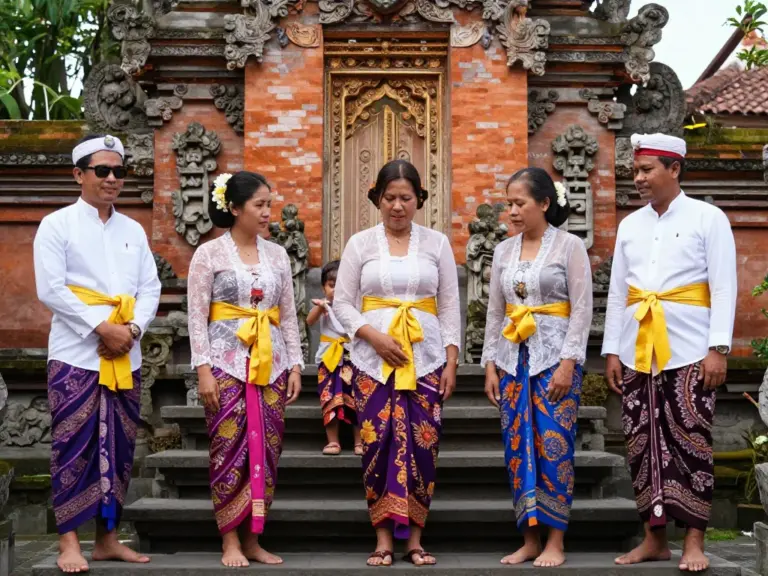
What to Wear: Appropriate Dress Codes for Men, Women, and Children at Balinese Temples
Bali, often referred to as the ‘Island of the Gods,’ is home to thousands of stunning Hindu temples (Pura) that serve as the spiritual heart of the island. When planning your visit to these sacred sites, understanding the appropriate dress codes for Balinese temples is not just a matter of following rules—it is a profound sign of respect for the local culture and spirituality. Whether you are visiting the iconic Pura Besakih or the sea temple of Tanah Lot, dressing correctly ensures you are welcomed into these holy spaces with open arms.
The Universal Basics: Sarongs and Sashes
Regardless of gender or age, there are two non-negotiable items required for entering any temple in Bali: the Sarong (Kamen) and the Sash (Selendang). The sarong is a large piece of cloth wrapped around the waist to cover the legs, while the sash is tied around the waist over the sarong. This attire symbolizes the separation of the lower, more ‘earthly’ part of the body from the upper, more ‘spiritual’ part.
Appropriate Dress Codes for Men
For men, the dress code is straightforward but specific. While it might be tempting to wear casual beachwear in the Bali heat, temples require a more modest approach. Men should wear a shirt that covers the shoulders—t-shirts are generally acceptable, but collared shirts or traditional ‘Batik’ shirts are preferred for a more respectful look. The sarong should be wrapped to reach at least below the knees, and the sash must be tied firmly around the waist. Avoid wearing tank tops or sleeveless shirts, as these are considered disrespectful in a place of worship.
Appropriate Dress Codes for Women
Women’s attire in Balinese temples focuses heavily on modesty. Shoulders must be covered at all times; therefore, blouses, t-shirts, or traditional Balinese ‘Kebaya’ are excellent choices. If you are wearing a sundress with thin straps, be sure to carry a light shawl or scarf to cover your shoulders before entering the temple grounds. The sarong should cover the legs down to the ankles.
Appropriate Dress Codes for Children
Children are not exempt from the rules of respect, though there is often a bit more leniency for very young toddlers. For older children, the same rules apply: covered shoulders and a sarong/sash combination. Dressing children in traditional Balinese attire can be a wonderful way to involve them in the cultural experience and often draws warm smiles from the local community. Ensure their clothing is breathable, as Balinese temples can be quite warm during the day.
Summary Table of Temple Etiquette
| Item | Requirement | Notes |
|---|---|---|
| Shoulders | Must be covered | Use t-shirts, shirts, or shawls. |
| Waist | Sash (Selendang) | Mandatory for all visitors. |
| Legs | Sarong (Kamen) | Must cover at least below the knees. |
| Footwear | Removal often required | Remove shoes before entering inner sanctums. |
คำถามที่พบบ่อย (FAQ)
Can I wear shorts if I use a sarong?
Yes, you can wear shorts underneath your sarong. The sarong will cover your legs, which satisfies the modesty requirement of the temple dress code.
Do I need to take off my shoes?
While you can wear shoes or sandals in the outer courtyards of most temples, you will be required to remove them before stepping onto the raised platforms or entering the most sacred inner areas.
Where can I get a sarong?
Most popular temples like Uluwatu or Tanah Lot have rental booths at the entrance. Alternatively, you can buy beautiful, high-quality sarongs at local markets like Ubud Market to keep as a souvenir.
Is the dress code different for different temples?
The core requirement of a sarong and sash is universal across all Balinese Hindu temples. However, more remote or less-visited ‘village’ temples may expect even stricter modesty.