Toraja Funeral Rites Explained: Customs, Calendar, and Visitor Guidelines for Respectful Travel
- Toraja Funeral Rites Explained: Customs, Calendar, and Visitor Guidelines for Respectful Travel
The highlands of Tana Toraja in South Sulawesi, Indonesia, offer a travel experience unlike any other. Central to the region’s unique culture are the elaborate and profound **Toraja Funeral Rites**, known locally as Rambu Solo. Far from a somber affair, these ceremonies are vibrant, days-long celebrations of life and a necessary transition for the soul to the afterlife. For travelers seeking a deep dive into Indonesian heritage, understanding these customs, the calendar for ceremonies, and the essential visitor guidelines is key to a respectful and enriching journey.
The Profound Philosophy: Death as a Celebration (Rambu Solo)
In Torajan culture, death is not the end but a complicated, costly, and lengthy step in a continuous cycle. The Rambu Solo ceremony is the ultimate rite of passage, ensuring the deceased’s spirit, or *Bombo*, successfully reaches *Puya*, the land of the souls. The grandeur of the ceremony directly reflects the social status and wealth of the family, making it a pivotal social event.
Aluk To Dolo: The Path of the Ancestors
The foundation of the Torajan belief system is *Aluk To Dolo*, or the ‘Way of the Ancestors.’ This indigenous faith dictates that all aspects of life, including the elaborate **Toraja Funeral Rites**, must be performed precisely to maintain harmony between the living, the dead, and the Creator. Rambu Solo literally means ‘Smoke Descending’ and refers to ceremonies conducted in the afternoon, facing west (the direction of death), contrasting with Rambu Tuka (‘Smoke Ascending’), which are joyous ceremonies for life events (birth, marriage) facing east.
‘To Makula’: The Long Wait for the Funeral
One of the most fascinating aspects is the interim period. A person is not truly considered ‘dead’ until the Rambu Solo ceremony is performed. Until then, the deceased is merely referred to as *’to makula’* (a sick person). The body is kept in the family’s *Tongkonan* (ancestral house), chemically preserved, and treated as if still alive—offered food, drink, and conversation—sometimes for months or even years, while the family saves the necessary funds for the grand funeral.
Anatomy of the Grand Ceremony: Key Rituals and Symbols
The main ceremony is a highly coordinated spectacle that can last from three to seven days. It is a powerful display of community solidarity and family wealth.
The Tongkonan and the Ceremonial Grounds (Rante)
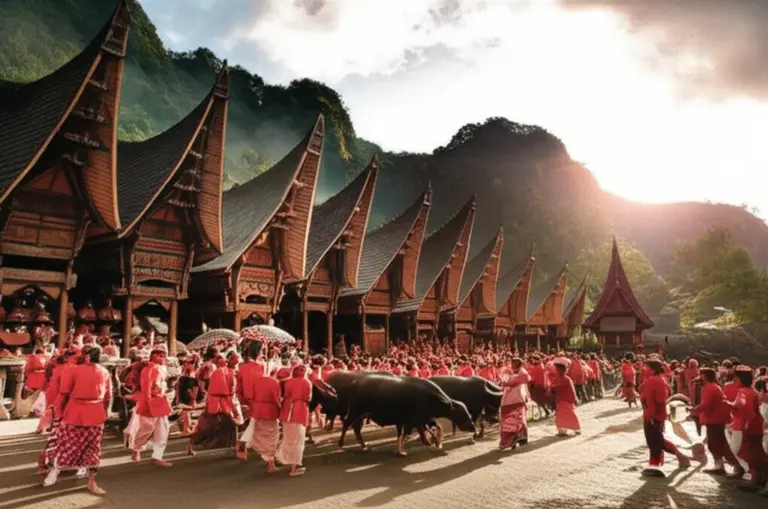
The ceremony takes place on a vast field known as the *Rante*, often adjacent to the family’s ancestral *Tongkonan*. Temporary bamboo structures (*Lakkian* or *Lumbung*) are built to house the hundreds, sometimes thousands, of guests. The event features traditional dances, music, and the arrival of guests bearing gifts, usually pigs and buffalo, which are essential for the next ritual.
The Pivotal Role of the Water Buffalo (Tedong)
The sacrificial slaughter of water buffalo (*tedong*) is the centerpiece of the Rambu Solo. The number of sacrificed animals is crucial, as the Torajans believe the buffalo’s spirit will carry the deceased’s soul to *Puya*. Elite funerals may involve dozens or even hundreds of buffalo and pigs. The meat is then meticulously distributed to all attending guests, a traditional act of sharing and community support.
The Final Journey and the Tau-tau Effigies
Following the sacrifices, the deceased is taken in a final procession (*Ma’Palao*), often carried in a highly decorated tower or a miniature *Tongkonan*, to the burial site. Torajan burials are unique, typically in cliff graves, cave tombs, or carved stone walls. High-status individuals are often accompanied by a *Tau-tau*, a life-sized wooden effigy carved to resemble the deceased, which is placed on a balcony near the grave to watch over the family.
Planning Your Visit: Calendar and Logistics
Witnessing a Rambu Solo ceremony is a privilege that requires careful planning and a local guide. Tana Toraja is located in South Sulawesi, Indonesia.
When to Witness the Rambu Solo Ceremony
While smaller funerals can happen year-round, the grandest Rambu Solo ceremonies typically occur during the dry season, specifically **June to September**. This is when families can most easily gather the necessary funds, harvest, and accommodate large crowds. If you are planning a trip specifically to witness the **Toraja Funeral Rites**, aim for this window and hire a local guide who can confirm the schedule of ongoing ceremonies.
Rambu Solo vs. Rambu Tuka
Remember the distinction: Rambu Solo is a death ritual (west-facing, afternoon), while Rambu Tuka is a life ritual (east-facing, morning). Travelers are almost exclusively invited to Rambu Solo ceremonies, as they are large communal events designed to include the wider community and guests.
Essential Visitor Guidelines for Respectful Engagement
Attending a funeral is a profound honor. Adhering to strict etiquette is paramount to showing respect for the Torajan people and their sacred customs.
| Etiquette Area | Guideline |
|---|---|
| **Dress Code** | Wear modest, dark, or neutral colors. Avoid red (a color for life ceremonies) and bright, distracting clothing. |
| **Gifting** | It is customary to bring a gift when attending. Common gifts include cigarettes, sugar, or money (often presented in an envelope). Your guide will advise on the appropriate amount or item. |
| **Behavior** | Be discreet, especially during sensitive moments like the animal sacrifice. Sit in the designated area for guests and tourists. Never interrupt or make a scene. |
| **Photography** | Ask permission before taking close-up photos of individuals, especially the family members or the deceased’s effigy (*Tau-tau*). Be mindful and use long lenses when possible. |
Photography and Behavior at the Rante
While the **Toraja Funeral Rites** are a tourist draw, they are first and foremost sacred religious events. Always defer to your guide’s instructions. When witnessing the sacrifices, maintain a respectful distance. The atmosphere is often lively and celebratory, but remember that the family is in mourning, even if they appear joyful. Your presence is tolerated and welcomed, but only on the condition of utmost respect.
คำถามที่พบบ่อย (FAQ)
What is the difference between Rambu Solo and Rambu Tuka?
Rambu Solo is the death ceremony, facing west and held in the afternoon. Rambu Tuka is the life ceremony (e.g., house inauguration, weddings), facing east and held in the morning. Rambu Solo is the event typically witnessed by tourists.
Why do the Toraja people sacrifice water buffaloes?
The Torajans believe the spirit of the sacrificed water buffalo (*tedong*) is essential for carrying the deceased’s soul to the afterlife (*Puya*). The number of buffaloes sacrificed reflects the deceased’s social status and ensures a smoother journey.
How long is the waiting period before the Toraja Funeral Rites?
The waiting period can range from a few months to several years, or even decades. The family must wait until they have accumulated enough wealth to host a ceremony befitting the deceased’s status, during which time the body is kept at home and treated as if they are merely ‘sick’ (*to makula*).
References
- What are the historical and cultural meanings behind Toraja funeral rites and why they matter to visitors
- How does the Toraja funeral calendar work — stages, timing, and how locals plan elaborate ceremonies
- What should visitors know about etiquette, dress, photography, and gift-giving during Toraja funerals