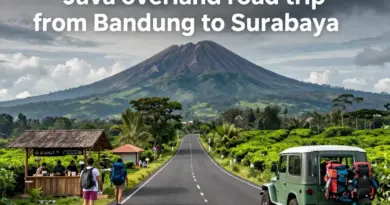
Planning Your Route and Timing: Best Seasons, Road Conditions, and Essential Permits
- Planning Your Route and Timing: Best Seasons, Road Conditions, and Essential Permits
Indonesia, the world’s largest archipelago, offers a staggering variety of landscapes, cultures, and experiences. Successfully exploring this nation requires meticulous preparation, especially when it comes to Planning Your Route and Timing. From navigating the monsoon rains to securing the correct driving documentation, understanding the logistical challenges upfront is crucial for a smooth journey. This comprehensive guide details the best seasons for travel, what to expect from Indonesia’s diverse road conditions, and the essential permits required for foreign visitors.
Understanding Indonesia’s Climate: Best Seasons for Travel
Indonesia sits on the equator, resulting in a tropical climate characterized primarily by two distinct seasons: the dry season and the wet (or monsoon) season. Choosing the right time to visit is the first and most critical step in successful route planning.
| Season | Months | Typical Conditions | Ideal Activities |
|---|---|---|---|
| Dry Season (High Season) | April to October | Sunny skies, low humidity, minimal rainfall. | Hiking (e.g., Mount Bromo), diving, beach holidays, overland travel. |
| Wet Season (Low Season) | November to March | Heavy, short downpours, high humidity, potential flooding. | Cultural experiences, spa treatments, lower prices, less crowded sites. |
The Dry Season (April to October)
The dry season is universally considered the best time for travel, particularly for activities involving extensive outdoor movement or remote exploration. Road conditions are optimal, minimizing the risk of landslides or impassable muddy tracks common in more remote areas like Flores or Sulawesi. Peak tourist months are July and August, meaning higher prices and greater crowds in places like Bali and the Gili Islands.
The Wet Season (November to March)
While the wet season brings daily rainfall, it rarely rains all day. Typically, the rain comes in intense bursts during the afternoon. However, this season significantly impacts travel logistics. Ferry schedules can be disrupted by rough seas, and driving conditions become hazardous due to reduced visibility and flash flooding, especially in urban centers and mountainous regions. If your route involves significant driving or trekking, be prepared for delays and mandatory rest days.
Road quality in Indonesia is highly inconsistent. It is essential to research the specific islands you plan to visit, as conditions range from modern toll roads to unpaved jungle tracks. This variance heavily influences your required mode of transport and daily distance targets when Planning Your Route and Timing.
Java and Bali: Well-Maintained Routes
Java and Bali benefit from excellent infrastructure due to high population density and tourism. Major highways (especially in Java) are modern and relatively efficient, though traffic congestion in major cities like Jakarta and Surabaya can be extreme. Bali’s roads are generally well-paved, but narrow village roads and heavy scooter traffic require cautious driving.
In Indonesia, especially Java and Bali, calculating travel time based solely on distance is misleading. A 100 km journey can easily take four to five hours due to traffic, particularly around holidays like Eid al-Fitr (Lebaran).
Sumatra, Borneo, and Sulawesi: Challenges and Remote Travel
Venturing into the outer islands presents greater logistical hurdles. While main trans-island routes exist (like the Trans-Sumatra Highway), many secondary roads are poorly maintained, unpaved, or prone to damage from heavy rains and logging trucks. Off-road capability (4×4 vehicles) is often necessary, and reliable fuel stations and repair shops become scarcer the further you venture from provincial capitals.
Essential Permits and Documentation for Foreign Drivers
Driving legally in Indonesia requires specific documentation. Failure to produce the correct permits during a police stop can result in fines or vehicle impoundment. This is a non-negotiable part of secure travel planning.
International Driving Permit (IDP) and Local Requirements
Foreign visitors must possess an International Driving Permit (IDP) alongside their valid national driver’s license. The IDP translates your license into several languages, which is mandatory for legal operation of a motor vehicle in Indonesia, whether a car or a scooter. Ensure your IDP covers the type of vehicle you intend to drive (e.g., motorcycle endorsement for scooters). The Indonesian police strictly enforce this rule, especially in tourist hotspots like Bali.
- Always carry the original IDP and national license.
- Ensure your passport and vehicle registration papers (STNK) are readily accessible.
- Helmets are mandatory for all motorcycle riders and passengers.
Specific Regional Permits (SIM, etc.)
While there are no national ‘road permits’ beyond the standard vehicle registration (STNK), certain remote or protected areas may require specific entrance permits (often referred to as SIMAKSI for conservation areas). For example, trekking permits for national parks (like Gunung Rinjani or Komodo National Park) must be secured in advance, often through a registered guide or local office. Factor the time required to acquire these permits into your overall route logistics.
Strategizing Your Route: Timing and Logistics
Effective Planning Your Route and Timing means building flexibility into your schedule. Inter-island travel often relies on domestic flights or ferries, both of which are subject to weather delays, particularly during the wet season. When calculating travel days, assume that any journey involving a ferry or flight connection will take a full day, regardless of the direct travel time.
- Prioritize Islands: Focus on one or two major regions (e.g., Java-Bali-Lombok) if you have two weeks or less. Trying to cover too much distance (e.g., Java to Sulawesi) will result in spending most of your time in transit.
- Use Local Transport: Consider utilizing Indonesia’s extensive train network on Java, which is efficient and avoids road traffic. For longer distances, domestic airlines (e.g., Garuda, Lion Air) are essential.
- Book Ahead: Accommodation and high-demand transport (especially during the dry season peak) should be booked well in advance to secure availability and favorable rates.
By respecting Indonesia’s diverse geography and climate, and ensuring all legal requirements are met, travelers can transform a potentially complex journey into an unforgettable adventure across this magnificent archipelago.
คำถามที่พบบ่อย (FAQ)
References
Official Indonesia Tourism Website |
UK Government Guide on IDP |
Indonesian Meteorology, Climatology, and Geophysics Agency (BMKG)
- Java Overland Road Trip from Bandung to Surabaya: Volcano Views, Coffee Stops, and Practical Itinerary
- Must-See Volcanoes and Scenic Detours: Mount Tangkuban Perahu, Mount Bromo, Ijen Crater, and Photo Stops
- Coffee Culture Along the Way: Top Coffee Plantations, Local Cafés, Tasting Tips, and Where to Buy Beans