Exploring the Dutch forts — detailed walking routes, key structures (Fort Belgica, Fort Nassau), maps, and historical anecdotes
- Exploring the Dutch forts — detailed walking routes, key structures (Fort Belgica, Fort Nassau), maps, and historical anecdotes
- The Legacy of the VOC: Why These Forts Matter
- Fort Belgica: The Star Citadel of Banda Neira
- Fort Nassau: The Foundation of Dutch Power
- Planning Your Exploration: Maps and Logistics
- Historical Anecdotes: The Nutmeg Wars
- Tips for Indonesia Tourism Visitors
- คำถามที่พบบ่อย (FAQ)
- Where exactly are Fort Belgica and Fort Nassau located?
- What is the historical significance of exploring the Dutch forts in the Banda Islands?
- Are the Dutch forts easily accessible for tourists, and is there an entrance fee?
For centuries, the remote Banda Islands in Maluku, Indonesia, were the epicenter of global trade, thanks to the invaluable nutmeg and mace grown exclusively here. The legacy of this lucrative spice trade is etched into the landscape, visible primarily through the imposing colonial structures left by the Dutch East India Company (VOC). For travelers interested in history and adventure, **exploring the Dutch forts** offers a profound journey back in time. This guide provides detailed routes, insights into key structures like Fort Belgica and Fort Nassau, and the compelling historical anecdotes that shaped modern Indonesia.
Essential Context: The Spice Islands
The Banda Islands, often called the Spice Islands, were the only source of nutmeg until the 19th century. The intense competition for control over this resource led to devastating conflicts, culminating in the Dutch seizing total control, solidifying their power through the construction of formidable fortresses.
The Legacy of the VOC: Why These Forts Matter
The forts scattered across Banda Neira and the surrounding islands are not merely ruins; they are monuments to global capitalism, colonial ambition, and resistance. Constructed primarily in the 17th century, these structures—including the famous Fort Belgica and Fort Nassau—served as administrative centers, military garrisons, and secure storage facilities for the precious nutmeg harvest.
Fort Belgica: The Star Citadel of Banda Neira
Perched dramatically atop a hill overlooking Banda Neira town, Fort Belgica is arguably the most recognizable and best-preserved of the Dutch fortifications. Its unique pentagonal star shape, complete with five bastions, reflects advanced 17th-century European military architecture designed to withstand cannon fire from any direction. It is a UNESCO World Heritage Tentative Site, making it a must-see when **exploring the Dutch forts**.
Architectural Marvel and Historical Significance
Originally built in 1611, Fort Belgica was rebuilt in its current stone structure in 1669 under Governor-General Joan Maetsuycker. The fort symbolizes the absolute control the VOC sought over the region. Climbing to the top rewards visitors with breathtaking panoramic views of the entire island group, including the active volcano, Gunung Api.
The Fort Belgica Walking Route (Approx. 45-60 minutes)
- Start Point: The main town center of Banda Neira.
- Ascent: Follow the paved road upwards, turning onto the stone staircase leading directly to the fort’s main gate. The climb is steep but short (about 15 minutes).
- Exploration: Enter the fort (a small entrance fee is usually required). Explore the five bastions, the central courtyard, and the restored interior rooms. Notice the thick walls and the strategic placement of the cannon ports.
- Viewpoint: Spend time on the highest ramparts for the iconic view of Fort Nassau below, the harbor, and Gunung Api.
Fort Nassau: The Foundation of Dutch Power
Located closer to sea level, just a short walk from the town pier, Fort Nassau predates Belgica and was the first major Dutch fortification in the area, built in 1609. While less structurally complete than Belgica, Nassau holds immense historical weight as the initial base of VOC operations.
Locating and Exploring Fort Nassau
Fort Nassau is often overgrown but its massive stone walls still delineate its original quadrangular shape. It is situated directly adjacent to the main road, making it very accessible. Look for the remnants of the barracks and the well-preserved tunnel system connecting it to other colonial structures. The primary appeal here is imagining the bustling early 17th-century port life that revolved around this site.
Planning Your Exploration: Maps and Logistics
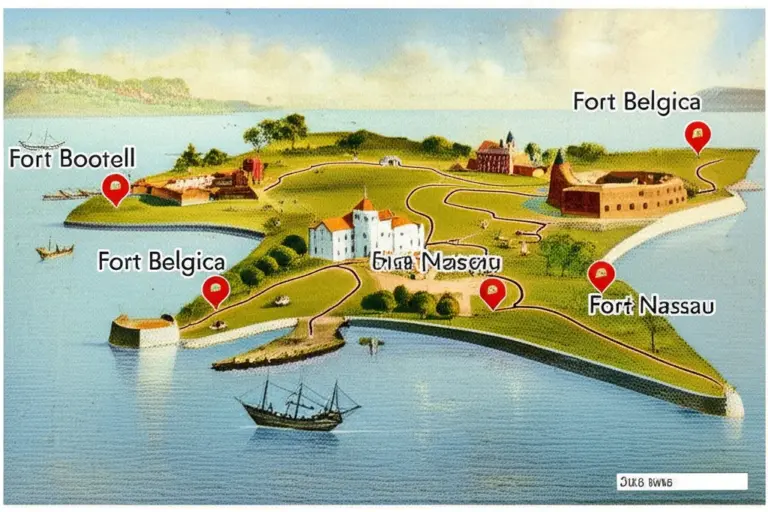
Banda Neira is a small, walkable island. Both Fort Belgica and Fort Nassau are within easy walking distance of each other and the main harbor, making them perfect for a half-day historical tour. Other minor ruins and colonial houses are scattered throughout the town, forming a cohesive historical landscape.
Visualizing the Location
Multimedia Insight: The Beauty of Banda
To truly appreciate the stunning natural and historical environment you will encounter when **exploring the Dutch forts**, take a moment to watch this short documentary clip:
Historical Anecdotes: The Nutmeg Wars
The construction of these massive forts was directly linked to the atrocities committed by the VOC in their quest for monopoly. The most infamous event was the Banda Massacre of 1621, orchestrated by Governor-General Jan Pieterszoon Coen. After local leaders resisted Dutch control over the nutmeg trade, Coen launched a military campaign that effectively decimated the indigenous population, replacing them with Dutch planters and enslaved labor. These forts stood as physical guarantors of this brutal economic control.
The story of the Banda Islands is a powerful, tragic narrative of how global commerce and colonial violence intersected, forever altering the geopolitical landscape of Southeast Asia.
Tips for Indonesia Tourism Visitors
-
Best Time to Visit: The dry season (April to November) offers the best weather for walking and island hopping.
-
Footwear: Wear sturdy shoes, especially for the steep climb up to Fort Belgica.
-
Photography: Sunrise or sunset from Fort Belgica provides unparalleled photo opportunities of the volcano and surrounding islands.
-
Local Guides: Consider hiring a local guide in Banda Neira to enhance your understanding of the complex history of the Spice Islands.
คำถามที่พบบ่อย (FAQ)
References
UNESCO Tentative List: The Historic and Cultural Landscape of Banda Islands
Rijksmuseum: History of Jan Pieterszoon Coen and the VOC
- Banda Neira Dutch Forts and Spice Legacy: A Complete Walking Guide for History Lovers and Spice Route Explorers
- Banda Neira overview — history, geography, and why the island mattered in the spice trade
- Planning your visit — getting to Banda Neira, best times to go, permits, and practical tips for walking tours