Understanding Batik Motifs and Meanings: Common patterns, symbolic meanings, regional styles, and how to identify authentic pieces
- Understanding Batik Motifs and Meanings: Common patterns, symbolic meanings, regional styles, and how to identify authentic pieces
Welcome to the vibrant world of Indonesian Batik, a UNESCO Intangible Cultural Heritage of Humanity. For travelers and culture enthusiasts visiting Indonesia, truly appreciating Batik goes far beyond recognizing its beauty; it involves delving into the profound narratives woven into its intricate patterns. This comprehensive guide will illuminate the secrets behind Understanding Batik Motifs and Meanings, covering everything from sacred Javanese designs to the bold coastal styles, helping you recognize authenticity on your journey.
Batik is not merely cloth; it is a visual language where every line, color, and motif tells a story of philosophy, social status, nature, and spirituality. Mastering the ability to read these symbols enhances the entire Indonesian tourism experience, transforming a souvenir purchase into acquiring a piece of living history.
The Historical and Spiritual Foundation of Batik Motifs
The art of Batik, the dyeing of cloth using wax-resist techniques, has ancient roots, but it flourished dramatically in the Javanese courts, particularly in Central Java. Here, motifs were heavily regulated, serving as clear indicators of the wearer’s social standing and spiritual alignment. Understanding the core symbolism is key to appreciating the artistry.
Sacred Motifs from the Javanese Courts
Central Javanese Batik (like those from Yogyakarta and Surakarta) often features motifs that are deeply philosophical and historically significant. These are the patterns that require the deepest respect and understanding.
- Parang Rusak (Broken Sword): Historically reserved for royalty, this motif symbolizes strength, protection, and the ability to overcome obstacles. Its flowing, diagonal lines represent the perpetual movement of the ocean and life itself. Wearing it often denoted high status.
- Kawung (Palm Fruit): Representing perfection and harmony, the Kawung motif is a circle-within-a-circle pattern, often likened to the cross-section of a palm fruit. It symbolizes balance and the ability to control one’s desires.
- Semen (Vine/Sprouts): Often used in wedding ceremonies, Semen symbolizes fertility, growth, and the connection between humanity and the natural world. It is characterized by delicate, intertwining vines and leaves.
- Truntum: A softer, more romantic motif, Truntum is frequently used in wedding attire. It symbolizes the blossoming of love and the hope for a bright future.
The Influence of Nature and Cosmology
Many Batik patterns draw direct inspiration from the natural world, reflecting the Javanese cosmological view where humans are intrinsically linked to their environment.
- Birds and Fauna: Birds often symbolize freedom and the realm of the heavens. Specific birds, like the Garuda (mythical eagle), signify power and majesty.
- Geometric Patterns: Beyond the courtly symbols, many geometric designs represent order, structure, and mathematical harmony in the universe.
To further appreciate the intricate process that brings these meanings to life, watch this demonstration of the traditional technique:
Regional Styles: A Kaleidoscope of Color and Context
As Batik spread across the Indonesian archipelago, it absorbed local cultural influences, leading to distinct regional styles often recognizable by their color palettes and motif choices. This diversity is what makes Understanding Batik Motifs and Meanings a regional study in itself.
The Coastal Batik (Batik Pesisir)
Coastal Batik, found in areas like Pekalongan, Cirebon, and Madura, contrasts sharply with the subdued tones of the interior courts. These areas were hubs for international trade, leading to vibrant, bold designs influenced by Chinese, European, and Arab traders.
| Region | Key Characteristics | Dominant Motifs |
|---|---|---|
| Pekalongan | Extremely bright colors (red, yellow, blue). Floral and animal motifs often mixed. | Phoenix, butterflies, lush flora. |
| Cirebon | Influence of Chinese porcelain patterns. | Mega Mendung (Cloud motif – symbolizing rain and fertility). |
| Madura | Bold, strong geometric patterns, often incorporating sharp reds and blacks. | Specific geometric interlocking forms. |
The Eastern & Western Batik Styles
Further afield, regions like Sumatra (especially Palembang) and Eastern Indonesia developed unique interpretations.
- Palembang Batik (South Sumatra): Often features motifs inspired by local flora and fauna, sometimes incorporating Islamic calligraphy or geometric patterns derived from local weaving traditions. Colors tend to be rich but slightly darker than Pekalongan.
- Toraja/Eastern Indonesia: While less traditional Batik wax-resist, the influence is seen in patterns that incorporate traditional tribal iconography, often using natural dyes resulting in earthy tones.
How to Identify Authentic Batik Pieces
As tourism grows, discerning authentic, handcrafted Batik from mass-produced imitations is crucial for supporting local artisans. True craftsmanship is evident in subtle details, directly related to the application of wax and dye.
Tulis vs. Cap: The Craftsmanship Test
The primary distinction lies in the method used to apply the wax:
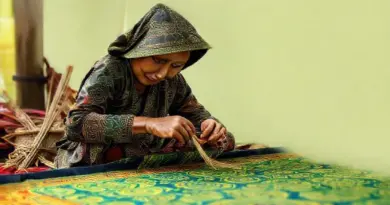
- Batik Tulis (Hand-Drawn): This is the highest quality. The artisan uses a canting (a small copper tool with a spout) to draw the pattern freehand.
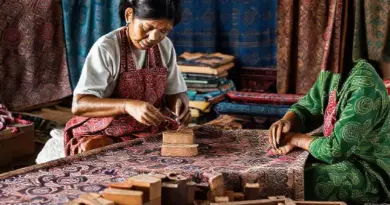
- Batik Cap (Stamped): The design is created using a copper stamp (cap). This is faster and more affordable, often resulting in perfect repetition.
If you are seeking the deepest connection to the cultural heritage, look for Batik Tulis. The key to identifying it is looking for subtle imperfections. A true artisan’s hand will show slight variations in the wax lines—a sign of human touch, not machine precision.
Color Bleeding and Wax Cracks
Authentic Batik relies on the wax resisting the dye. When dyed multiple times, especially in complex patterns:
- Color Bleeding: Look closely at the edges where two colors meet. In authentic Batik, you will often see a slight, fine ‘halo’ or bleeding where the dye seeped slightly under the wax barrier. This is almost entirely absent in printed fabrics.
- Crackle Lines (Retak Seribu): Older, truly hand-dyed pieces often develop fine, spiderweb-like cracks in the wax coating, which then absorb dye, creating a unique texture known as retak seribu (a thousand cracks). This is highly prized.
The Texture of Authenticity
Finally, feel the fabric. Authentic Batik, particularly Batik Tulis, often feels slightly stiff or waxy initially due to the residual wax, and the colors are usually richer on the front side than the back. For the best experience, seek out reputable galleries or artisan cooperatives, such as those supported by the Indonesian government initiatives promoting cultural preservation.
Conclusion: Carrying Indonesia’s Stories
By learning the language of Understanding Batik Motifs and Meanings, you gain a deeper appreciation for the artistry and history embedded in every thread. Whether you admire the royal solemnity of Javanese Parang or the joyful vibrancy of Coastal Mega Mendung, your appreciation for Indonesian culture will be profoundly enriched. Choose wisely, support the artisans, and wear a piece of history.
คำถามที่พบบ่อย (FAQ)
References
For further reading on the cultural significance of these textiles, you can explore resources on UNESCO’s Intangible Cultural Heritage list regarding Batik.
- Traditional Indonesian Arts and Crafts: A Guide to Batik — History, Techniques, Motifs, and Where to Experience It
- What is Batik? Origins, cultural significance, and how it differs across Indonesian regions
- How Batik is Made: Materials, traditional wax-resist techniques, modern adaptations, and step-by-step process