Why travelers choose treetop conservation stays in Indonesia — eco-tourism goals, expected experiences, and how these compare to The Gibbon Experience
- Why travelers choose treetop conservation stays in Indonesia — eco-tourism goals, expected experiences, and how these compare to The Gibbon Experience
The allure of the jungle canopy is undeniable. For the modern, conscious traveler, choosing treetop conservation stays in Indonesia represents more than just a unique accommodation choice; it signifies a commitment to sustainable travel, biodiversity protection, and immersive nature experiences. As global tourism shifts towards meaningful engagement, these elevated retreats offer a compelling alternative to standard resort stays, often blending luxury with deep ecological purpose.
Indonesia, with its staggering biodiversity across islands like Sumatra, Borneo, and Sulawesi, is the perfect backdrop for this movement. This article delves into the primary motivations driving travelers toward these elevated havens, what they can realistically expect from the experience, and how they stack up against world-renowned models like The Gibbon Experience.
The Driving Force: Eco-Tourism Goals Behind Canopy Living
Travelers selecting treetop conservation stays in Indonesia are typically driven by a clear set of ethical and experiential objectives that extend far beyond a simple vacation.
Prioritizing Ethical Impact and Conservation Funding
The primary goal for many visitors is ensuring their tourism dollars directly support rainforest preservation. Indonesian treetop lodges are often deeply integrated with local conservation NGOs or directly manage protected areas. This means:
- Direct Funding: A significant portion of the accommodation fee is often earmarked for anti-poaching patrols, habitat restoration, and community development programs.
- Low Footprint Operations: These lodges prioritize renewable energy, minimize waste output, and utilize sustainable building materials, adhering to strict environmental impact assessments.
- Citizen Science: Many stays invite guests to participate in data collection, such as bird counts, primate monitoring, or camera trap checks, turning vacation time into valuable research contributions.
Seeking Authentic Immersion and Digital Detox
Unlike sprawling resorts, treetop accommodations are deliberately small-scale and remote. This fosters a deep, almost primal connection with the environment.
Supporting Local Communities
True eco-tourism mandates community benefit. Guests expect transparency regarding local employment, sourcing of food, and partnerships with indigenous groups to ensure cultural preservation alongside environmental protection.
| Conservation Goal | Traveler Expectation |
|---|---|
| Habitat Protection | Guaranteed minimal environmental impact. |
| Education | Guided interpretation by local naturalists. |
| Economic Stability | Use of local guides, cooks, and staff. |
The Expected Indonesian Treetop Experience
What does life among the branches actually entail? The experience is heavily reliant on the specific location (e.g., a rainforested area in Kalimantan versus a coastal reserve in Java), but several elements are consistent across high-quality treetop conservation stays in Indonesia.
Accommodation Design and Accessibility
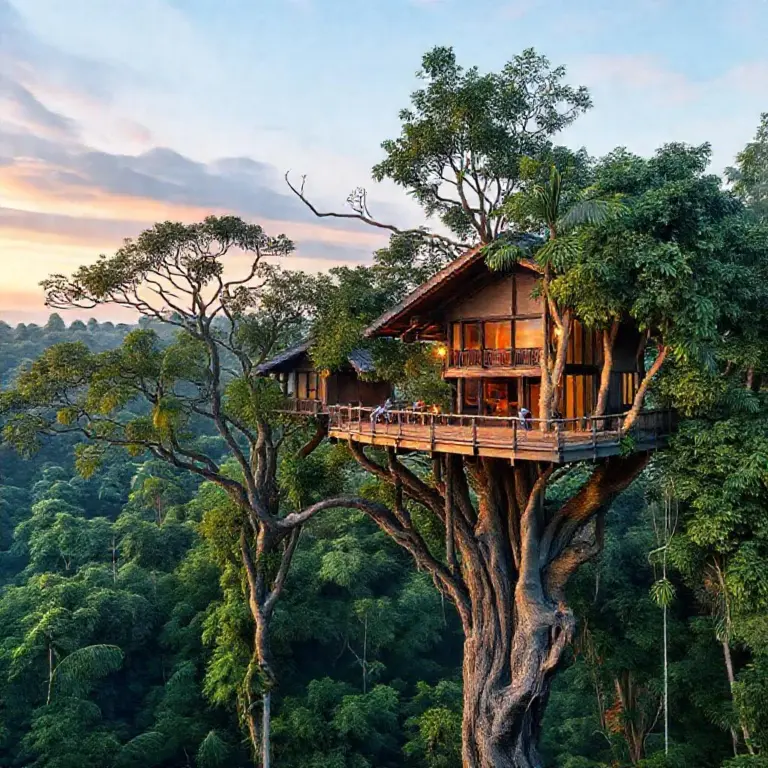
The structures are engineering marvels, often built around existing trees using non-invasive techniques. Expect:
- Elevated Views: Panoramic vistas over the canopy, often above the morning mist.
- Rustic Luxury: While committed to sustainability, many offer comfortable bedding, composting toilets, and perhaps solar-heated water, balancing ruggedness with necessary comfort.
- Access: Reaching the lodging usually involves a significant hike or a specialized, often thrilling, ascent system (rope bridges, pulley lifts, or steep wooden staircases).
Wildlife Encounters: The Canopy Focus
This is where treetop lodging shines. Guests are positioned perfectly to observe species that rarely descend:
- Gibbons, langurs, and hornbills often frequent the upper branches, becoming part of the morning soundtrack.
- Night walks or guided canopy tours focus intensely on nocturnal life, utilizing specialized low-light equipment.
To give you a sense of the incredible biodiversity that these conservation efforts protect, here is a short look at some of the iconic canopy dwellers:
The Pace of Life
Days are structured around natural rhythms: early morning bird activity, mid-day educational talks, afternoon hikes, and quiet evenings listening to the jungle. Connectivity is often deliberately limited, enforcing a restorative break from digital life.
Treetop Conservation Stays in Indonesia vs. The Gibbon Experience
The Gibbon Experience (TGE) in Laos is arguably the world standard for canopy-based adventure tourism, often cited as the benchmark. Comparing Indonesian offerings against TGE helps clarify what a traveler can expect from the local market.
Focus and Scale
The Gibbon Experience (TGE): TGE is highly focused on the zipline network—a thrilling, structured adventure centered around observing wild Black Crested Gibbons across a vast network of platforms. It is an intense, adrenaline-fueled wildlife experience.
Indonesian Stays: Indonesian treetop lodges are generally less focused on extreme adventure infrastructure (like dedicated zipline parks) and more focused on **long-term, low-impact habitation and holistic conservation education.** The experience is often quieter, more reflective, and centered on the immediate ecosystem surrounding the lodge platform.
Accessibility and Infrastructure
TGE boasts world-class, specialized infrastructure built specifically for rapid, high-altitude transit. While Indonesian stays are impressive, they often rely on more traditional, sustainable, and sometimes more physically demanding access methods.
Conservation Integration
Both models contribute to conservation, but the mechanism differs. TGE is often cited as a singular, large-scale success story. In contrast, Indonesian models frequently involve smaller, decentralized operations working in partnership with various local and regional forest management bodies, offering a more varied landscape of conservation impact across the archipelago.
Choosing Your Canopy Adventure
The decision between a highly specialized, adventure-focused trip like TGE and the diverse, conservation-centric options available across Indonesia depends entirely on the traveler’s priorities.
- If the highest priority is adrenaline combined with guaranteed gibbon viewing, TGE is the benchmark.
- If the goal is deep immersion, supporting varied local conservation projects, and experiencing the breadth of Indonesian biodiversity from a quiet, elevated vantage point, then the treetop conservation stays in Indonesia offer a richer, more diverse ethical reward.
Ultimately, travelers choosing these Indonesian retreats are voting with their wallets for a future where travel actively heals and protects the world’s most vital ecosystems.
คำถามที่พบบ่อย (FAQ)
What is the typical cost range for treetop conservation stays in Indonesia compared to standard hotels?
Treetop conservation stays are generally priced higher than standard mid-range hotels due to their remote locations, specialized construction, and the mandatory conservation contribution included in the rate. They often fall into the luxury/premium experiential travel bracket.
Are these treetop lodges safe during Indonesia’s rainy season?
Reputable operators adhere to strict engineering and safety standards. However, the rainy season may bring increased hiking difficulty and potential temporary closures due to heavy localized flooding or landslides, which operators manage by prioritizing guest safety above all else.
Do I need special gear to stay in a treetop lodge?
Basic hiking gear, waterproof clothing, insect repellent, and sturdy, high-traction footwear are essential. Specialized gear like binoculars is highly recommended for wildlife viewing, though some lodges may offer rentals.
How do Indonesian treetop stays ensure minimal disturbance to wildlife?
Minimal disturbance is ensured through small group sizes, strict adherence to guide instructions regarding noise and distance, building structures that avoid major wildlife corridors, and often implementing strict ‘no-flash’ photography rules.
References
Information regarding best practices in eco-tourism and canopy architecture is derived from current industry standards and publications on sustainable Indonesian travel development.
- The Gibbon Experience Equivalent: Treetop Conservation Stays and Canopy Walks in Indonesia
- Top locations and operators for canopy walks and treetop stays in Indonesia — detailed options, accessibility, and best seasons
- What to expect during treetop conservation stays — accommodation types, activities, wildlife encounters, and conservation practices