The Gibbon Experience Equivalent: Treetop Conservation Stays and Canopy Walks in Indonesia
- The Gibbon Experience Equivalent: Treetop Conservation Stays and Canopy Walks in Indonesia
- Why Seek Canopy Experiences in Indonesia?
- Top Indonesian Canopy Walks and Sky Bridges
- Treetop Conservation Stays: Sleeping in the Sky
- คำถามที่พบบ่อย (FAQ)
- Are there actual gibbons found near these Indonesian canopy walks?
- What is the main difference between Indonesian canopy walks and the Laotian Gibbon Experience?
While the famed Gibbon Experience in Laos remains unique, travelers seeking immersive, high-altitude nature immersion and genuine conservation engagement in Indonesia can find remarkable alternatives. This exploration focuses on uncovering **The Gibbon Experience Equivalent: Treetop Conservation Stays and Canopy Walks in Indonesia**, catering to the discerning eco-tourist eager to sleep among the giants and traverse the forest ceiling. The Gibbon Experience Equivalent: Treetop Conservation Stays and Canopy Walks in Indonesia offers a profound connection to biodiversity.
Indonesia, an archipelago teeming with endemic wildlife and ancient rainforests, presents an unparalleled setting for canopy exploration. Unlike traditional trekking, staying in treetop accommodations or engaging in canopy walks provides a unique vantage point, often directly supporting local conservation efforts and indigenous communities. Our search for the Indonesian equivalent emphasizes sustainability, accessibility, and the sheer thrill of being suspended high above the forest floor.
Why Seek Canopy Experiences in Indonesia?
The appeal of canopy exploration goes beyond adventure sports. It’s about understanding the vertical stratification of the rainforest ecosystem. The canopy layer, often called the ‘eighth continent,’ is home to the majority of tropical life, yet remains the least explored. Seeking out these experiences supports research and anti-deforestation initiatives vital for protecting species like orangutans, hornbills, and, yes, even elusive gibbons found in Sumatra and Borneo.
Conservation Over Commercialism
True equivalents to the Gibbon Experience prioritize community involvement and habitat protection over mass tourism. When selecting a stay or walk, look for certifications or clear partnerships with local conservation NGOs. This ensures your travel dollar directly funds habitat preservation, which is crucial given the rapid rate of deforestation in areas like Kalimantan and Sumatra.
Top Indonesian Canopy Walks and Sky Bridges
While dedicated multi-day, zip-line heavy experiences like Laos’ original might be rare, Indonesia boasts several world-class canopy infrastructure projects that offer breathtaking views and educational opportunities.
- Taman Nasional Gunung Halimun-Salak (West Java): Known for its dense, protected forests, specific areas here offer guided canopy walks focusing on montane birdlife. The focus is on low-impact observation.
- Bukit Lawang (Sumatra): While primarily famous for Orangutan trekking, several local guide operations now facilitate access to high viewpoints and rudimentary canopy bridges built for research, offering prime birdwatching spots.
- Borneo Rainforest Canopy Walk (Kalimantan): Located near protected areas, these structures allow visitors to walk amongst the emergent layer, providing unparalleled views of the vast, unbroken forest expanse.
The Thrill of the Canopy Walk
Canopy walks are typically suspended bridge systems offering stability and safety, allowing for slower, more contemplative observation. They are excellent for photography and birdwatching, providing access to species rarely seen from the forest floor.
Let’s look at a key area for future development in this niche:
| Location Type | Primary Focus | Conservation Link |
|---|---|---|
| National Parks | Ecosystem Study, Birdwatching | Strict visitor quotas |
| Private Ecotourism Reserves | Immersive Stays, Wildlife Tracking | Direct funding for anti-poaching |
| Research Stations | Scientific Observation | Limited public access (rarely an equivalent) |
Treetop Conservation Stays: Sleeping in the Sky
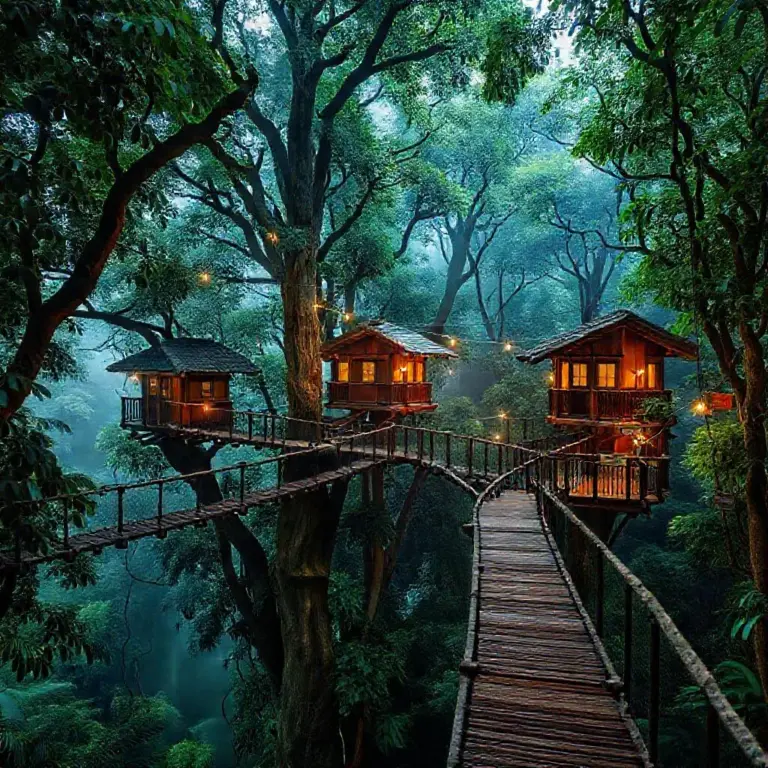
The most direct parallel to the immersive nature of the Gibbon Experience involves overnight stays in structures built high in the trees. While not always featuring zip-lines between huts, these accommodations offer continuous immersion in the nocturnal sounds and diurnal activity of the forest canopy.
Notable Treetop Stays in Indonesia
Finding dedicated, high-end treetop resorts focused purely on conservation is challenging, as many lean toward general luxury. However, certain remote lodges in Borneo and Sulawesi offer elevated bungalows or treehouses that provide this feeling:
- Remote Lodges in Central Kalimantan: Often partnering with Dayak communities, these stays use traditional building methods and are situated near river systems that flow through primary forest.
- Volcanic Rim Stays (e.g., near Mount Bromo or Ijen): While not strictly deep jungle, some high-altitude stays offer stunning views above the cloud line, providing a different, yet equally elevated, natural experience.
- Raja Ampat Treehouses: Although focused on marine conservation, some island retreats offer simple, elevated huts allowing guests to observe coastal forest life from above.
These stays often include guided early morning walks to witness the forest waking up—the best time for primate and bird sightings. This auditory experience alone captures much of the magic associated with canopy living.
Video Highlight: Experiencing the Rainforest Canopy
To truly visualize the environment you will be entering, watch this illustrative video showcasing the dense biodiversity found in Indonesian rainforests, much of which is only visible from above:
The sounds and sights captured in such footage underscore why pursuing The Gibbon Experience Equivalent: Treetop Conservation Stays and Canopy Walks in Indonesia is a worthwhile endeavor for the dedicated nature lover. Remember that responsible travel practices—minimizing waste, respecting wildlife distances, and supporting certified local operators—are paramount to ensuring these environments thrive.
Accessing these remote jungle locations requires careful planning. Unlike Bali or Java’s main tourist circuits, these conservation areas often involve long drives followed by boat or short hikes. Ensure you pack appropriate gear, including light, quick-drying clothing, high-quality insect repellent, and sturdy, waterproof hiking boots.
คำถามที่พบบ่อย (FAQ)
References
For further research into responsible canopy tourism and local conservation projects:
- Why travelers choose treetop conservation stays in Indonesia — eco-tourism goals, expected experiences, and how these compare to The Gibbon Experience
- Top locations and operators for canopy walks and treetop stays in Indonesia — detailed options, accessibility, and best seasons
- What to expect during treetop conservation stays — accommodation types, activities, wildlife encounters, and conservation practices