Borobudur and Prambanan: The Ultimate Visitor’s Guide to Java’s Majestic Temples — Tickets, Tours, and Tips for First-Time Travelers
- Borobudur and Prambanan: The Ultimate Visitor’s Guide to Java’s Majestic Temples — Tickets, Tours, and Tips for First-Time Travelers
- Understanding the Twin Giants: Borobudur vs. Prambanan
- Tickets, Entry Fees, and Access Logistics
- Timing Your Visit: Sunrise, Sunset, and Crowds
- Essential Tips for First-Time Travelers
- Location Context: Where to Base Yourself
- คำถามที่พบบ่อย (FAQ)
- Is it possible to visit both Borobudur and Prambanan in one day?
- Do I need a sarong at Borobudur and Prambanan?
- What is the best way to see the Ramayana Ballet at Prambanan?
- Are there ATMs or currency exchange near the temples?
Welcome to Central Java! For any traveler exploring the wonders of Indonesia, the twin titans of ancient Javanese civilization—Borobudur and Prambanan—are non-negotiable stops. This comprehensive guide serves as Borobudur and Prambanan: The Ultimate Visitor’s Guide to Java’s Majestic Temples — Tickets, Tours, and Tips for First-Time Travelers, ensuring your journey through these UNESCO World Heritage sites is seamless, insightful, and unforgettable. We delve deep into logistics, history, and the best insider tips for navigating these colossal monuments.
Understanding the Twin Giants: Borobudur vs. Prambanan
While often visited together due to their proximity near Yogyakarta, Borobudur and Prambanan represent distinct eras and religious traditions of Java. Knowing the difference sets the stage for appreciation.
Borobudur: The Buddhist Mandala
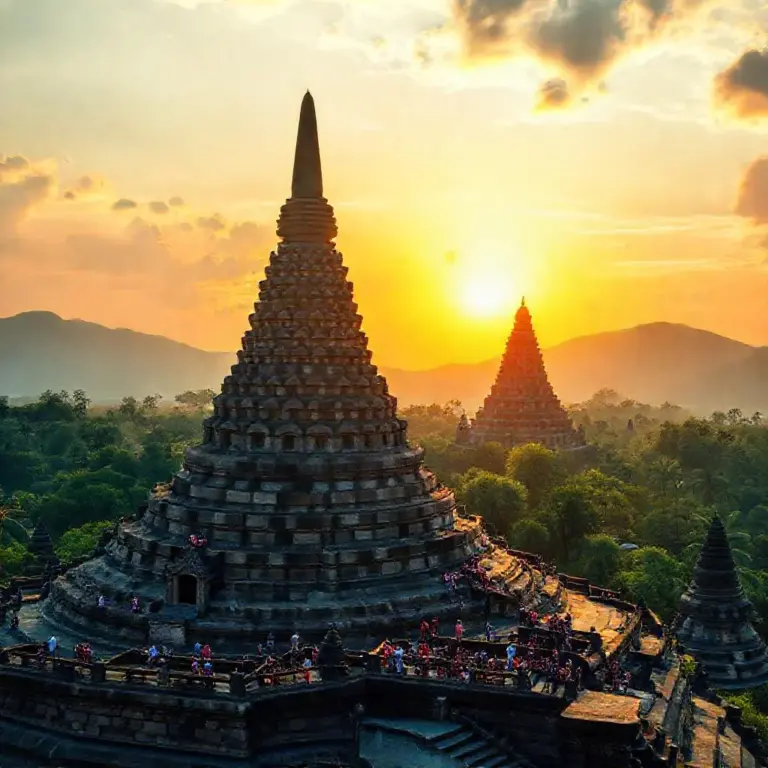
Built in the 9th century by the Sailendra Dynasty, Borobudur is the world’s largest Buddhist temple. It is a massive, stepped pyramid designed as a giant, three-dimensional mandala representing Buddhist cosmology. It features thousands of relief panels illustrating the life of Buddha and Bodhisattvas, culminating in the stunning, bell-shaped stupas at the top. The sheer scale and spiritual architecture are breathtaking.
Prambanan: The Hindu Marvel
In contrast, Prambanan, built around the same period by the Mataram Kingdom, is dedicated to the Hindu Trimurti: Brahma (the Creator), Vishnu (the Preserver), and Shiva (the Destroyer). The central temple dedicated to Shiva towers over the complex. Its architecture is characterized by tall, slender, pointed structures, showcasing intricate carvings depicting the epic Ramayana.
Tickets, Entry Fees, and Access Logistics
Navigating the ticketing process is crucial for smooth entry. Prices fluctuate, especially for international visitors, and access rules change based on preservation efforts.
Current Ticketing Scenarios (As of 2024)
Note: Due to ongoing conservation efforts, access to climb the upper terraces of Borobudur is often restricted or requires a special, more expensive ticket bundled with a mandated guide. Always check the official website or your tour operator.
| Site | Standard Entry (Foreigner Estimate) | Special Access (Borobudur Climb) |
|---|---|---|
| Borobudur | Approx. IDR 450,000 | Additional Fee Required |
| Prambanan | Approx. IDR 350,000 | N/A |
Getting There: The Yogyakarta Hub
Both temples are best accessed from Yogyakarta (Jogja). Borobudur is about 40 km northwest, while Prambanan is about 17 km east.
- Private Driver/Taxi: The most convenient option, allowing you to control the itinerary.
- Ride-Sharing Apps: Grab or Gojek are excellent for shorter distances or getting to the main road junctions, but may not operate directly to the temple gates depending on local regulations.
- Organized Tours: Recommended for first-timers, as they handle transport, tickets, and often include sunrise/sunset viewing.
Timing Your Visit: Sunrise, Sunset, and Crowds
The magic of these sites is heavily dependent on the time of day you visit. Early morning is almost always superior.
The Borobudur Sunrise Experience
Witnessing the mist lift over the surrounding jungle as the sun hits the main stupa is legendary. This requires a very early start (often requiring an overnight stay near the temple or a 3:00 AM departure from Jogja) and a separate, pricier ticket. It is worth the effort for the unparalleled atmosphere.
Prambanan at Dusk
Prambanan’s tall spires look spectacular against the setting sun. Furthermore, many tours offer the optional Prambanan Ramayana Ballet performance, which takes place on an outdoor stage nearby after dark, offering a cultural spectacle.
Essential Tips for First-Time Travelers
To maximize your experience and respect these sacred sites, keep these practical tips in mind as you plan your Borobudur and Prambanan: The Ultimate Visitor’s Guide to Java’s Majestic Temples — Tickets, Tours, and Tips for First-Time Travelers.
- **Footwear Rules:** You must remove your shoes to walk on the main stupa levels of Borobudur. Wear shoes that are easy to slip on and off. Sarongs are often required or provided for entry to the main temple areas at both sites.
- **Hydration and Heat:** Central Java gets hot and humid. Carry ample water. The open spaces at Prambanan offer little shade.
- **Hire a Licensed Guide:** While self-exploration is possible, hiring a certified guide (available at the entrance) significantly enhances the understanding of the reliefs and historical context.
- **The Two-Day Strategy:** Trying to see both temples properly in one rushed day is exhausting. Dedicate one full morning to Borobudur (sunrise optional) and one afternoon/evening to Prambanan.
Location Context: Where to Base Yourself
The vast majority of visitors use Yogyakarta (Jogja) as their base. It is a vibrant city offering excellent accommodation, food, and cultural sites (like the Kraton Palace).
Proximity Comparison
If you are short on time, consider staying closer to the temples. Magelang is closer to Borobudur, while areas closer to the airport might be slightly better positioned for Prambanan, though Jogja city center remains the most practical option overall for amenities.
คำถามที่พบบ่อย (FAQ)
Answers to the most common queries regarding visiting these iconic Javanese landmarks.
Conclusion: Java’s Enduring Legacy
Borobudur and Prambanan are not merely piles of ancient stones; they are living testaments to the artistic, spiritual, and political zenith of ancient Java. By planning your trip utilizing this guide, you are equipped to explore these majestic temples with confidence and reverence. Safe travels on your Indonesian adventure!
References
- UNESCO World Heritage Centre: Borobudur Temple Compounds
- UNESCO World Heritage Centre: Prambanan Temple Compounds
- Why Visit Borobudur and Prambanan? History, Cultural Significance, and Best Time to Go
- Planning Your Trip: How to Get There, Buy Tickets, Choose Guided Tours, and Book Sunrise/Sunset Experiences
- Exploring the Temples: Site Maps, Key Reliefs and Shrines, Photography Tips, and Accessibility Information