Traditional Sasak house architecture: layout, materials, symbolism, and preservation efforts
Lombok, the sister island of Bali, offers a profound cultural experience that remains deeply rooted in the traditions of its indigenous people, the Sasak. Central to this identity is the Traditional Sasak house architecture, a marvel of vernacular design that harmonizes perfectly with the tropical landscape. These structures, known locally as Bale, are more than just dwellings; they are living testaments to a philosophy that balances human life, nature, and the spiritual realm. For any traveler interested in Indonesia Tourism, understanding these architectural gems is essential to appreciating the island’s soul.
The Layout and Spatial Philosophy of Sasak Dwellings
The layout of a Traditional Sasak house, particularly the Bale Tani (the commoner’s house), is strictly dictated by cultural norms and family hierarchy. Unlike modern open-plan homes, the Sasak interior is divided into specific levels. The first level, or the lower floor, is where the family sleeps and conducts daily activities. Interestingly, the kitchen is often integrated into this space or placed in a specific corner to signify the hearth of the home.
One of the most distinctive features is the Bale Tani‘s split-level design. The upper level, known as the Sesangkok, is traditionally used as a storage area for heirloom items or a sleeping area for unmarried daughters to protect their honor. The entrance is intentionally low, forcing anyone entering to bow—a physical gesture of respect to the inhabitants and the spirits of the ancestors residing within.
Sustainable Materials: Building with Nature
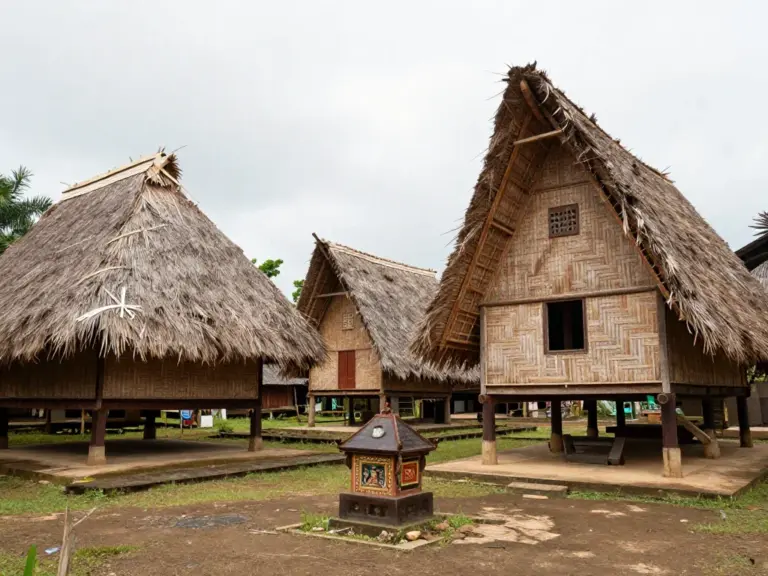
Traditional Sasak house architecture relies entirely on locally sourced, organic materials. This sustainable approach ensures that the buildings are well-ventilated and earthquake-resistant—a crucial factor in the Indonesian archipelago. The primary materials include:
- Alang-Alang (Elephant Grass): Used for the thick, thatched roofs which provide excellent insulation against the heat.
- Bamboo and Wood: The walls (anyaman) are typically made of woven bamboo, while the main pillars are crafted from sturdy local timber.
- Clay and Buffalo Dung: Perhaps the most unique aspect is the floor. It is made from a mixture of clay, ash, and cow or buffalo dung. When polished, this creates a hard, dust-free surface that is surprisingly cool and durable.
Symbolism and the Rice Barn (Lumbung)
While the Bale is for living, the Lumbung (rice barn) is the iconic symbol of Lombok. With its distinctive horseshoe-shaped roof, the Lumbung represents prosperity and the community’s agricultural heritage. In Sasak culture, rice is sacred, and the Lumbung is built on high stilts with circular wooden discs to prevent rodents from reaching the harvest. The height also symbolizes the high status of food security in the village.
| Feature | Symbolic Meaning |
|---|---|
| Low Doorway | Humility and respect for the host. |
| Buffalo Dung Floor | Connection to the earth and warding off insects. |
| High Roof | Connection to the divine and spiritual protection. |
Preservation Efforts and Cultural Tourism
As modernization sweeps across Indonesia, the preservation of Traditional Sasak house architecture has become a priority for both the local community and the government. Villages like Sade and Ende have been designated as cultural conservation sites. Here, the community continues to live in traditional ways, ensuring that the skills of weaving bamboo and thatching roofs are passed down to younger generations.
Tourism plays a dual role in these efforts. While it provides the economic means to maintain these structures, it also poses a risk of “museum-ification.” To counter this, sustainable tourism initiatives encourage visitors to engage with the Sasak people through workshops and homestays, ensuring the culture remains a living tradition rather than a static display.
คำถามที่พ่อยบ่อย (FAQ)
Q: Why do Sasak people use buffalo dung for their floors?
A: Buffalo dung is mixed with clay to create a smooth, hard, and durable floor. Once dried and polished, it is odorless and helps keep the house cool while acting as a natural insect repellent.
Q: Can tourists stay in a traditional Sasak house?
A: Yes, many cultural villages offer homestay experiences where tourists can live in a modified Bale to experience the Sasak lifestyle firsthand while supporting the local economy.
Q: Are Sasak houses earthquake-proof?
A: The flexible bamboo walls and thatched roofs, combined with a structure that is not fixed deeply into the ground with rigid concrete, allow the houses to sway and absorb seismic energy better than many modern brick buildings.
References
- Official Indonesia Tourism – Lombok Destination Guide
- UNESCO World Heritage Centre – Cultural Landscape of Bali Province (Contextual Reference)
- Sasak Villages of Lombok Handweaving Architecture and Etiquette: A Complete Guide for Visitors and Cultural Enthusiasts
- Overview of Sasak village history, cultural context, and the role of weaving in Lombok society
- Handweaving techniques and motifs: materials, process, meanings, and how to identify authentic Lombok textiles