Betawi Heritage at Setu Babakan: A Complete Visitor’s Guide to Food, Dance, and Traditions
Nestled in the southern part of Jakarta, Setu Babakan serves as a living museum dedicated to preserving the rich tapestry of Betawi culture. As the capital city modernizes, this 289-hectare cultural village remains a sanctuary for the indigenous people of Jakarta, offering a profound look into the Betawi Heritage at Setu Babakan. Whether you are a history buff, a foodie, or a traveler seeking authentic Indonesia tourism experiences, this guide will navigate you through the soul of Jakarta’s heritage.
The Heart of Betawi Culture: Understanding Setu Babakan
Established in 2000, the Setu Babakan Betawi Cultural Village (Perkampungan Budaya Betawi) was created to protect the unique customs of the Betawi people—a multi-ethnic group formed from the blending of Malay, Javanese, Arab, Chinese, and European influences. The site is centered around two natural lakes, Setu Babakan and Setu Mangga Bolong, providing a serene backdrop for traditional wooden houses and lush fruit orchards.
A Culinary Journey: Tasting Authentic Betawi Flavors
One cannot truly experience Betawi Heritage at Setu Babakan without indulging in its culinary treasures. The village is a haven for traditional snacks and heavy meals that are becoming increasingly rare in the city center. You will find vendors lining the lakefront offering iconic dishes like Kerak Telor (a spicy omelet made from glutinous rice and duck eggs) and Bir Pletok (a non-alcoholic herbal drink made from ginger and sappan wood).
| Dish Name | Key Ingredients | Taste Profile |
|---|---|---|
| Kerak Telor | Glutinous rice, Duck egg, Serundeng | Savory & Smoky |
| Soto Betawi | Beef, Coconut milk/Milk, Spices | Rich & Creamy |
| Gabuk Pucung | Snakehead fish, Black nut (Kluwek) | Earthy & Tangy |
Traditional Dance and Performing Arts
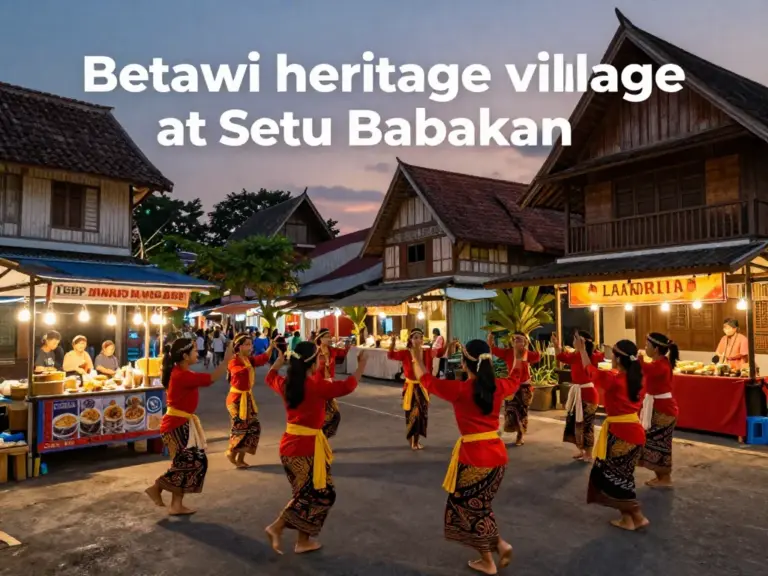
The rhythmic sounds of the Gambang Kromong orchestra often fill the air at Setu Babakan. Visitors can watch the Tari Topeng (Mask Dance) or the Yapong Dance, which showcase the grace and spirit of the Betawi people. These performances are not just for show; they are vital expressions of community identity and historical storytelling.
Exploring the Architecture and Traditions
Walking through the village, you will notice the distinct architecture of the ‘Rumah Kebaya’—traditional houses with wide verandas used for receiving guests. The intricate woodwork on the eaves (Gigi Balang) symbolizes honesty and hard work. Beyond the buildings, the traditions of martial arts like Silat Betawi are still practiced by the local youth, ensuring that the physical heritage remains as strong as the spiritual one.
How to Get There and Visitor Tips
Located in Jagakarsa, South Jakarta, Setu Babakan is accessible via commuter train (KRL) to Lenteng Agung station, followed by a short ride via local transport. Admission is generally free, though small fees may apply for specific attractions or boat rides on the lake. To fully appreciate the Betawi Heritage at Setu Babakan, allow at least 3-4 hours for your visit.
คำถามที่พบบ่อย (FAQ)
Q1: What is the best time to visit Setu Babakan?
A1: The best time is on Sundays when the cultural performances are scheduled and all food stalls are open.
Q2: Is there an entrance fee for Setu Babakan?
A2: Entry to the cultural village is free, but you may need to pay for parking and specific activities like the swan boat rides.
Q3: Can I learn traditional Betawi dance there?
A3: Yes, there are workshops and training sessions held at the main pavilion (Gedung Amphi Theatre) on certain days for the public.
Q4: What should I wear when visiting?
A4: Casual and comfortable clothing is fine, but as it is a cultural site, modest attire is recommended out of respect for the local community.