The Balinese Baci-like Blessings and Local Rituals: Understanding Village Ceremonies
Welcome to the heart of Bali, an island where spirituality is woven into the very fabric of daily life. For the discerning Indonesia tourism enthusiast, understanding The Balinese Baci-like Blessings and Local Rituals: Understanding Village Ceremonies is key to unlocking the island’s profound cultural depth. Far beyond the beaches, Balinese life is governed by intricate cycles of ceremonies that honor the gods, ancestors, and the natural world. These rituals, often featuring offerings reminiscent of the Javanese ‘Baci’ tradition, are vibrant expressions of Tri Hita Karana—harmony among people, nature, and the divine.
The Spiritual Framework: Tri Hita Karana and Ceremonial Life
Balinese Hinduism (Agama Hindu Dharma) dictates a constant balancing act. Every ceremony, from the smallest daily offering to massive temple festivals, aims to maintain this harmony. The concept of Bhuana Agung (the macrocosm) and Bhuana Alit (the microcosm, or human being) must align. This philosophy underpins why ritual cleanliness and specific offerings are non-negotiable aspects of Balinese society.
The Significance of Offerings (Canang Sari and Banten)
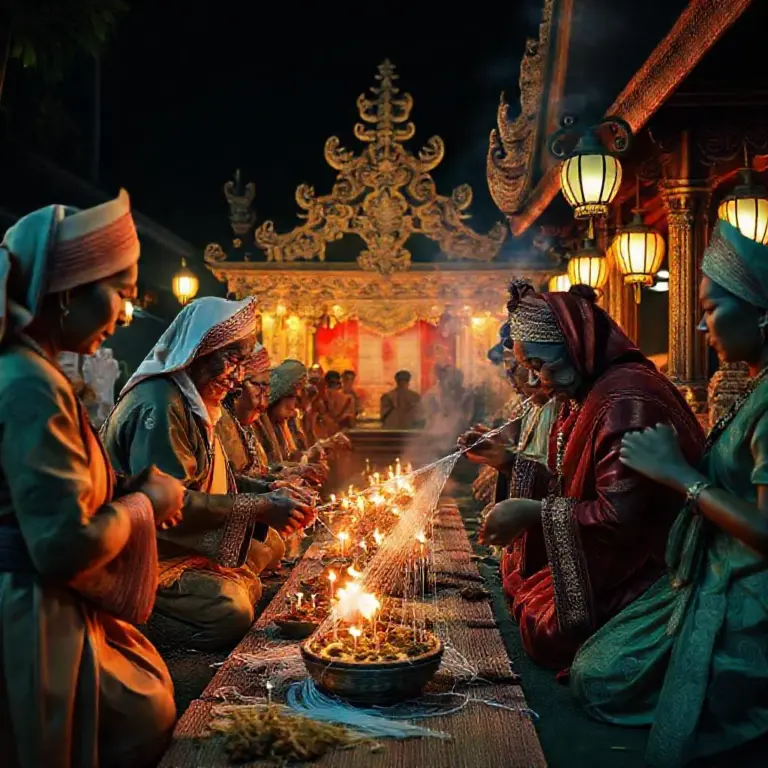
While the term ‘Baci’ is often associated with Javanese or Sundanese purification rituals involving offerings, the Balinese equivalent is manifested beautifully in the Canang Sari—the ubiquitous daily offering. These small, square palm-leaf trays are laden with flowers of specific colors (representing major Hindu deities), rice, cookies, and incense. They are placed everywhere: on the ground for the lower spirits, on altars for the gods, and even in vehicles for safe travel.
Beyond the Canang Sari: Banten
For major village ceremonies, the offerings escalate into complex arrangements called Banten. These can involve towers of fruit, decorated animals, or intricately folded palm leaves, each element carrying specific symbolic meaning related to gratitude, appeasement, or devotion.
Key Village Ceremonies You Might Witness
To truly appreciate the island, tourists should be aware of the main community rites. These are organized and funded by the village community itself (Pura management structures are key here).
1. Odalan (Temple Anniversary)
Every 210 days (based on the Balinese Pawukon calendar), the local village temple (Pura) celebrates its anniversary. This is the most common and vibrant ceremony. It involves elaborate processions, massive food preparations, the playing of Gamelan orchestras, and the presentation of grand Banten to the resident deities. Visitors are often welcomed but must adhere strictly to temple etiquette (wearing a sarong and sash).
2. Galungan and Kuningan (The Victory of Dharma over Adharma)
Galungan marks the time when the ancestral spirits descend to earth to be honored. The streets become instantly recognizable by the towering, decorated bamboo poles called Penjor, symbolizing Mount Agung and the offerings being made. Kuningan, celebrated ten days later, marks the spirits’ return to heaven. These festivals are paramount examples of The Balinese Baci-like Blessings and Local Rituals: Understanding Village Ceremonies in action, focusing on communal purification and gratitude.
3. Nyepi (Day of Silence)
Perhaps the most unique ceremony is Nyepi, the Balinese New Year. On this day, the entire island shuts down for 24 hours of absolute silence, fasting, and meditation. The preceding night features the terrifying but beautiful Ogoh-Ogoh parade—giant effigies representing malevolent spirits, which are paraded and then burned to cleanse the island for the coming year. Witnessing the creation of the Ogoh-Ogoh is a fascinating pre-Nyepi experience.
For a visual immersion into the powerful, purifying atmosphere of these rites, please observe this short documentary clip:
Etiquette for Tourists Engaging with Rituals
As a visitor, showing respect is paramount. Engaging respectfully enhances your experience immensely. Here are key guidelines derived from Balinese spiritual practices:
| Icon | Rule | Explanation |
|---|---|---|
| Dress Code | Always cover shoulders and knees. A sarong and sash are mandatory for entering temples. | |
| Temple Conduct | Never point your feet or shoes toward a shrine. Do not walk in front of people who are praying. | |
| Photography | Ask permission before photographing people, especially during intimate moments of prayer. Avoid taking photos during the most sacred parts of the ceremony. | |
| Offerings | Never step on or kick aside Canang Sari left on the ground. |
The Role of the Pemangku (Priest)
The local priest, or Pemangku, is the spiritual guide for the village ceremonies. They are responsible for ensuring that the rituals, including the specific blessings and offerings that parallel the intent of Baci rites, are performed correctly according to tradition. Their role ensures that the flow of cosmic energy remains balanced for the entire community.
คำถามที่พบบ่อย (FAQ)
What is the main difference between a Balinese offering and a Javanese ‘Baci’ blessing?
While both involve purification and offerings, the Balinese system is deeply integrated with their specific Tri Hita Karana philosophy, manifesting daily in the Canang Sari. Javanese Baci traditions often focus more on specific personal or communal cleansing rites, though the underlying spiritual respect for offerings is shared.
Can tourists attend a village Odalan ceremony?
Yes, tourists are generally welcome to observe Odalan ceremonies at local temples. However, strict adherence to the temple dress code (sarong, sash, and sometimes a head covering for men) is mandatory, and quiet, respectful observation is expected.
How often do major Balinese village ceremonies occur?
Major community-wide ceremonies like Odalan occur every 210 days according to the Balinese Pawukon calendar. Galungan and Kuningan cycles are also fixed within this calendar system, creating a continuous rhythm of ritual life.
What is the purpose of the Ogoh-Ogoh parade before Nyepi?
The Ogoh-Ogoh parade is a vibrant ritual designed to lure out and then symbolically banish the negative forces or evil spirits (bhuta kala) from the village, cleansing the environment before the Day of Silence (Nyepi) begins.
References
By taking the time to understand these deep-rooted customs, your journey through Indonesia transforms from mere sightseeing into meaningful cultural immersion.
- What are Baci-like blessings in Bali and their cultural significance for village life?
- How do Balinese village ceremonies (odalan, tooth-filing, and purification rites) work step-by-step and who participates?
- Which symbols, offerings, music, and attire are used in Balinese rituals and what do they represent?