History and Cultural Significance of the Betawi Community at Setu Babakan
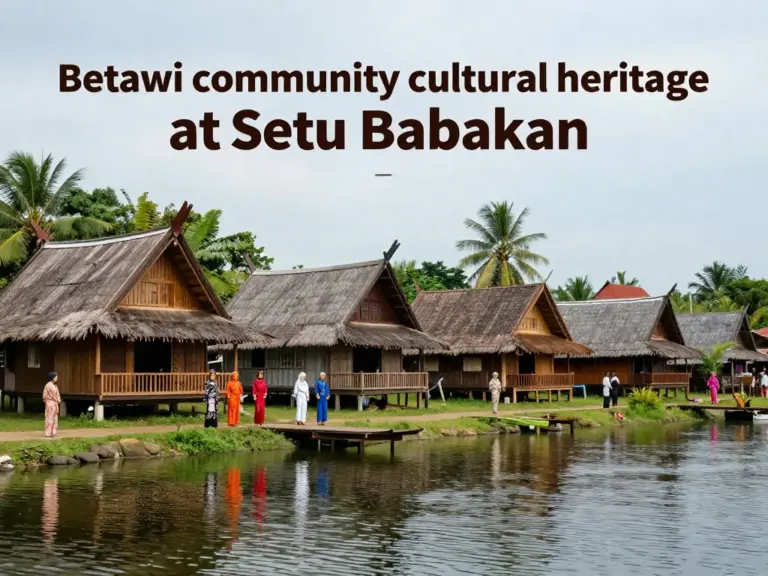
The Betawi Community at Setu Babakan represents the beating heart of Jakarta’s indigenous heritage. Located in Jagakarsa, South Jakarta, Setu Babakan is more than just a lake; it is a dedicated cultural village (Perkampungan Budaya Betawi) established to preserve the unique customs, language, and traditions of the Betawi people amidst the rapid modernization of Indonesia’s capital.
The Origins of the Betawi People
The Betawi ethnic group is a fascinating melting pot of various cultures. Emerging around the 18th century in Batavia (now Jakarta), the community formed through the intermingling of diverse ethnic groups, including Javanese, Sundanese, Malay, Chinese, Arab, and European settlers. This synthesis created a distinct identity characterized by a vibrant dialect, eclectic culinary traditions, and a resilient social fabric.
Cultural Significance of Setu Babakan
Setu Babakan serves as a living museum. Visitors can witness traditional Betawi architecture, characterized by the ‘Rumah Kebaya’ with its iconic wide terraces and ornate wooden carvings. The site is a hub for performing arts such as Ondel-ondel (giant puppet figures), Lenong (folk theater), and the soulful Gambang Kromong music. These art forms are not merely entertainment; they are vessels of history that tell stories of struggle, humor, and daily life in old Jakarta.
Traditional Gastronomy and Daily Life
One cannot discuss the Betawi Community at Setu Babakan without mentioning the food. The village is the best place to sample authentic Kerak Telor (spiced omelet with sticky rice), Bir Pletok (a non-alcoholic herbal beverage), and Soto Betawi. The preservation of these recipes is vital to the community’s cultural survival, providing economic opportunities for local residents while keeping ancestral flavors alive.
| Aspect | Cultural Element |
|---|---|
| Architecture | Rumah Kebaya & Rumah Gudang |
| Martial Arts | Silat Betawi (Beksi) |
| Beverage | Bir Pletok (Ginger-based) |
| Icon | Ondel-ondel Puppets |
Preserving the Legacy for Tourism
For Indonesia tourism, Setu Babakan offers a tranquil escape from the city’s skyscrapers. It provides an educational platform where tourists can learn about the philosophical values of the Betawi people, such as their openness to outsiders and their deep religious devotion. By visiting, travelers contribute to the sustainability of this heritage site, ensuring that the ‘spirit of old Jakarta’ continues to thrive.
คำถามที่พบบ่อย (FAQ)
Q1: What is the best time to visit Setu Babakan?
A1: The best time to visit is during the weekends or on Jakarta’s anniversary (June 22nd), when the village hosts special cultural festivals and traditional performances.
Q2: Is there an entrance fee for Setu Babakan?
A2: Entry to the Setu Babakan area is generally free for the public, though there may be small fees for specific museum exhibits or boat rides on the lake.
Q3: Can I learn traditional Betawi dance there?
A3: Yes, there are several cultural centers within the village that offer workshops and training for traditional Betawi arts, including dance and music.